C. F. Martin Style 45 Guitar
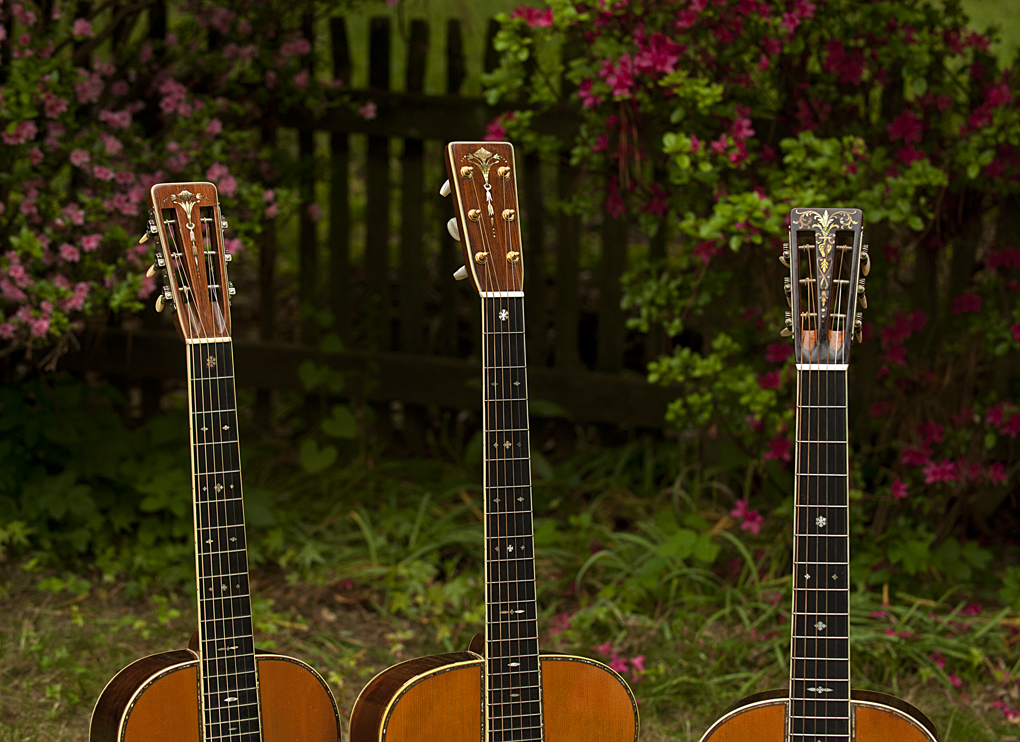
The Style 45 first appeared as a custom version of a 00-42 in 1902, long after Martin Style names had been derived from the price of the guitar.
Style 45 Top Borders and Rosettes
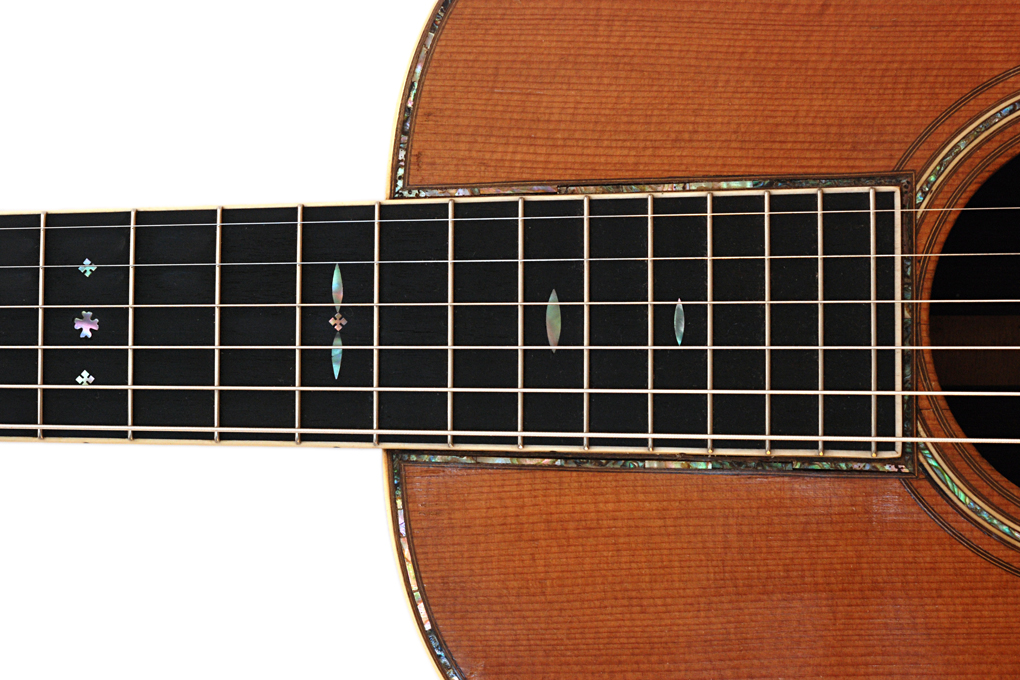
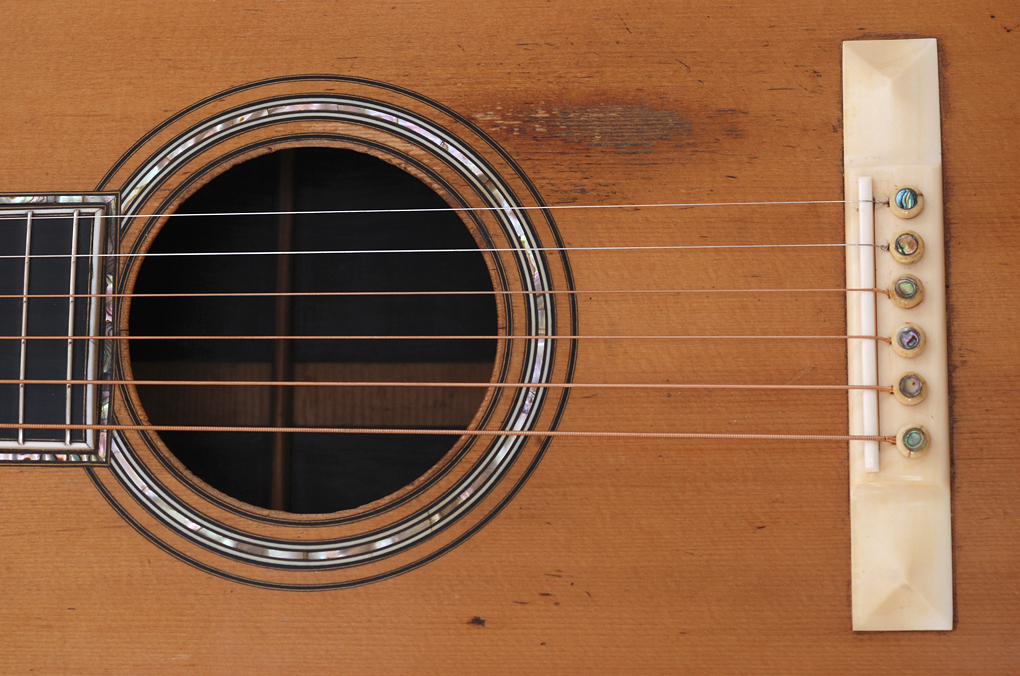
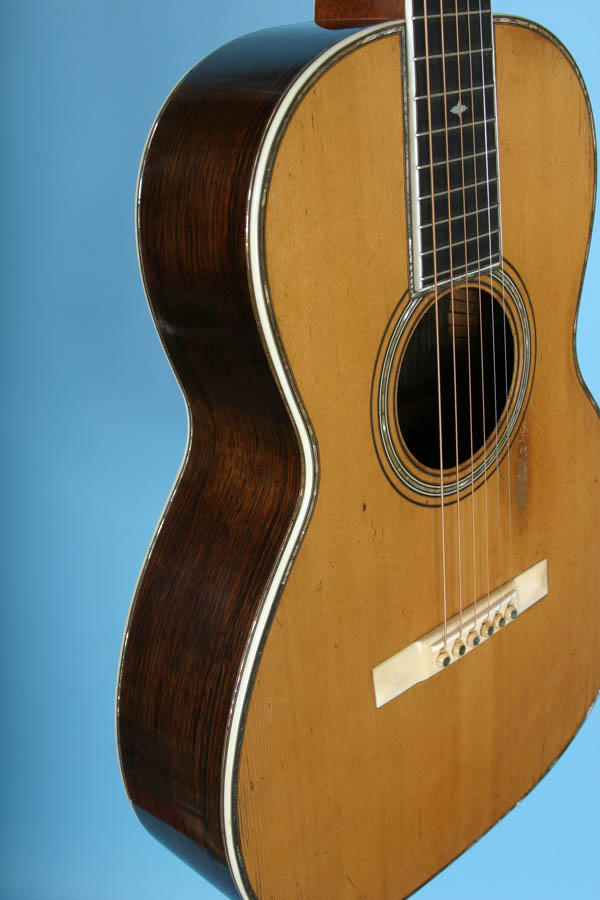
The Style 45, the top of the Martin line after 1902, is distinguished by pearl inlay on all top borders, in the center ring of the rosette, and surrounding the fretboard extension. The top and back, as well as the fingerboard, were bound with genuine Elephant ivory, and the bridge was constructed of genuine ivory, all until 1918 when the ivory pyramid bridge was replaced by an ebony pyramid bridge and the ivory bindings were replaced by grained Celluloid.
1919 Martin 0-45
The Style 45 was also built with a genuine elephant ivory bridge until 1919.
Style 45 Back and Side Borders
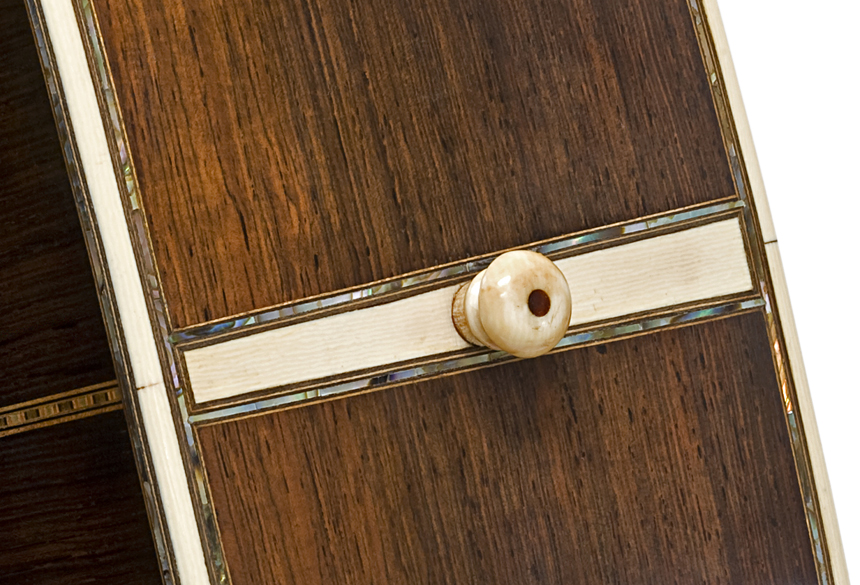
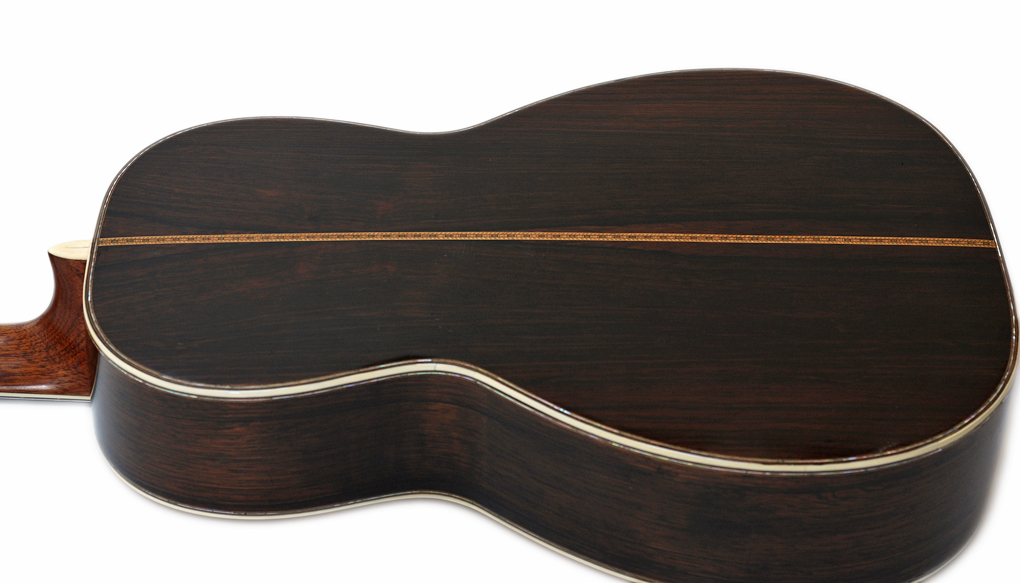
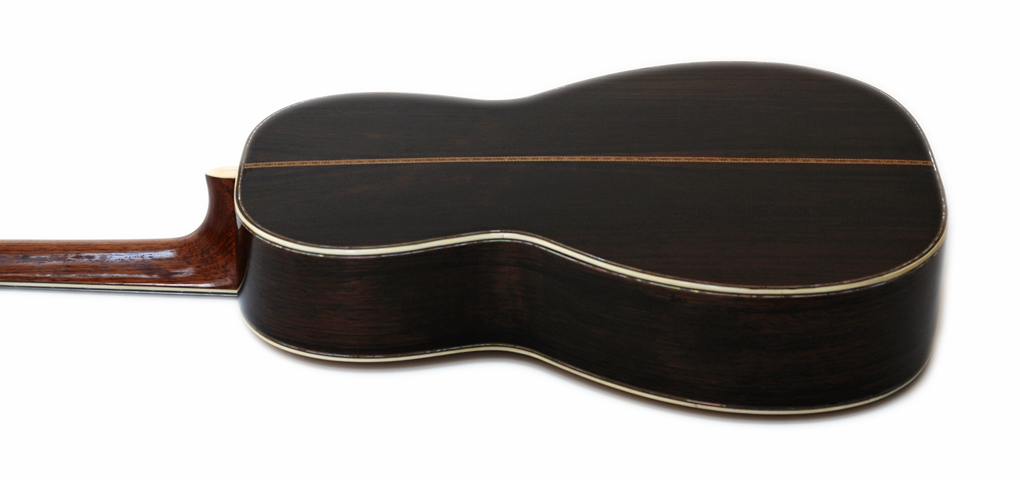
The Style 45 also has pearl inlays on the borders of the back and sides and surrounding the end piece and the heel.
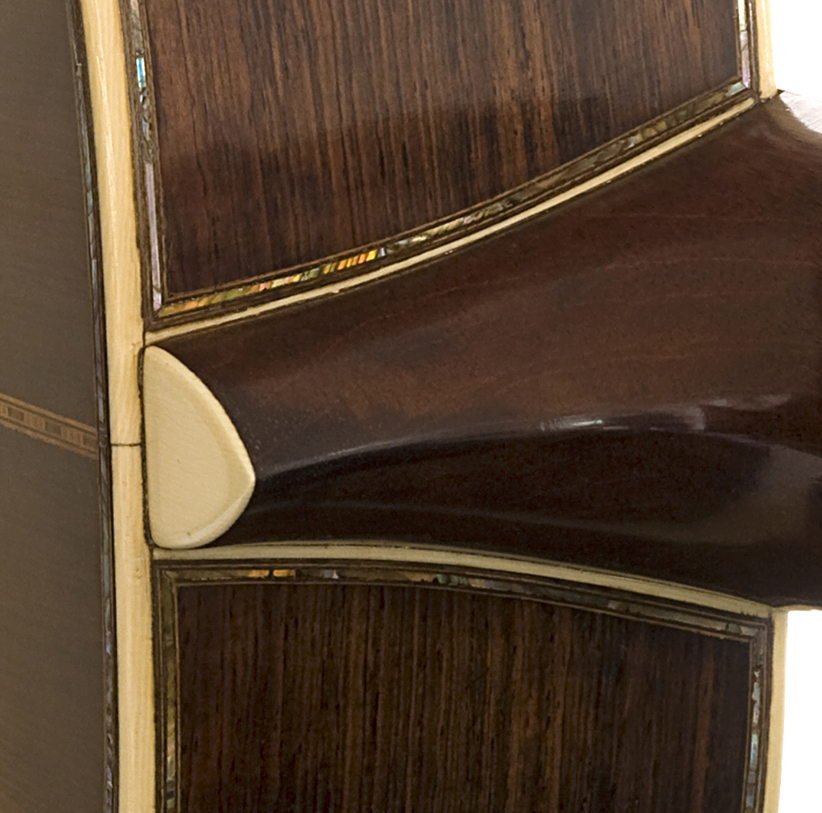
Style 45 Back Strips
This 1919 0-45 has a backstrip design which is not the typical for a Style 45, though 1919 saw many differences due to the huge growth in production and problems with meeting the demand.
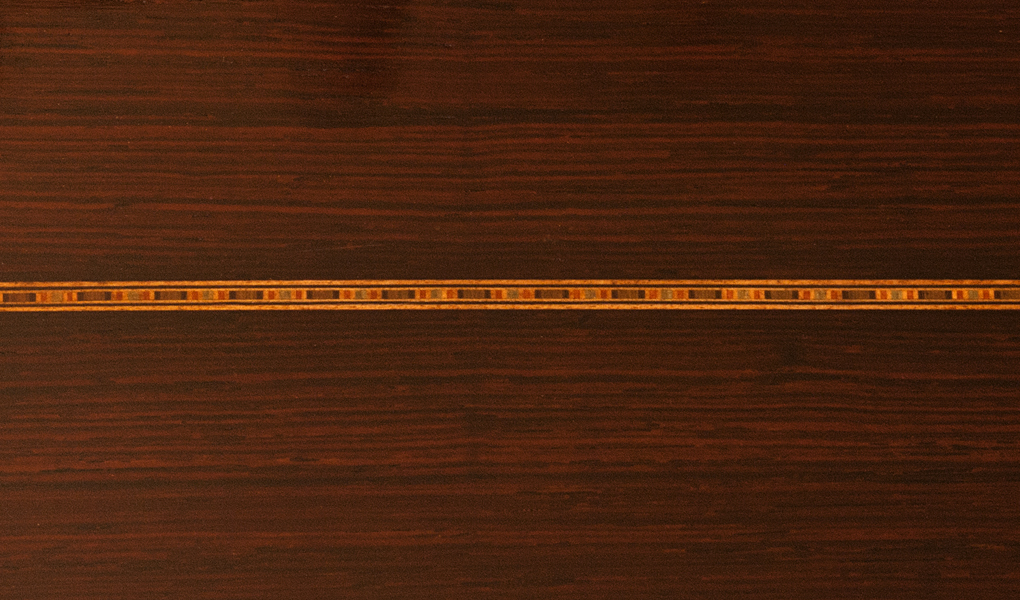
The following example is of the backstrip design simply known as the "Style 45 Backstrip".

Style 45 Headstock Inlays
The first of the "Style 45" headstock inlays to appear on a Martin was seen on #9372, the first 00-42S, to have pearl inlaid on the back and side borders in 1902. This version was known as the "fern". This was followed by #9488, which had another version of the fern:
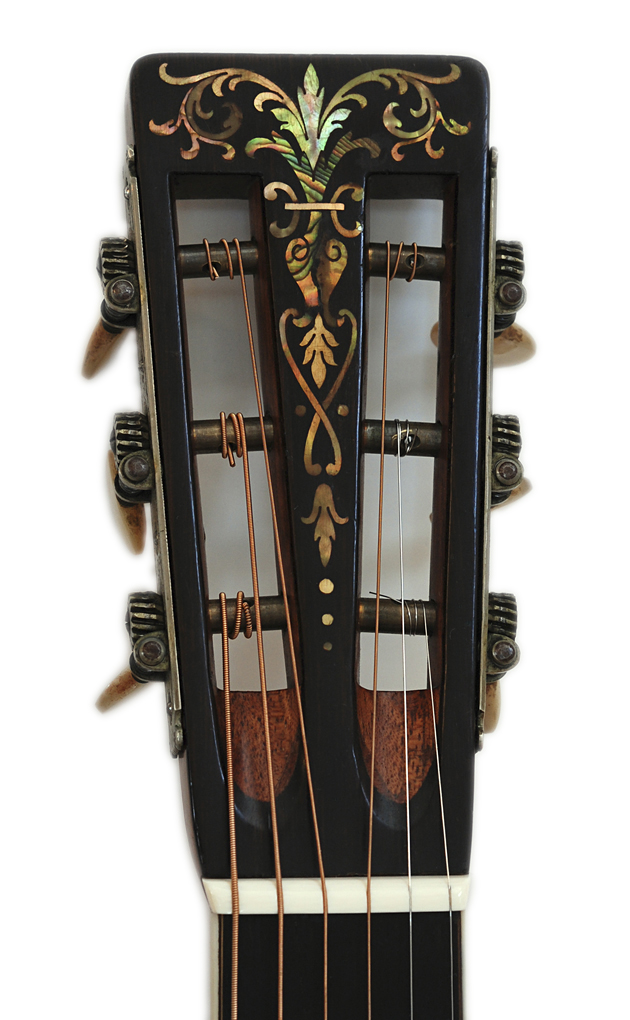
The first version of the "torch" or "fern" seen in 1902 was used on subsequent early examples, and became the standard when the Style 45 became a regularly catalogued item in 1904.
The design seen on #9488 was revived many years later for the 2004 "Bellezza Nerra" and other custom Martins, and became known as the "alternative torch."
Later "Style 45 Torch"
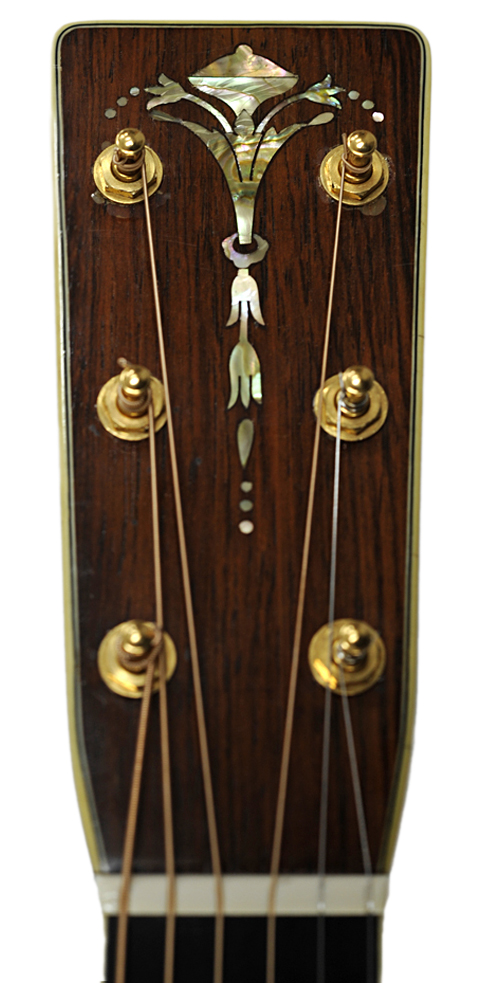
By 1905, the fern was replaced by the first version of the "torch", sometimes also known as the "flowerpot"
1919 Martin 0-45
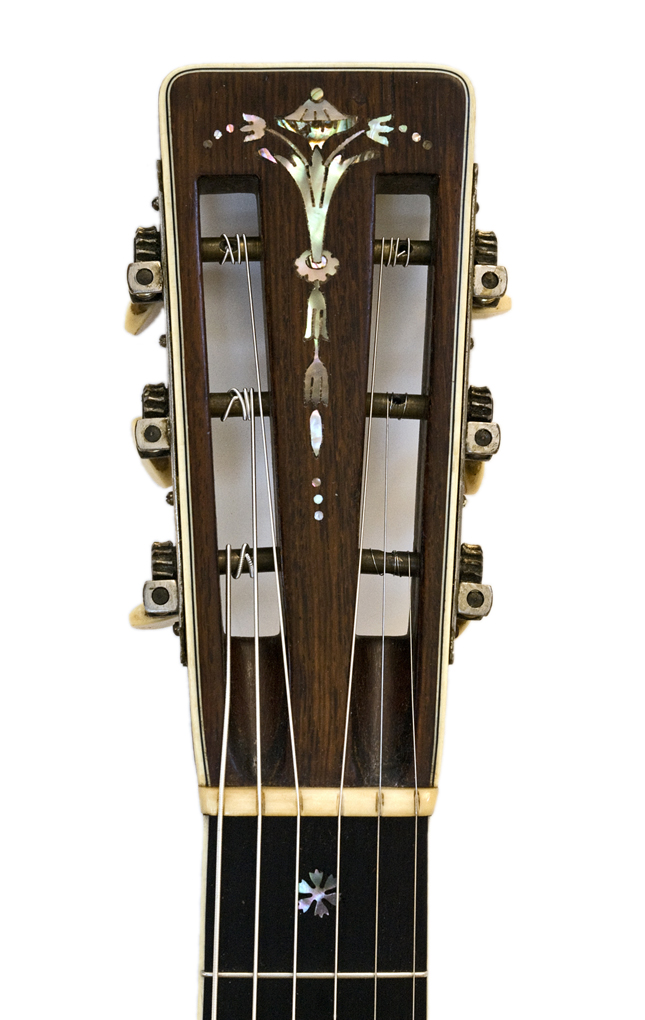
The torch was simplified and appeared in a more refined version from 1927 to 1933.
1930 Martin OM-45 DeLuxe
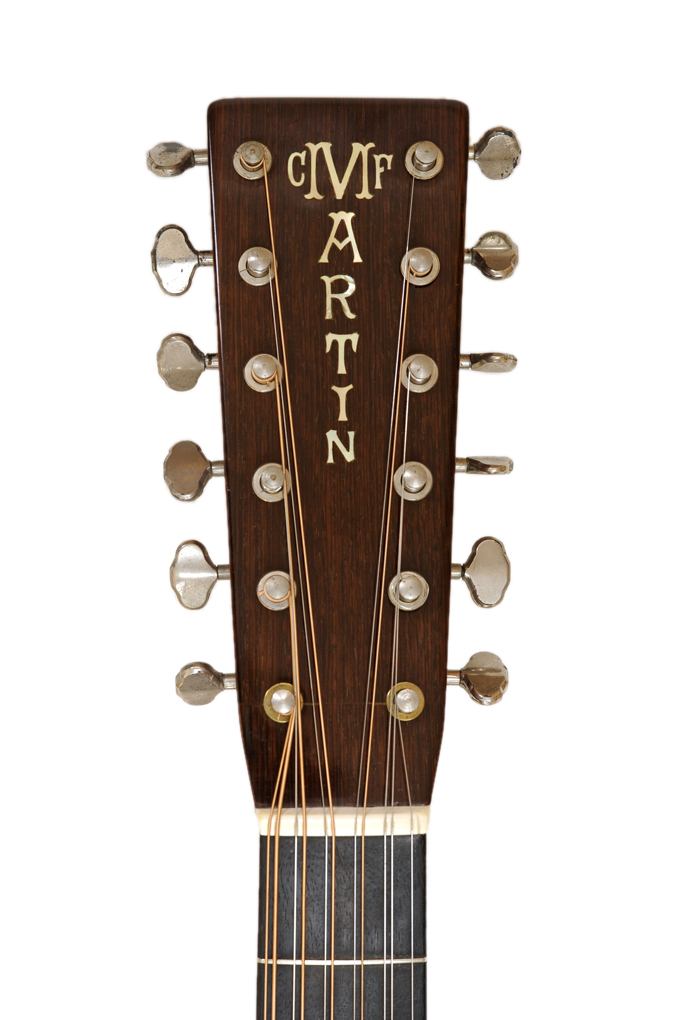
With the last batch of OM-45 produced in 1934, the torch was replaced on solid headstock Martins by the C.F. Martin logo that had been seen on archtops such as this C-2 12 string:
1932 C-2S 12 String
1941 D-45
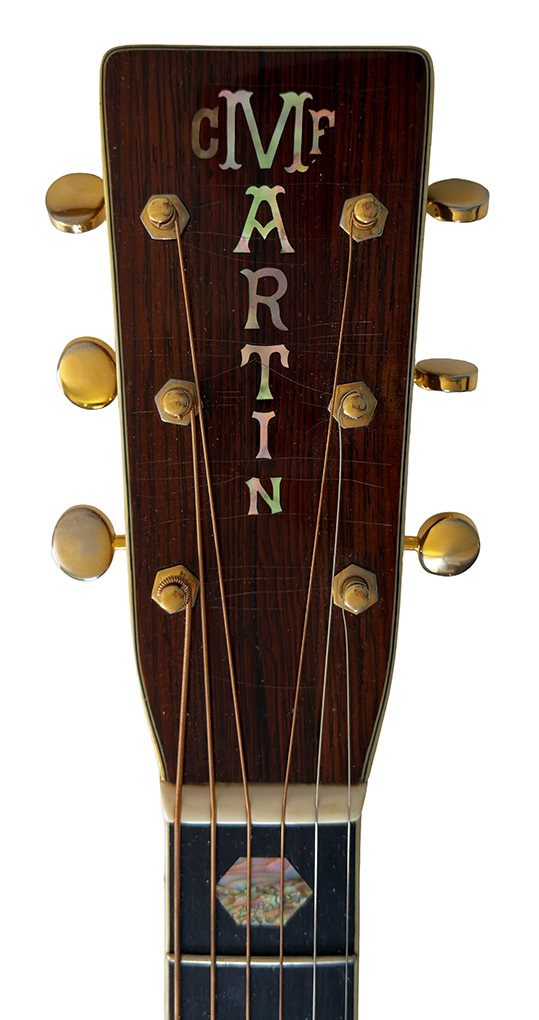
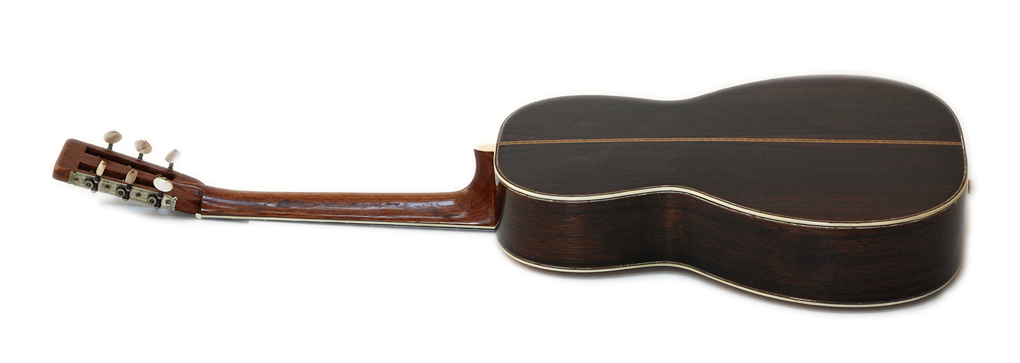
The torch still appeared on slotted headstock Martins and a few special order 14 fret guitars.
The torch was not produced by Martin, but was purchased from the Jeorge H. Jones Co. of New York.
The Style 45 Fretboard Inlays
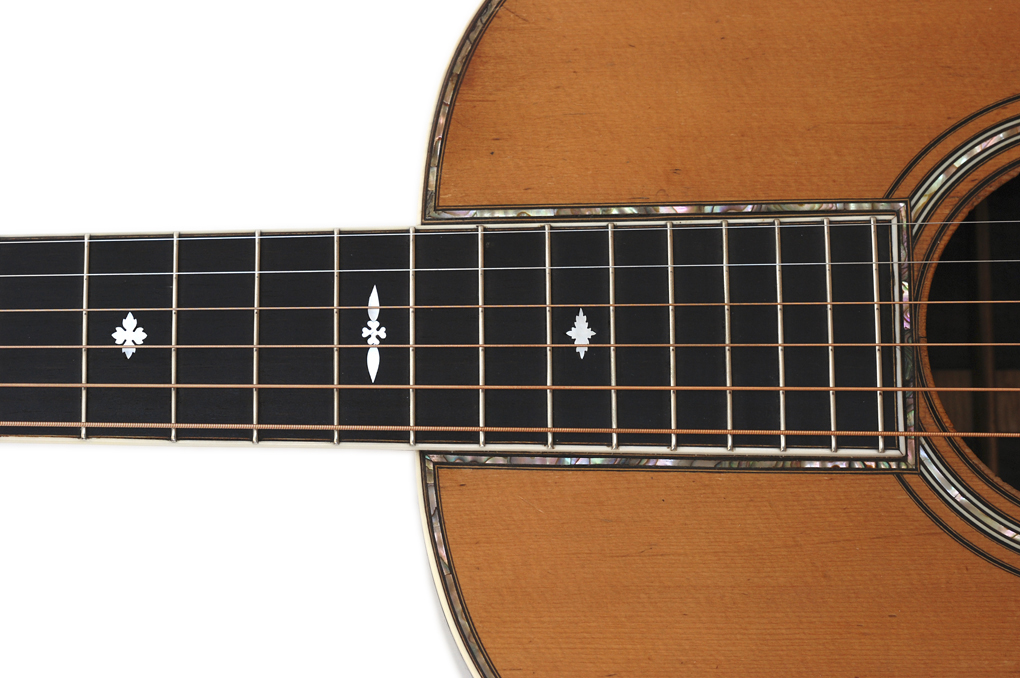
The earliest version of the Style 45, first built in 1902, has "snowflake" inlays on the fifth, seventh, ninth, twelth and fifteenth frets. The earliest version had inlays made of white pearl.
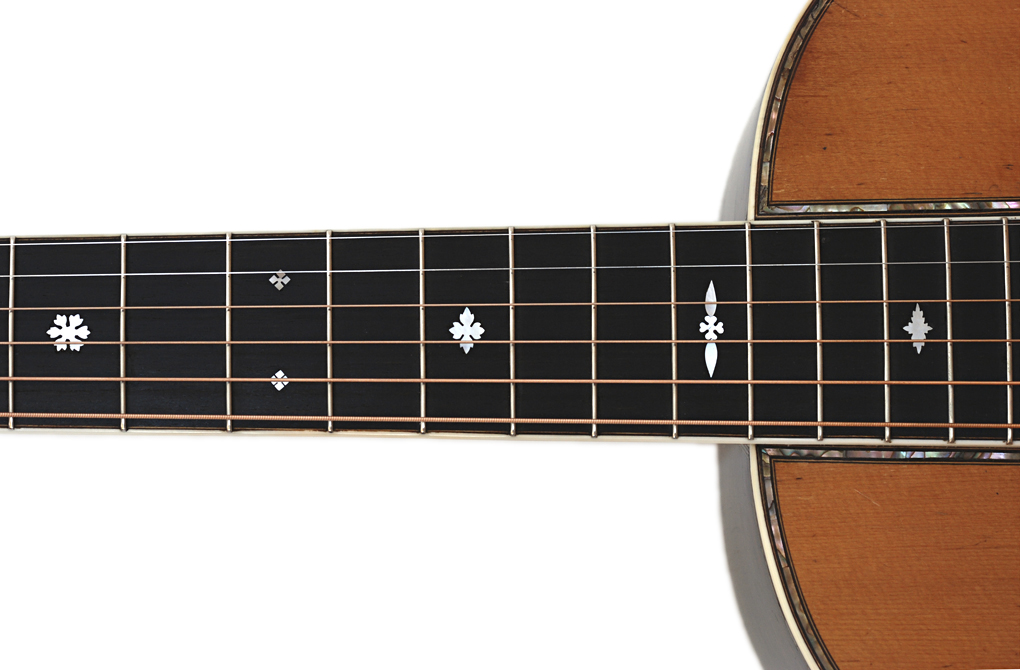
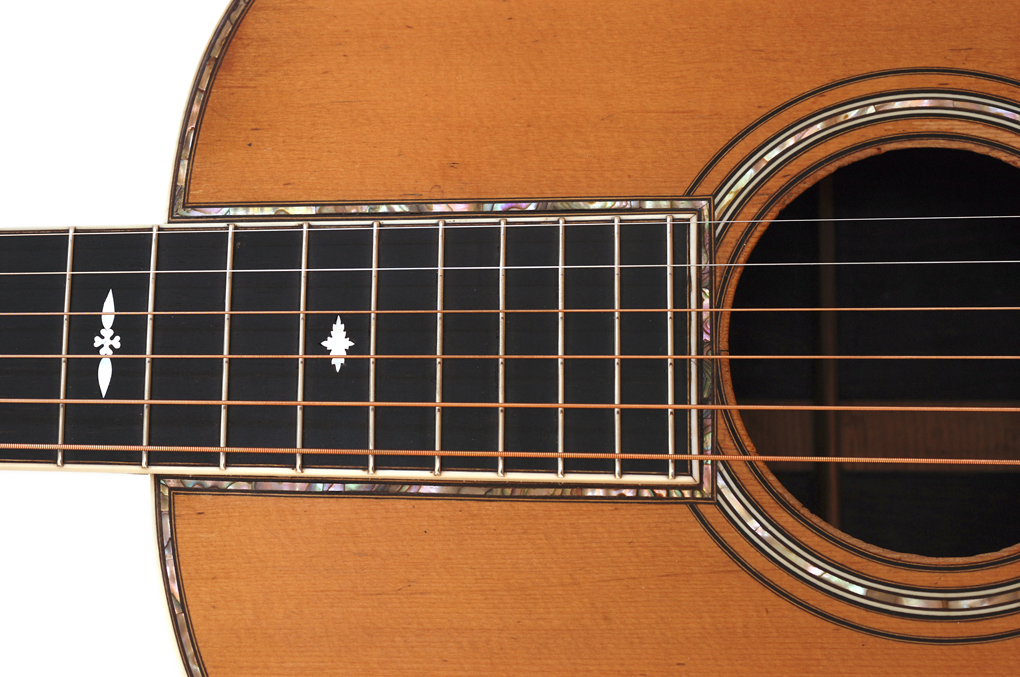
By 1910 the abalone inlays on the Style 45 included the third fret and extended to the nineteenth fret.
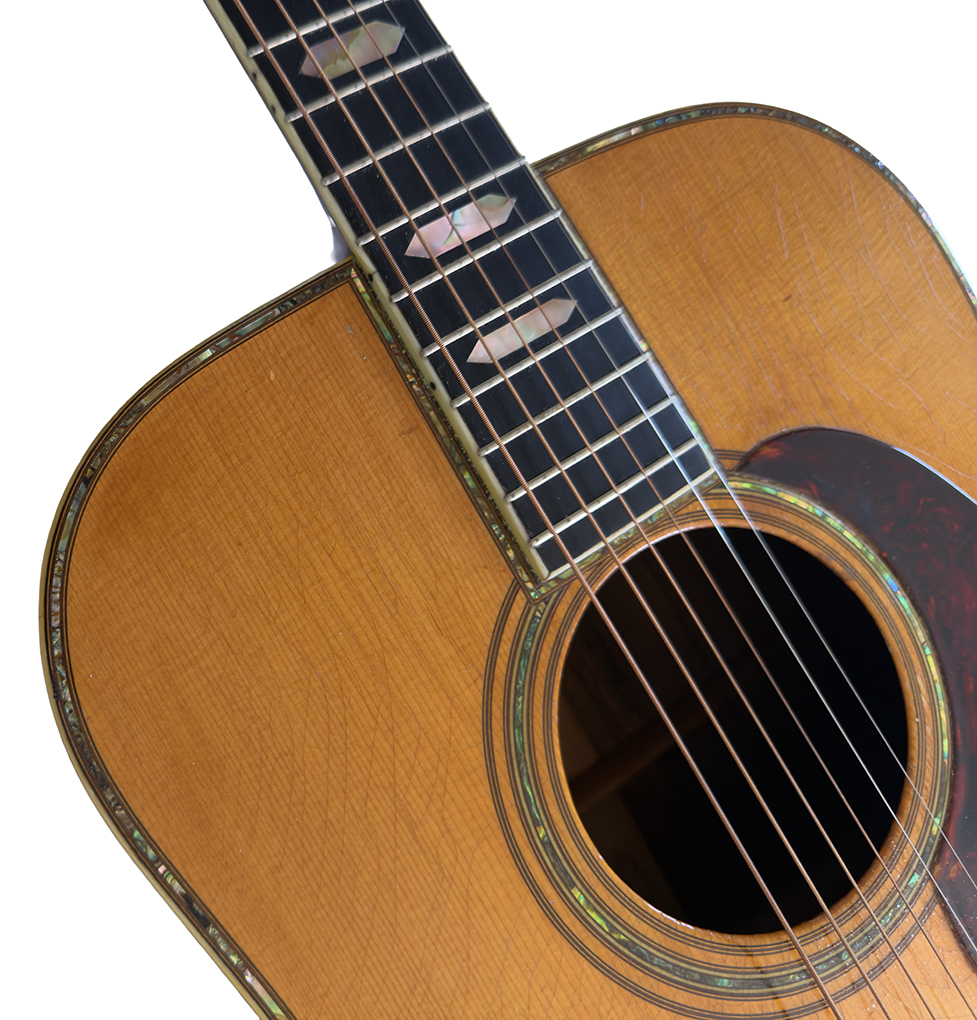
After 1938, the D-45 transitioned to the hex inlays that had been used on the F-7 and F-9 archtop guitars. The smaller body Martin retained the snowflakes.
C.F. Martin 1902 00-42 Special / 00-45 Prototype
The Style 45 sits at the top of the Martin line, and original pre-war Style 45's are the most desirable and collectable Martins.
Longworth says of the 45: "This style had it's origin in some specially inlaid 42 models. The first was 00-42 #9372 which had special pearl trim
on the sides and back as well as the top. The fingerboard had a vine on it, and there was a beutiful headstock inlay to match.... The year was 1902.
Two more 00-42 guitars with sides and back inlay were made that same year. They were #9410 and #9488."
Three more prototypes were made in 1903. According to Gruhn Guitars, of the 6 prototypes, #9488 "ended up being the closest to what became know as the style 45".
Longworth says of the headstock design: "The first headstock veneer for the style 45 guitars appears on the original prototype from 1902. It had a very intricate fern pattern.
This inlay is quite rare and is shown only in the 1904 catalog."
The 00-45 is first catalogued in 1904, but only one 00-45 was made that year. Three were made in 1905, and none in 1906, with only ten more being made in the entire decade.
One 1-45 and two 0-45's were made in 1904, and only one 000, and a grand total of 26 Style 45's of any size were made in the entire decade.
As Walter Carter says, "Available in Sizes 0, 00, and eventually 000, Style 45 was not a great success at first. Not until the opulent, carefree 1920's would sales of any Style 45 model top 10 a year."
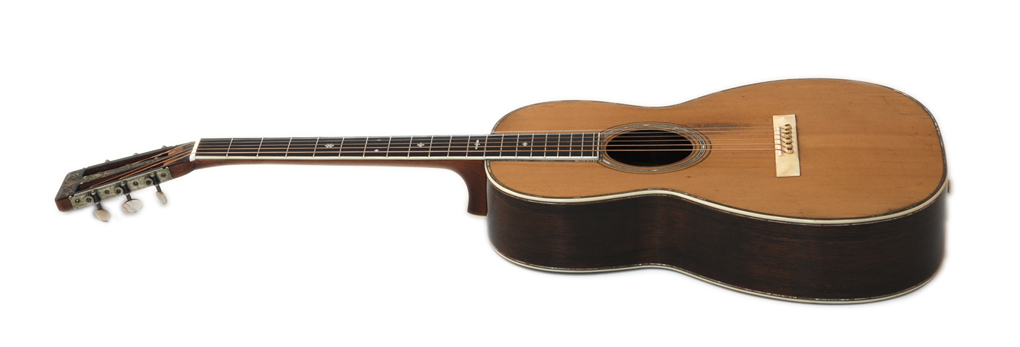
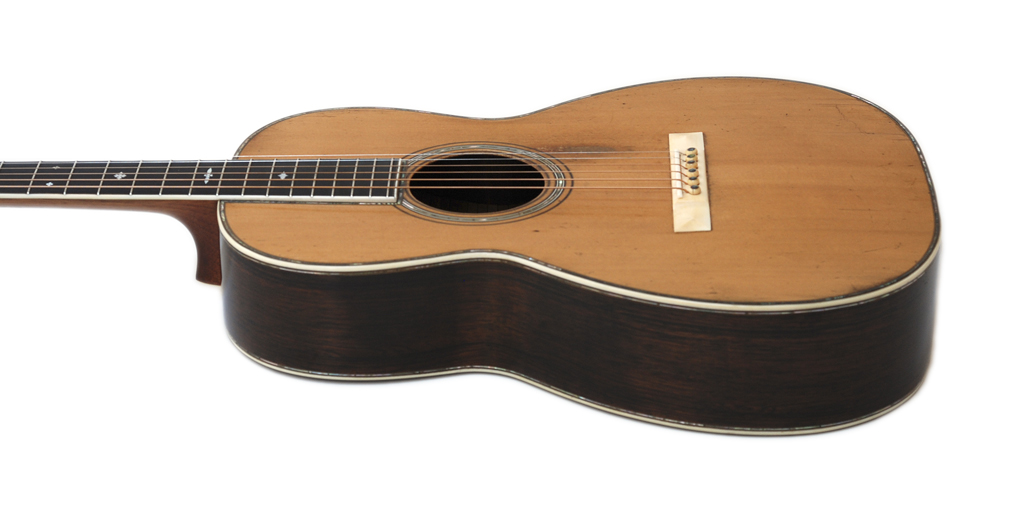
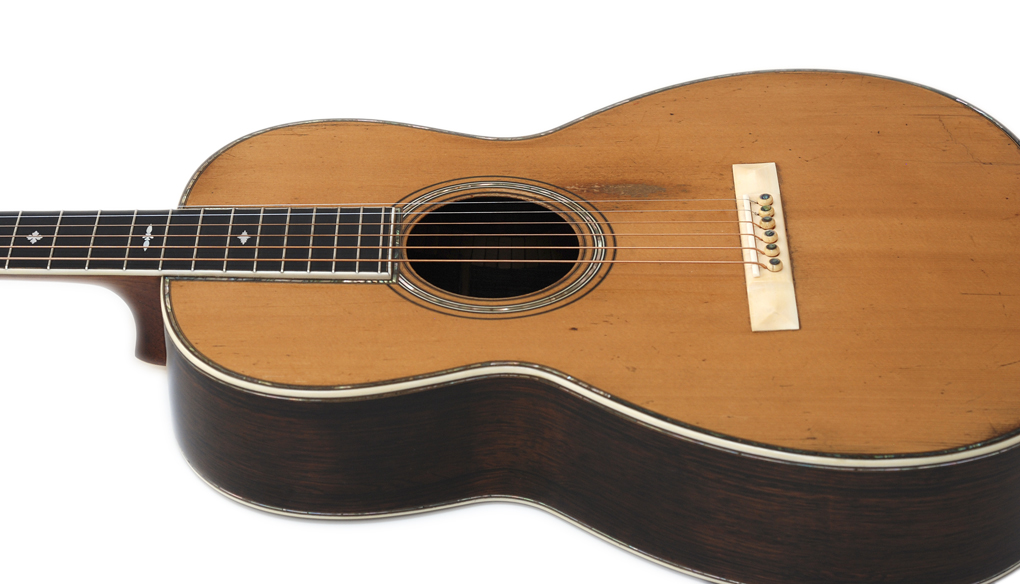
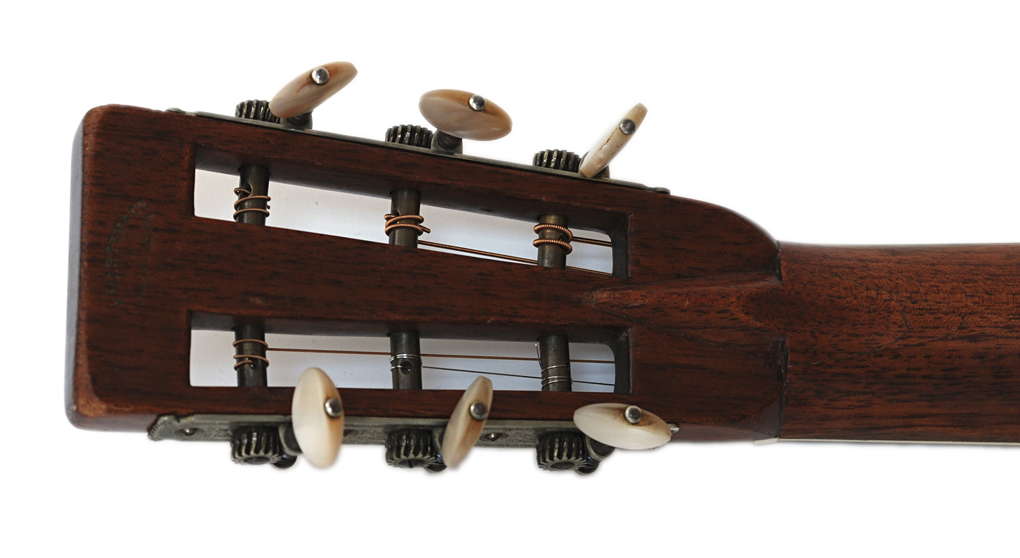
This guitar is #9488.
The pyramid style bridge is made of genuine ivory, as are the nut, saddle, bridge pins, and end pins, and the binding on the top, back and sides of the body, and also the fingerboard. The "German silver" tuning machines have buttons made of pearl. The border inlaid on the top, back, and sides of the guitar is in abalone "Japan pearl". An additonal connecting link of pearl is inlaid around the end of the fingerboard, and abalone is also inlaid into the soundhole ring, as well as the ivory bridge pins, and end pin.
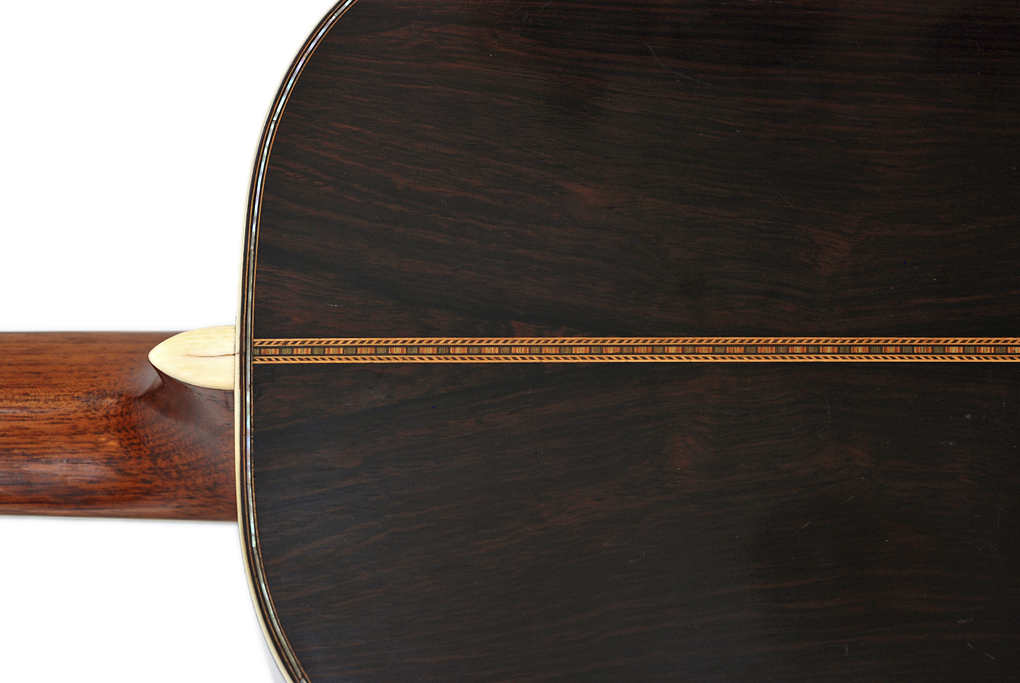
The German wood marquetry on the back of the guitar is of a design which has become known as the "45 Style" backstripe.
The back and sides are French Polished Brazilian Rosewood, and the top is most likely of German spruce. The ebony fingerboard on this protype has the "snowflake" inlays which have become distinctive to pearl inlayed Martin guitars. These inlays on frets 5, 7, 9, 12 and 15 would be standard on style 45 for a decade. In 1914, they remained on the style 42, and were expanded to three more frets on the style 45. This guitar has a dove tail joined headstock and cedar neck with volute, and scalloped X style braces.
This is believed to be the only prototype to have all of the features and inlays that would become standard on the early Style 45, and with minor modification, would become the hallmark of all Style 45 guitars for many years to come.
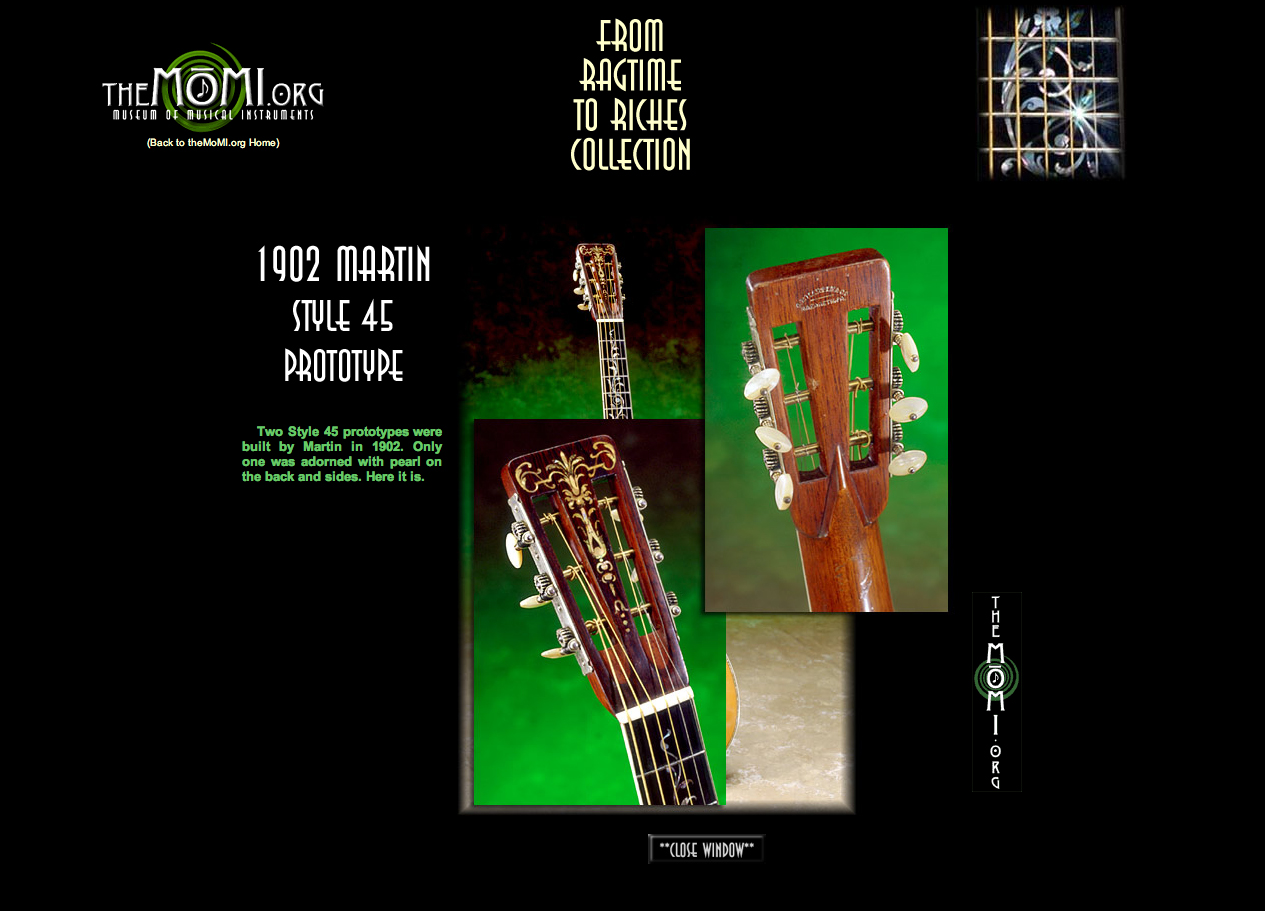
The first of the "Style 45" headstock inlays to appear on a Martin was seen on #9372, the first 00-42S, to have pearl inlaid on the back and side borders in 1902. This version was known as the "fern". This was followed by #9488, which had another version of the fern:
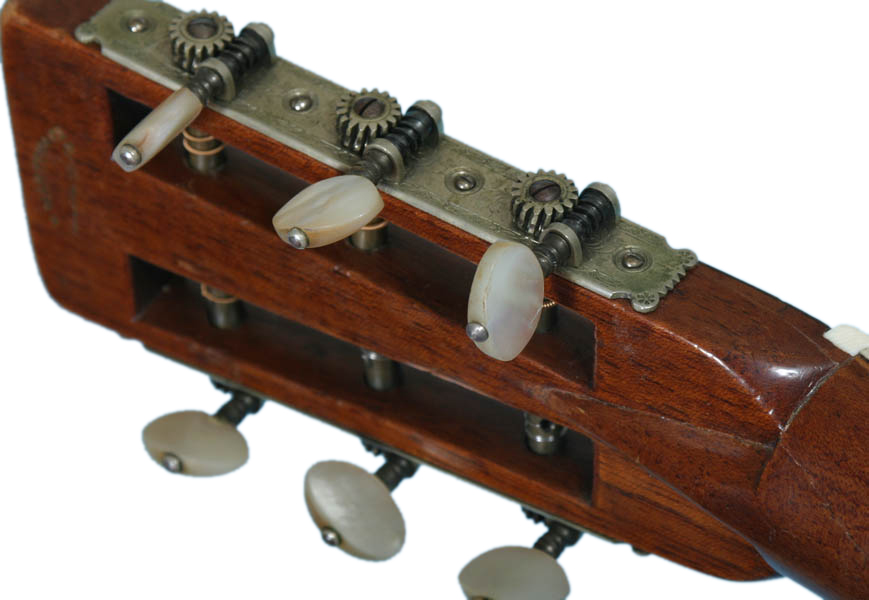
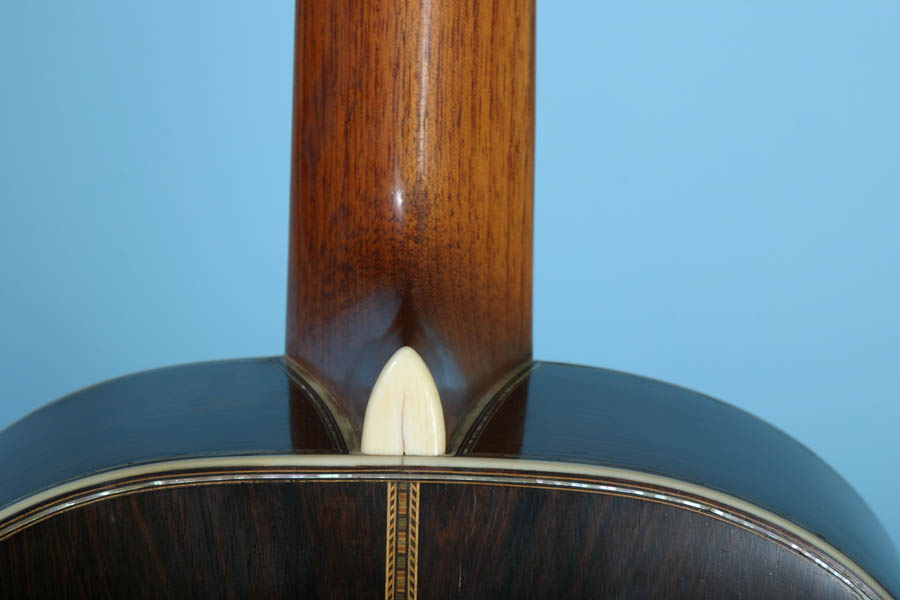
On Hank Risan's MOMI website, Mr. Risan mistakenly claims #9372 is the only Style 45 prototype with pearl inlay on the back and sides.
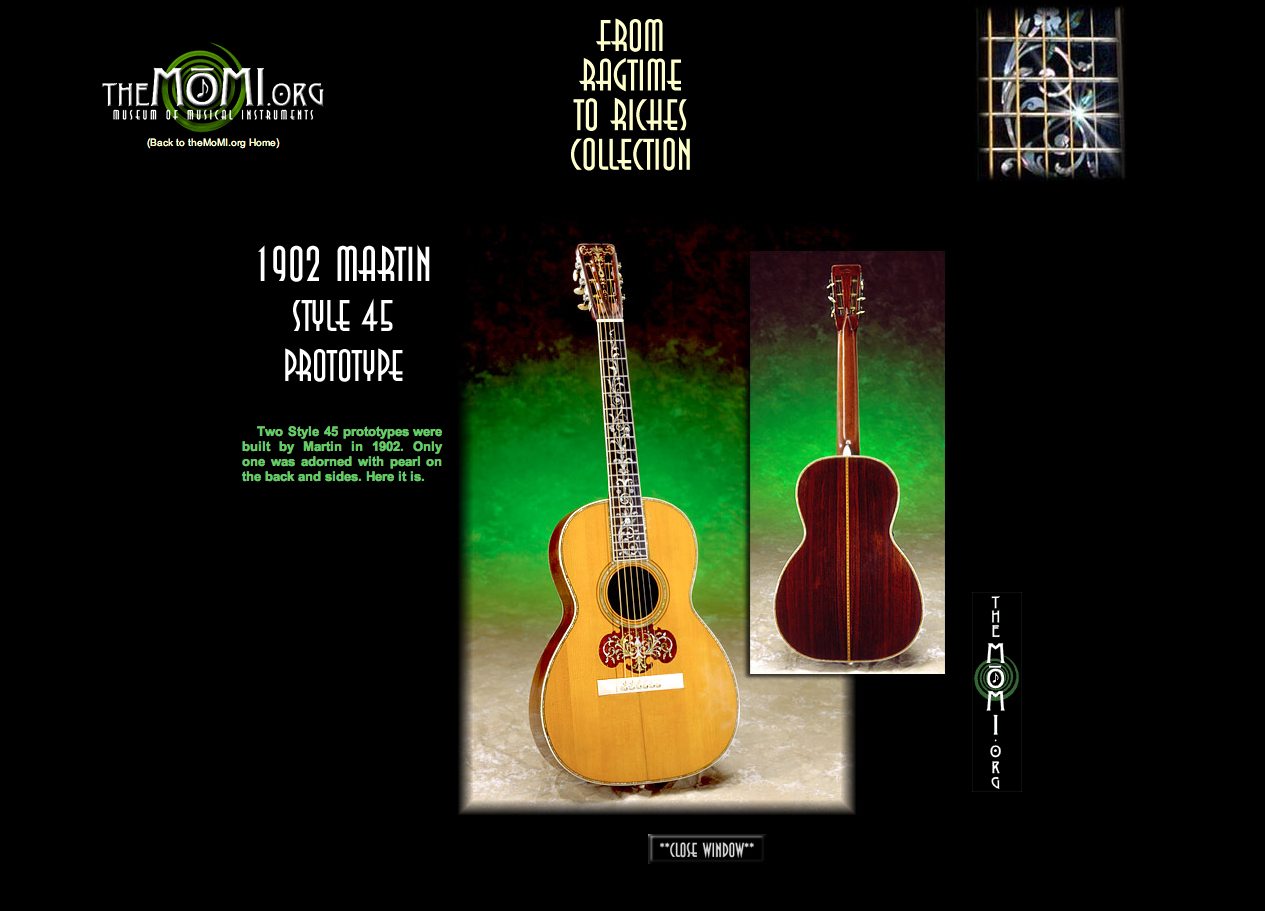
As you can see, this is not true.
In fact, #9488 is the closest of the early "Style 45 prototypes" to what would become a production Style 45.
This is from Gruhn Guitars,
Robert, Here are some more shots of the 00-45 known as 00-42 Special order. This was a 45 style pro-type. Martin messed around with 6 different prototypes and this ended up being the closest to what became know as the style 45. Let me know if you need more photos.
Christie
Christie Carter
Gruhn Guitars
As you can see from photos of Mr Risan's guitar in the first edition of Longworth, it was found with a non original belly bridge. Apparently a new reproduction ivory bridge has been made for the guitar.
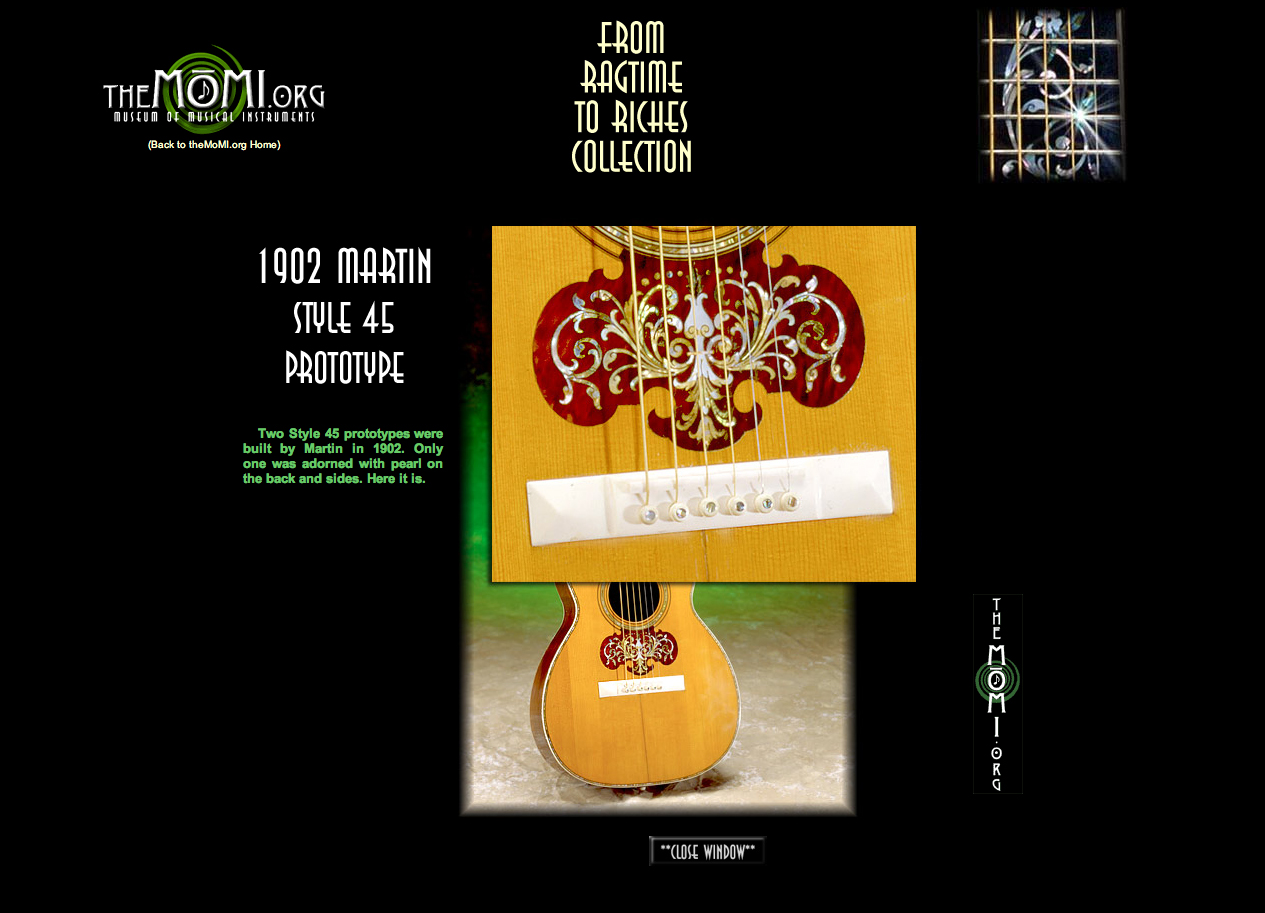
The fingerboard and pickguard inlays on #9372 are actually similar to the inlays that were standard on the higher grade Martin mandolins of the time:
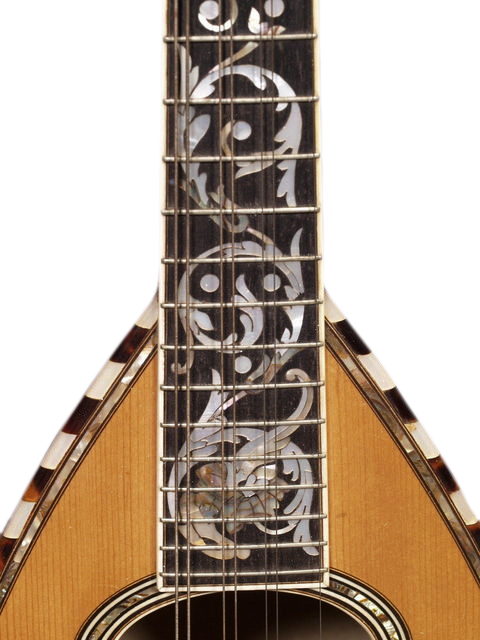
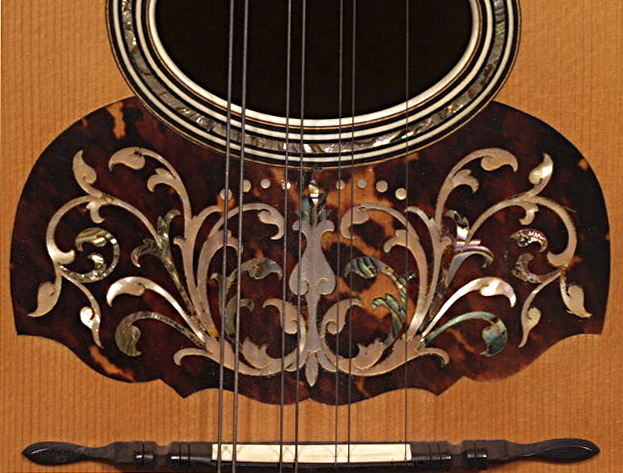
Martin has made a reissue of the early Style 45 prototypes.
New Martin Guitars Limited Edition Reissue
00-45S 1902
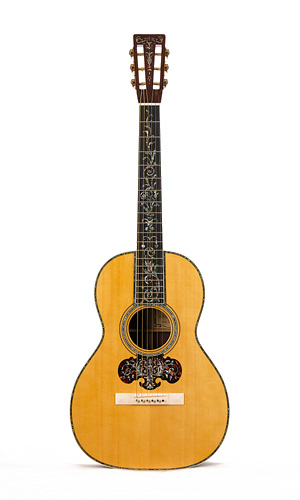
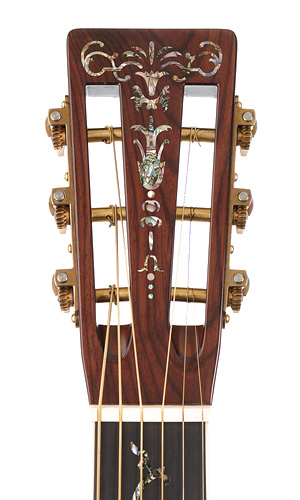
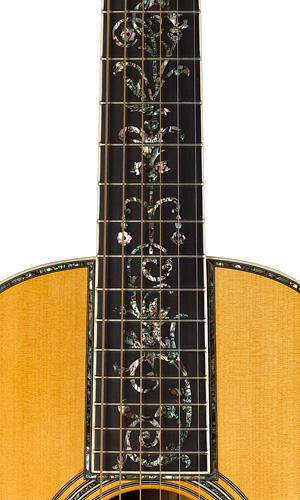
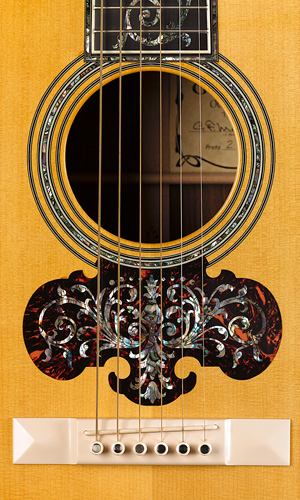
Limited Editions: 00-45S 1902
Home > Guitars > Choosing Your Martin > Inactive Model > 00-45S 1902
List Price $8999.00
Model Specifications
MODEL 00-45S 1902
CONSTRUCTION: Mahogany Blocks/Dovetail Neck Joint
BODY SIZE: 00-12 Fret
TOP: Solid Adirondack Spruce
ROSETTE: Style 45- Maple/Black Fiber Inlays
TOP BRACING PATTERN: Standard
TOP BRACES: Solid Adirondack Spruce 1/4''
BACK MATERIAL: Solid Brazilian Rosewood
BACK PURFLING: Style 45 Golden Era
SIDE MATERIAL: Solid Brazilian Rosewood
ENDPIECE: Grained Ivoroid
ENDPIECE INLAY: Select Abalone with Black/Maple Fiber
BINDING: Grained Ivoroid
TOP INLAY STYLE: Style 42 with Black/Maple/Black Fiber
SIDE INLAY: Abalone Pearl with Black/Maple/Black Fiber
BACK INLAY: Abalone Pearl with Black/Maple Fiber
NECK MATERIAL: Select Hardwood
NECK SHAPE: Modified V
NUT MATERIAL: Fossilized Ivory
HEADSTOCK: Slotted/Square Slots/Long Diamond/Square Taper
HEADPLATE: Solid Brazilian Rosewood /Flower Pot- Abalone Pearl Inlay
HEELCAP: Grained Ivoroid
FINGERBOARD MATERIAL: Solid Black Ebony
SCALE LENGTH: 24.9''
# OF FRETS CLEAR: 12
# OF FRETS TOTAL: 19
FINGERBOARD WIDTH AT NUT: 1-7/8''
FINGERBOARD WIDTH AT 12TH FRET: 2-5/16''
FINGERBOARD POSITION INLAYS: Tree Of Life- Select Pearl
FINGERBOARD BINDING: Grained Ivoroid
FINISH BACK & SIDES: Polished Gloss
FINISH TOP: Polished Gloss w/ Vintage Toner
FINISH NECK: Polished Gloss
BRIDGE MATERIAL: White Micarta
BRIDGE STYLE: Pyramid w/ Drop-in Saddle
BRIDGE STRING SPACING: 2-5/16''
SADDLE: 16'' Radius/Fossilized Ivory
TUNING MACHINES: Waverly/Sloane w/ Small Ivoroid Knobs
RECOMMENDED STRINGS: Martin MSP 4100 Light Phosphor Bronze
BRIDGE & END PINS: Fossilized Ivory w/ Black Pearl Dots
PICKGUARD: Tortoise Color inlaid into Top w/Abalone Pearl Inlay
CASE: 900 Hard Shell Coffin Case
INTERIOR LABEL: Signed by CFM IV, Numbered In Sequence with Total (60)
ELECTRONICS: Optional
OTHER OPTIONS: Available left-handed at no additional charge
OTHER COMMENTS: All prices & specifications are subject to change without notice.
Article about #9488 from Vintage Guitar Magazine
1902 Martin 00-42 Special, preview of Style 45
Photo by Kelsey Vaughn, courtesy Gruhn Guitars
By George Gruhn and Walter Carter
It has all the appointments of a Martin 00-45, particularly the abalone pearl trim around all the borders of the body, but this guitar is entered into Martin’s books as a special-order 00-42. The reason is simple: Martin did not yet have an official Style 45 when this guitar was made in 1902.
Abalone pearl trim was nothing new on a Martin in 1902, at least around the top border. Style 42 had been standardized by the late 1850s, and its abalone pearl went all the way around the fingerboard extension. The soundhole, too, featured an abalone ring (as did all of the 30-something styles, as well as Style 27). An ivory bridge with pyramid ends added a touch of elegance.
Beyond the top of the guitar, however, Style 42 was pretty plain. There was a strip of wood marquetry down the center of the back. Fingerboard inlays – initially, just three snowflakes – were a relatively recent addition, introduced in the 1890s, and the headstock was unadorned except for the Martin brand-stamp on the back
In 1902, Martin made what went down in the books as a 00-42 Special but that term hardly describes the “presentation” level of ornamentation. The fingerboard and peghead featured an intricate floral- or vine-pattern inlay. The guitar also had a pickguard – which no Martin guitars of that period had – in the style of bent-top, bowlback mandolins, with a symmetrical shape, situated under the strings. It, too, was heavily inlaid with the floral pattern. For good measure, an abalone border was added to the sides and back.
This “pearled-out” 00-sized guitar, serial number 9372, was far too ornate to be a standard Martin catalog model, but it did start people thinking about taking Style 42 to the next level. Only 38 serial numbers later (which would be the same day today but probably two months later in 1902, a year in which Martin made only 218 guitars), Martin made another 00-42 Special (#9410), with the side and back trim but without the fancy fingerboard and pickguard inlay, and 78 guitars farther down the line, Martin made yet another – this month’s feature (#9488).
Why not the larger 000 body size for these ultra-deluxe models? Again, the answer is simple. It didn’t exist yet, at least not in Martin’s standard line. The 000 was still experimental in 1902, with only five 000 examples – all designated as specials – made in that year.
Martin made more of these Style 42-plus guitars with abalone-bordered rims and back in 1903 and then in 1904 standardized the style, giving it the number 45 and offering it in the catalog. Only four guitars were logged into the books as Style 45s in that first official year of production, but they covered the most of the body sizes with a 1-45, two 0-45s and a 00-45. For the record, the first official Style 45 was one of the 0-45s. The first 000-45 wasn’t made until in 1905.
The step up from Style 42 to the abalone body borders and abalone peghead inlay of Style 45 cost the buyer $30. On a 1-45 that represented, coincidentally, a 42 percent increase from $70 to $100. The price went up $5 as the body sizes increased; the 0-42 was $75 and the 00-42 was $80, but the upcharge for a Style 45 was still $30, so the 0-45 was $105 and the 00-45 was $110.
This 1902 guitar features the first version of the Style 45 peghead inlay, which is sometimes referred to as the “fern” pattern. Martin pictured a Style 45 guitar with this inlay in the 1904 catalog and the same photo appeared as late as the 1909 catalog, but Martin had actually begun using a simpler pattern, known today as the “torch,” by 1905, and that version lasted until about 1927. A slightly simplified torch took over but only until the early 1930s. By that time Martin was switching to a 14-fret neck with a solid peghead that allowed more room for a logo and/or ornamentation than the slotted pegheads, and on Style 45 guitars (even those that retained the slotted peghead) the delicate torch was replaced with the bold, all-caps, vertically oriented CF MARTIN inlay.
Style 45 got off to a slow start. It was 1919 before production of any one model hit double digits, but Style 42 models weren’t selling much better until the 1920s. In fact, it’s difficult to assess whether guitarists preferred one style over the other because the preferences vary from one body size to the next.
The small Size 1 was becoming passé by the time Style 45 appeared, and Martin made only six 1-45s from 1904 to 1919, when the company stopped offering all the pearly styles in Size 1. In the 0-size, Style 42 outsold Style 45 through the 1920s; then both the 0-42 and 0-45 virtually disappeared in the 1930s. In the 00-size, Style 42 was more popular than Style 45, and it remained strong in the 1930s while production of 00-45s dropped to a total of 3 for the decade. In the 000-size, however, Martin didn’t put a 000-42 on the price list until 1918, so the fancier Style 45 dominated by default.
The initial designation – Style 42 special – understated just how special Style 45 Martins would become. In the pre-World War II years, it was only surpassed briefly by the OM-45 Deluxe (produced only in 1930), which featured additional inlays in the pickguard and bridge. In today’s vintage market, Style 45s follow the same pattern as they did in their original listings. The larger the body, the greater the value. The largest of the prewar models – the D-45 – is, of course, the Holy Grail of vintage Martins.
Although Martin has offered models in recent years with higher model numbers than Style 45, along with many limited-edition, commemorative or artist models with fancier appointments, Style 45 remains today as it was when this “pre-45” guitar helped to get the Style 45 ball rolling in 1904 – simply Martin’s top style.
I believe there are two inaccuracies in this article.
"Only 38 serial numbers later (which would be the same day today but probably two months later in 1902, a year in which Martin made only 218 guitars), Martin made another 00-42 Special (#9410), with the side and back trim but without the fancy fingerboard and pickguard inlay, and 78 guitars farther down the line, Martin made yet another – this month’s feature (#9488)."
#9410, now in California, has the same presentation features as #9372. #9488 is in fact the first 00-45 prototype with "standard" Style 45 features, and not designed as a presentation model.
"This 1902 guitar features the first version of the Style 45 peghead inlay, which is sometimes referred to as the “fern” pattern."
#9488 has the first version inlay in the sense that it is a fern as opposed to the later torch.
However, it is a second and quite different fern.
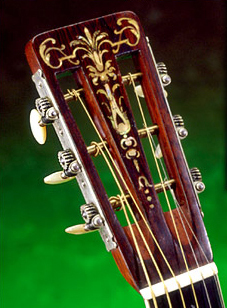
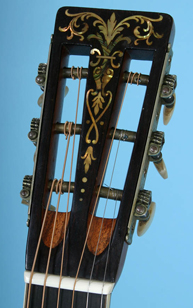
#9372 #9488
The inlays on #9372 have been copied on the reissue guitar.
However, the inlays on 9488 have been reproduce in recent years on numerous special edition guitars, and has become known as the Martin "Alternate Torch"
Fern pattern on #9372:
Style 45 Prototype inlays
You will also notice that the inlays on #9488 are slightly different than the inlays that would become standard on a style 45 when inlays were added to additional frets. Also, the original inlays were produced from white pearl, while later fingerboard inlays were produced from green Abalone.
vintagemartin.com
To See Robert Corwin's Classic Photography of Folk and Roots Musicians, visit:
For Information on Photography for
Exhibition, Publication, CD's, Promotion, Web Pages, Tour Books,
to Purchase Photographic Prints, or
If You Have Questions or Suggestions About This Web Site or Vintage Martin Guitars:
e-mail: Robert Corwinentire site copyright ©1998 through 2011 Robert Corwin/Photo-Arts. All rights reserved.