C. F. Martin Dreadnaught Guitars

Early C.F. Martin Dreadnaught Guitars Made for Oliver Ditson & Co.
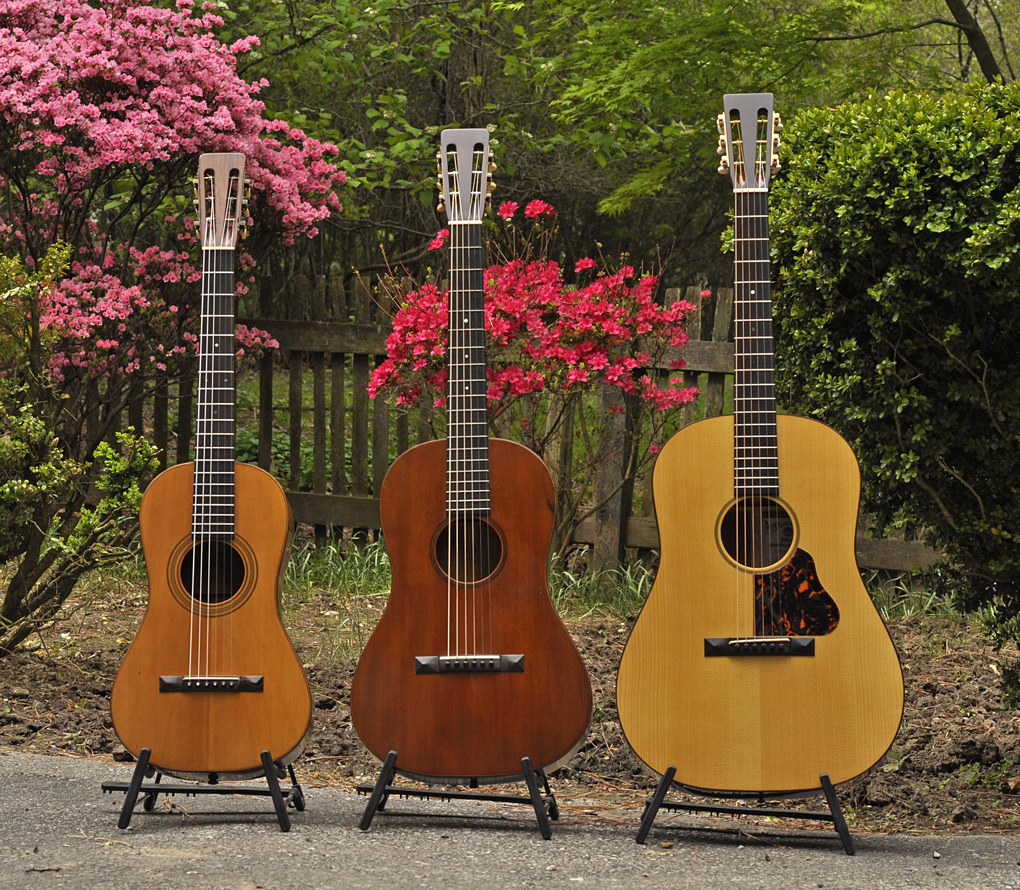
The "Standard" size Ditson Model 1-21, "Concert" size Ditson Model 11, and "Extra Large" (Dreadnaught) size Ditson Model 111 reissue.
Ditson was a large music retailer with stores in New York and Boston (and earlier in Philadelphia), and was one of Martin's largest customers, selling guitars and other instruments, including many mandolins.
Martin's "Ditson Model" guitars, with their wide waisted body shapes reminiscent of early European guitars, were made expressly for the Ditson Stores and came in three sizes, Standard, Concert, and Extra Large.
The Standard Model has a width at the lower bout of 11 1/8"
The Concert Model has a width at the lower bout of 12 3/4"
The Extra Large Model has a width at the lower bout of 15 5/8"
The Extra Large model, requested by Harry Hunt of the Ditson Company, and designed with the help of Martin shop foreman John Deichmann, became known as "the Dreadnaught", after a class of large British battleships, and was the first Dreadnaught guitar ever made.
While the proper spelling of the "Dreadnought" ships is spelled with an "o", Martin used the spelling "Dreadnaught" with an "a" until changing to the proper spelling in the early 1960's.
Since my web site is about Vintage Martins from the earliest days until the 1960's, I have chosen here to use the spelling that was in use at and contemporaneous to the time of the instruments I'm describing.
The Ditson Models had their own model designations, and unlike other Martins, their trim level was designated as 1, 2, or 3, but their size was designated by the number of digits, ie. 1, 11 or 111.
All of these regular Ditson Models were made with a spruce top and mahogany back and sides.
Some Ditson Model guitars have either lighter orange tinted tops or dark stained tops. In some years the stained top was an option.
While fan bracing is generally associated with lighter guitars made for gut or nylon strings, the Ditson models have the same style of fan bracing as seen on the koa wood guitars made for the Southern California Music Company, which were originally made to be played with heavier steel strings in the Hawaiian style.
Starting in the 1920's, Martin began supplying Diston with X braced Dreadnaughts set up for standard Spanish playing.
A Bone To Pick
Martin "D-28 Herringbone" Guitars
Since it's inception in the 1850's, the Style 28 Martin has been recognized by it's herringbone purfling on the top border of the guitar made of fine wood marquetry imported from Germany. In 1947, as the supply of available herringbone marquetry purchased before the war dissipated, the manpower needed to handle old world craftsmanship became harder to find, and tastes moved towards "post-war modern", Martin replaced the herringbone border with the simple border of straight lines introduced with their archtop guitars in 1931.
In the post-war years, the pre-war D-28 dreadnaught, with it's large body and powerful sound, enhanced by the scalloped bracing used until 1944, became the preferred guitar of musicians playing Bluegrass music. As the limited number of pre-war D-28 Martins became sought after and legendary, players in the Bluegrass community began referring to them as "D-28 Herringbones", to differentiate them from later examples of the model. With time, the term "D-28 Herringbone" was shortened to be referred to in slang as "A Bone". Eventually these terms were adopted by the community of Martin collectors as well.
Martin produced 2,054 14 fret D-28 with herringbone trim. Of these, almost 1,600 had red spruce tops, approximately 1,410 were made with the more desirable scalloped bracing, and roughly 575 of these were built with "forward bracing".
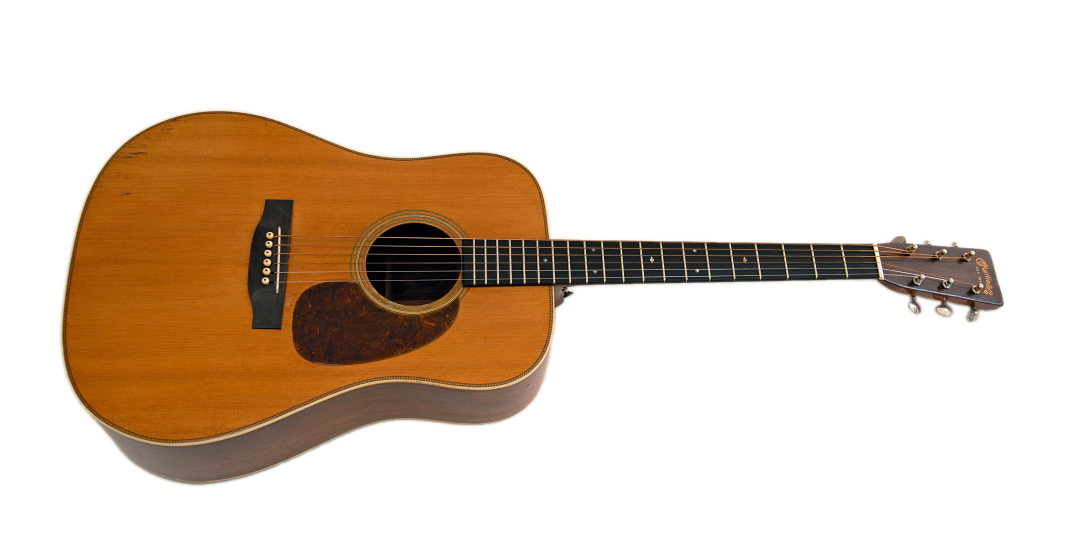
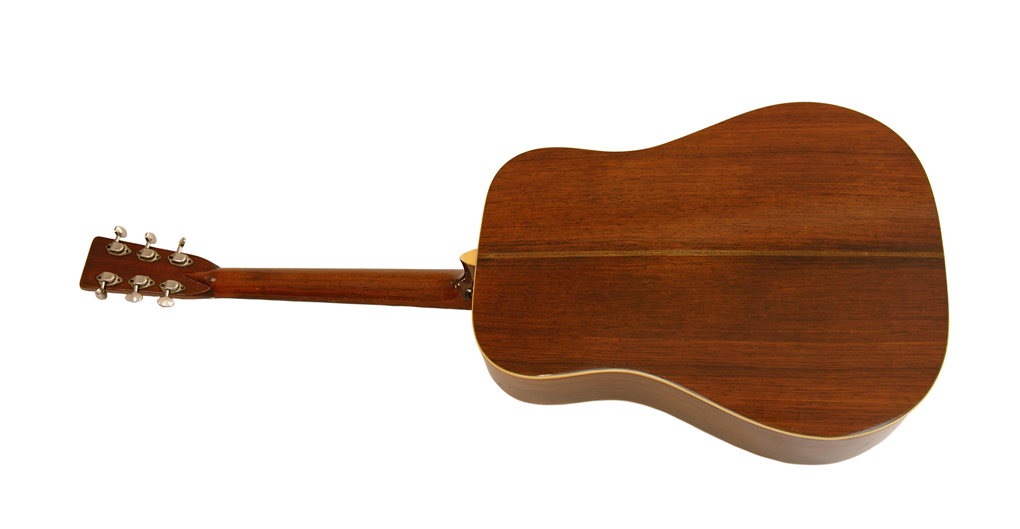
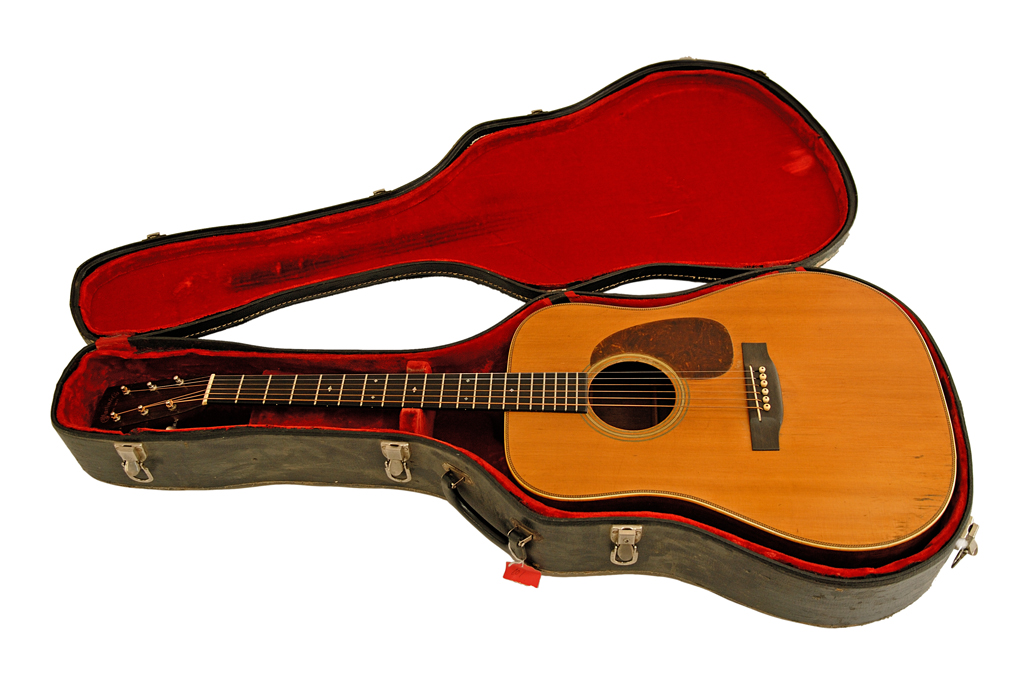
1939 Martin D-28
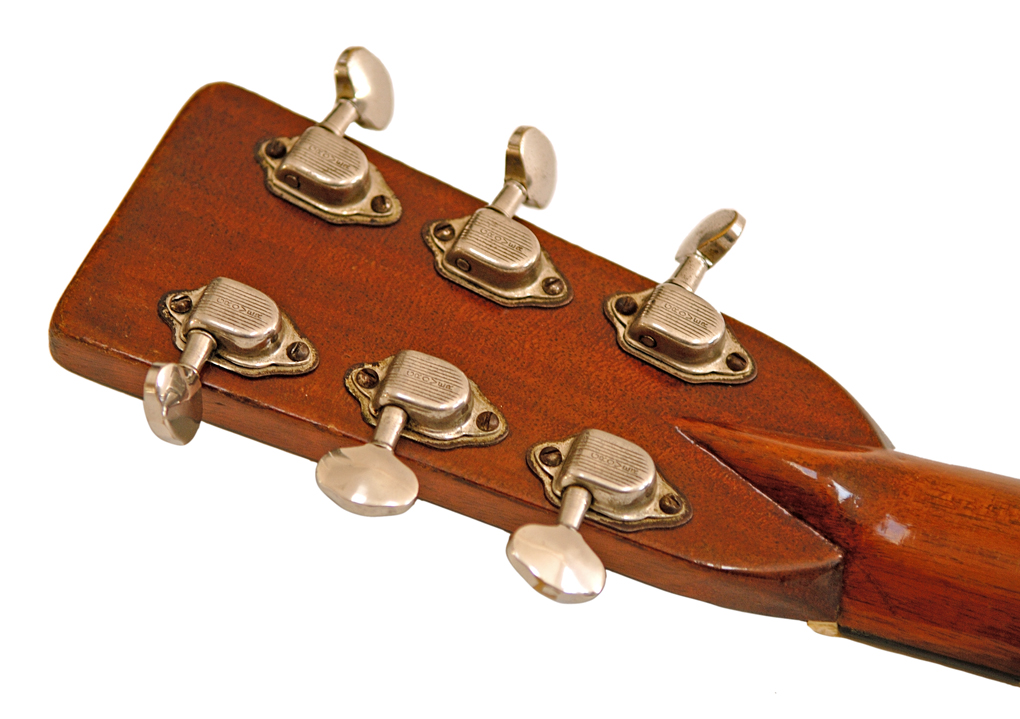
This guitar has a replacement ebony bridge and maple bridge plate. Original enclosed Grover G-111 tuners. One of 123 herringbone scalloped braced dreadnaughts built in 1939.
Serial number 73404

C.F. Martin D-18 Guitars
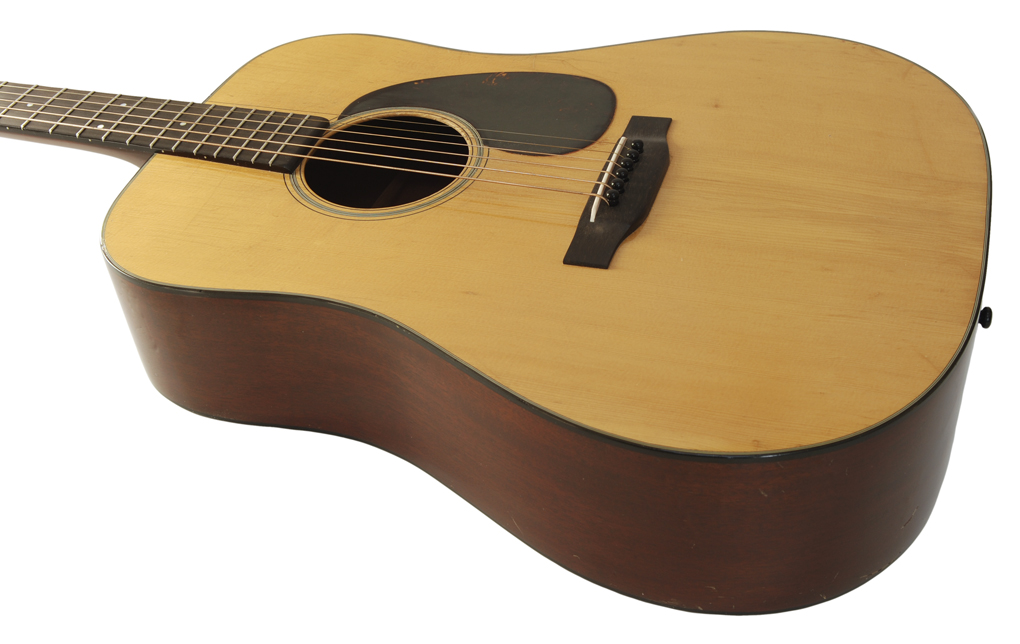
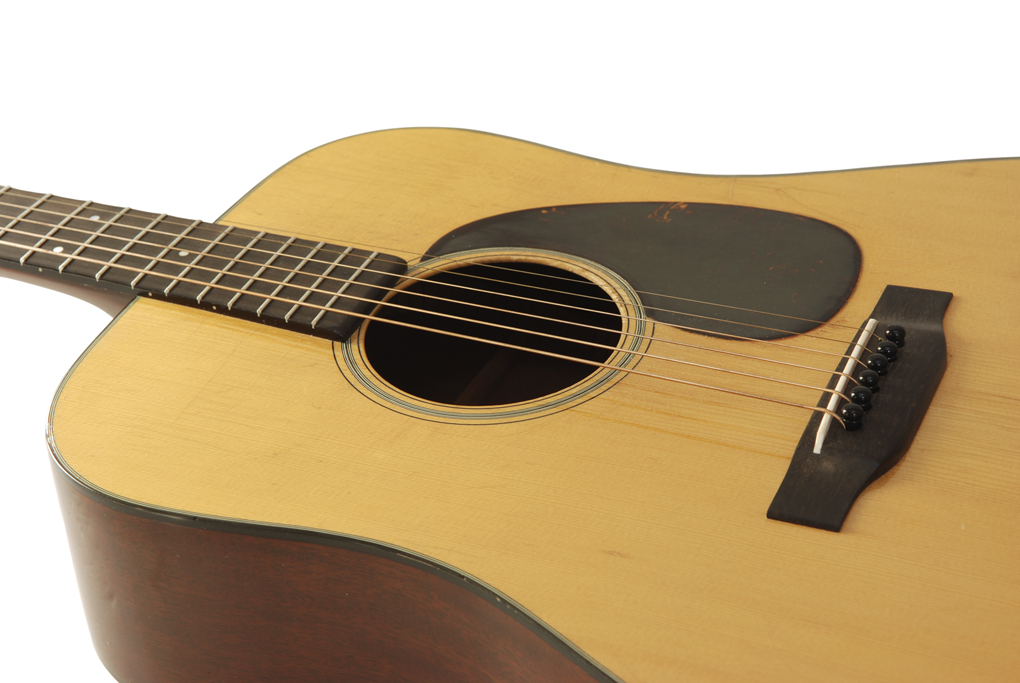
Beacause the Style 18 has little trim, there is less to distinguish the pre-war D-18 from later ones visually from the outside. The important pre-war D-18 details are the scalloped bracing and the use of red spruce for the soundboard, both of which contribute to their responsive sound.
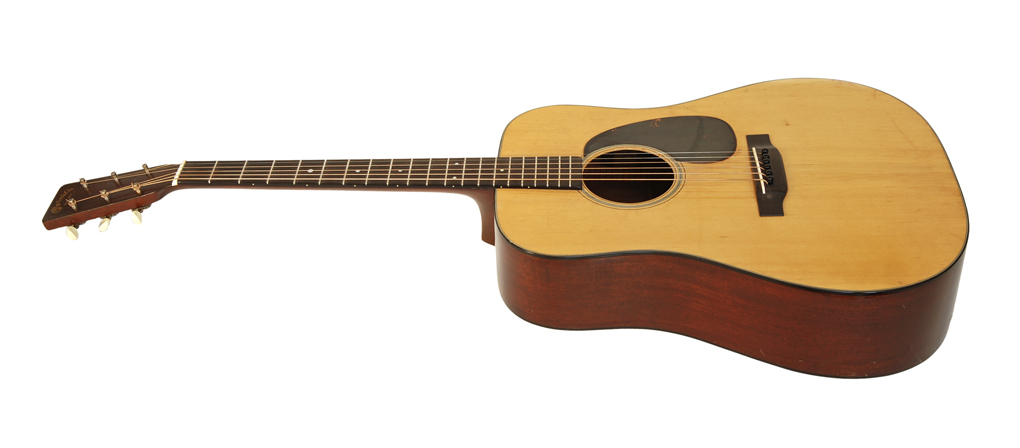
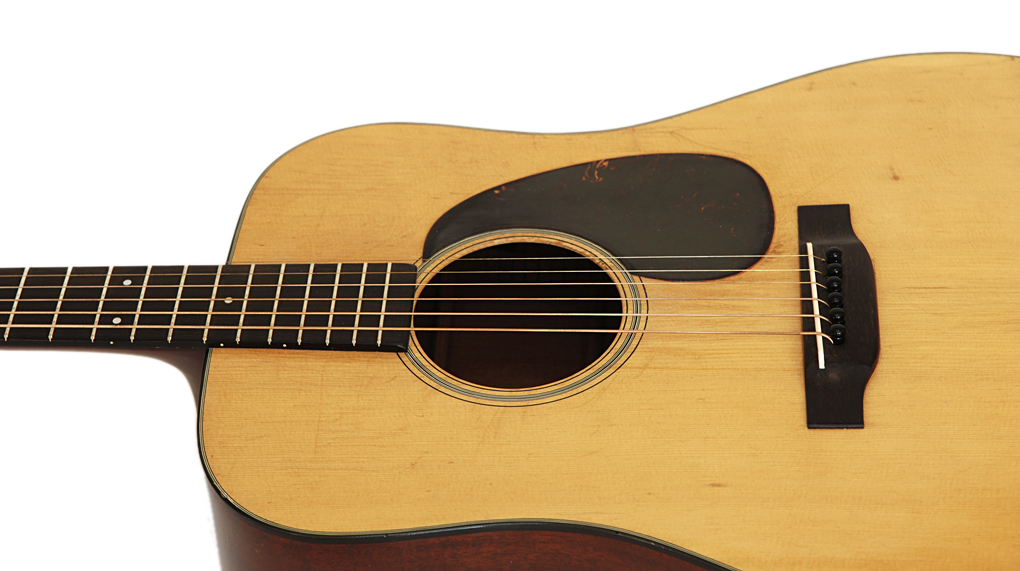
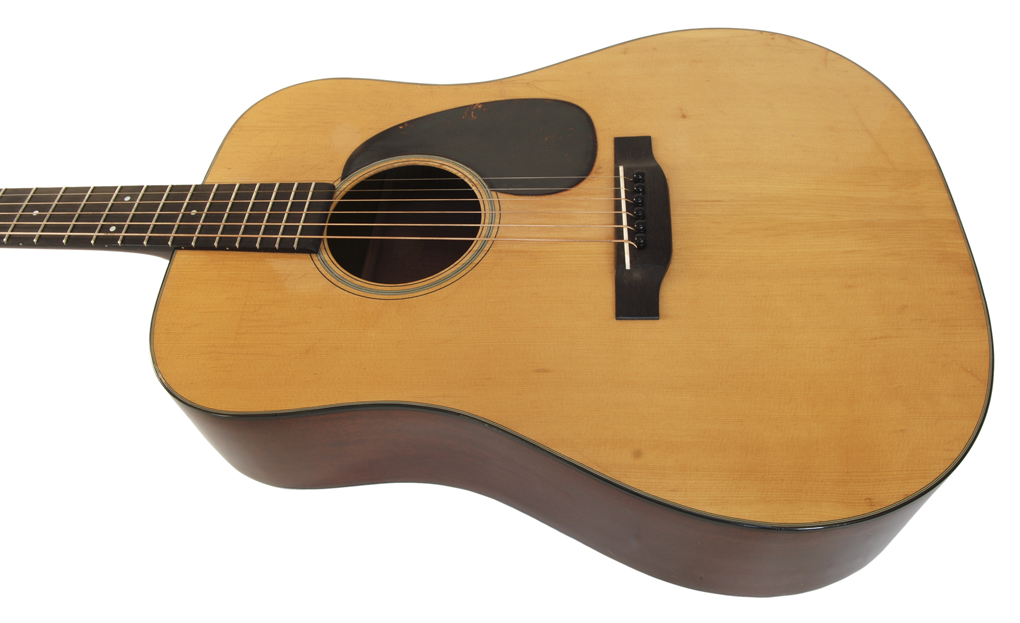
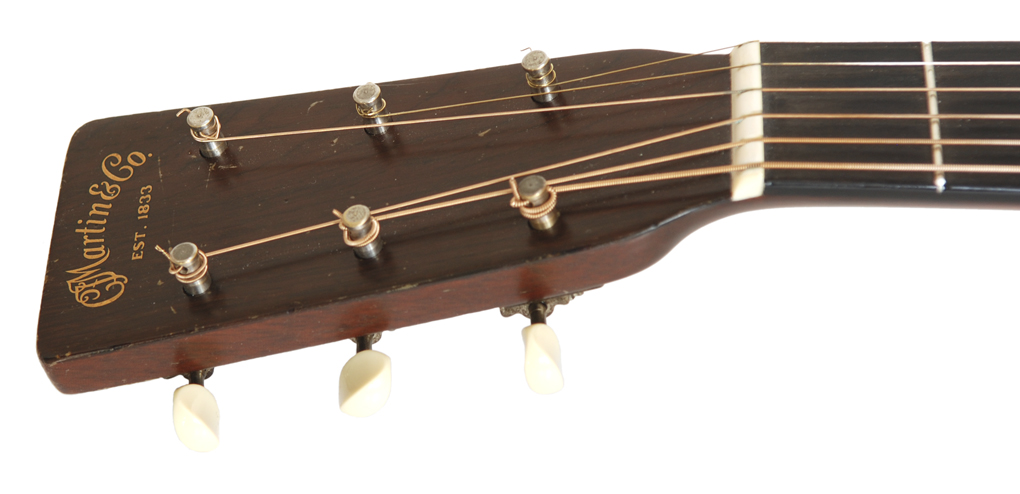
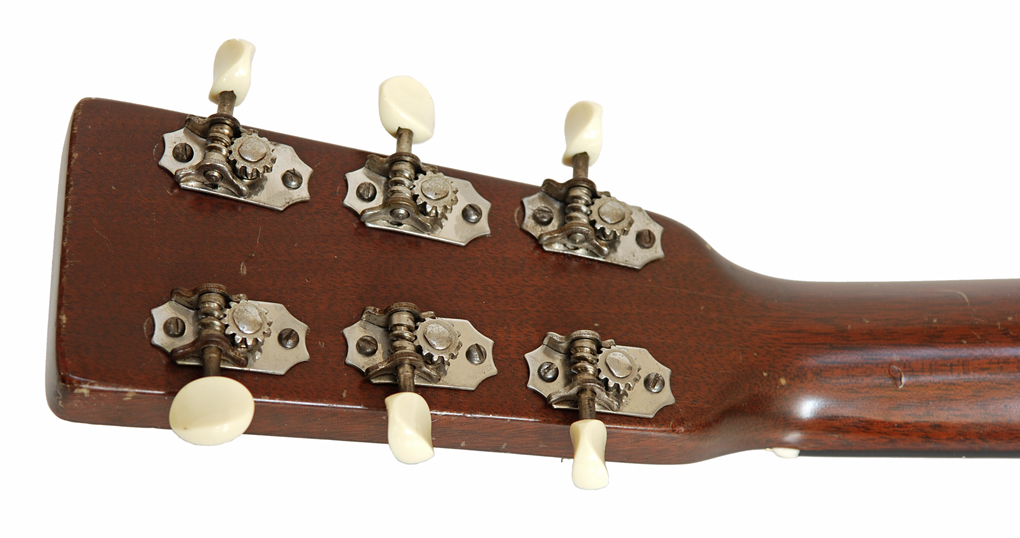
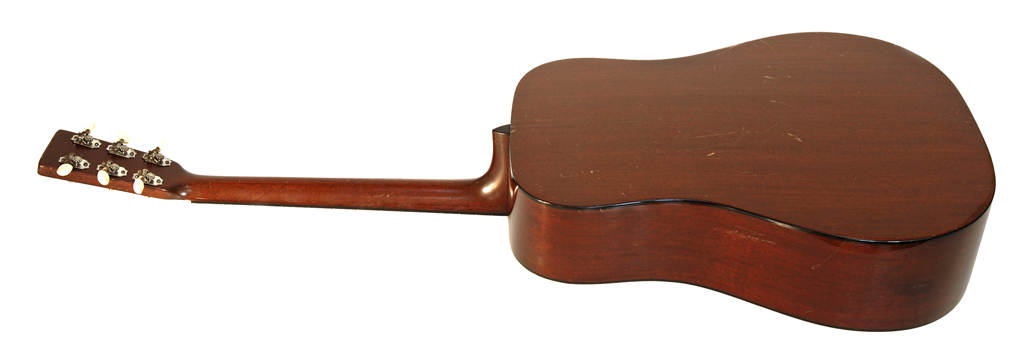
1944 Martin D-18
Red Spruce top, scalloped bracing, and ebony neck rod. Appears original except for apparent Martin Factory overspray on back and sides, and possible light overspray on spruce top.
Serial number 88616
C.F. Martin D-45 Guitars
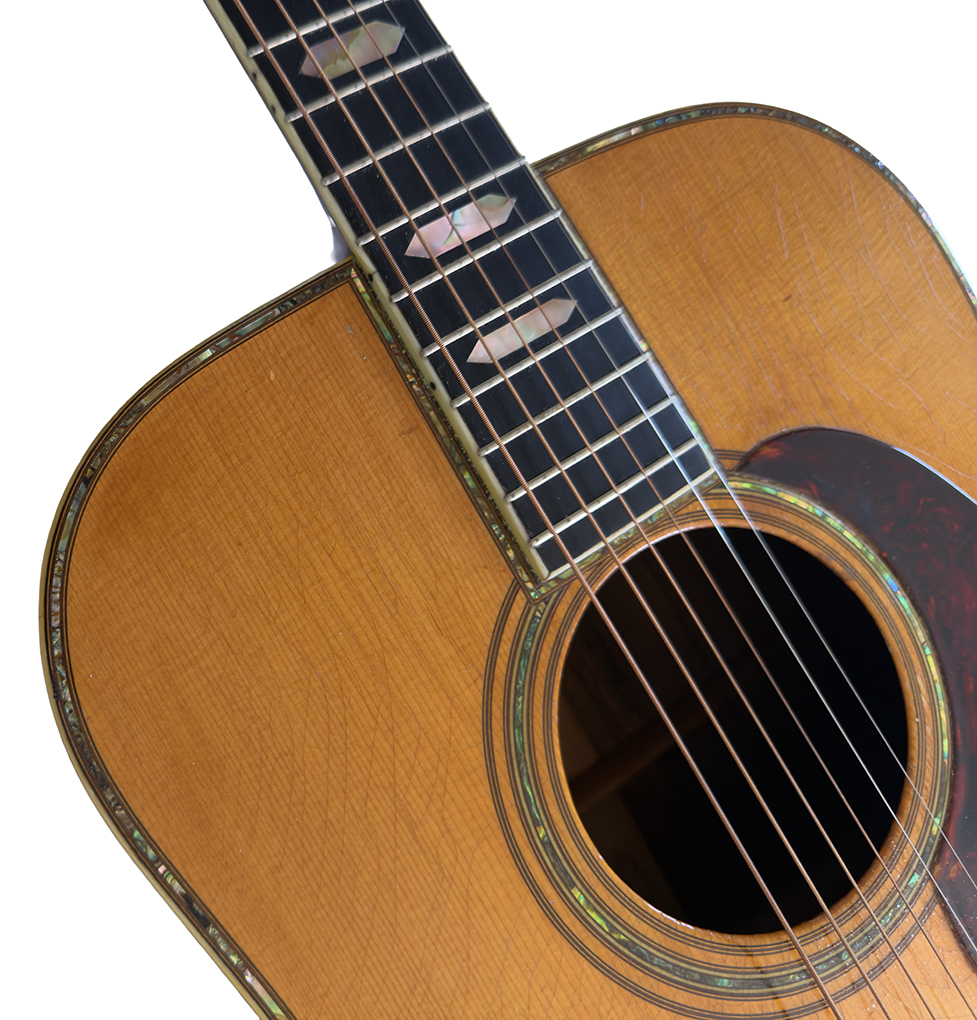
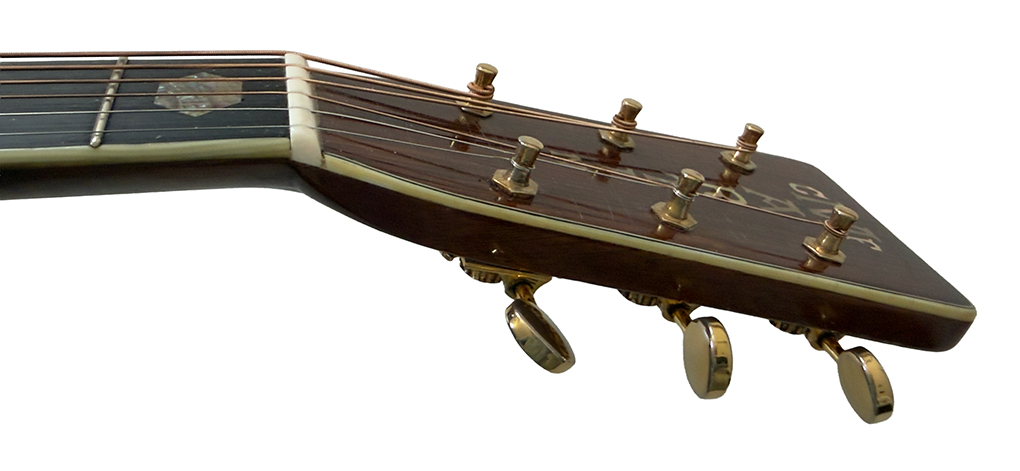
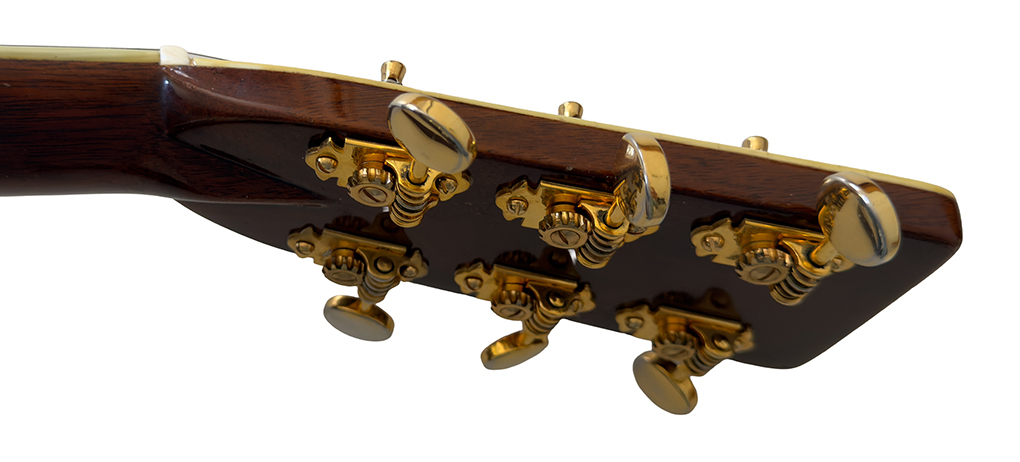
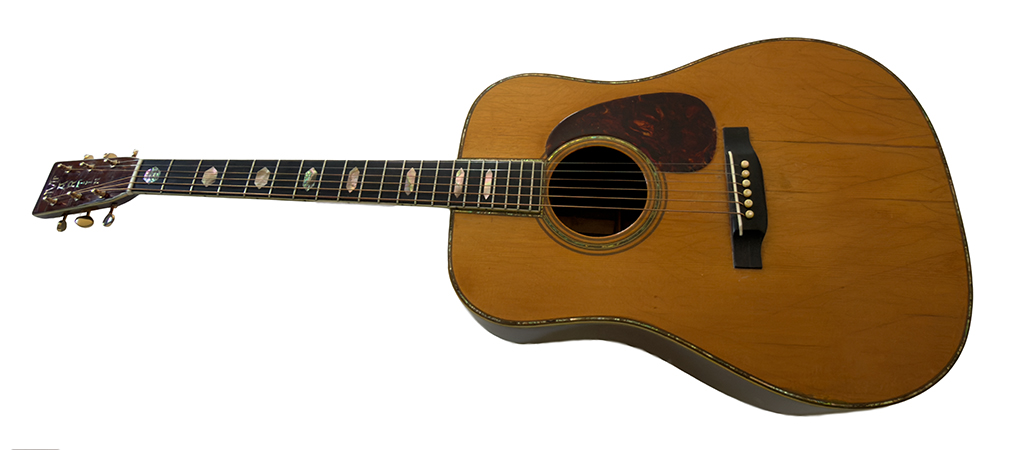
1941 D-45
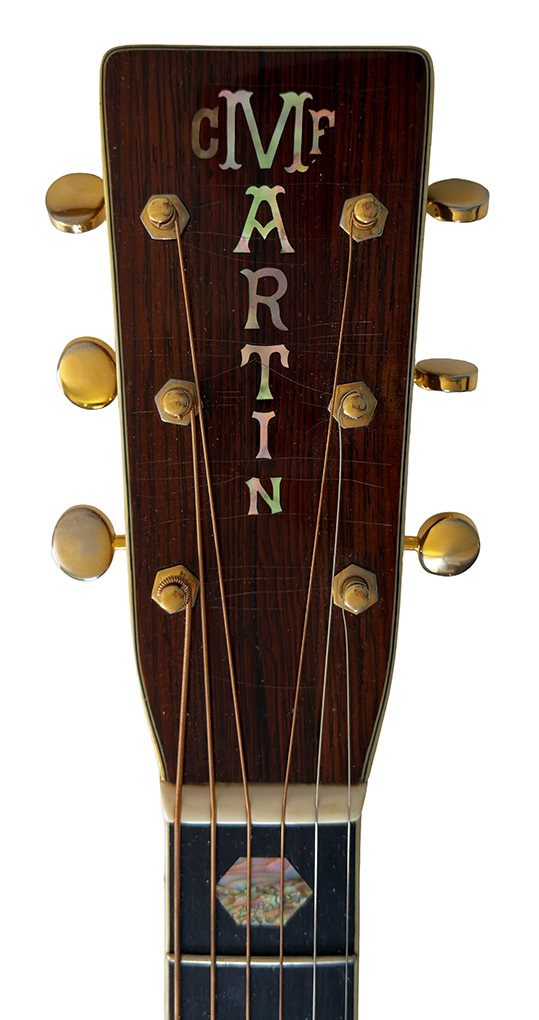
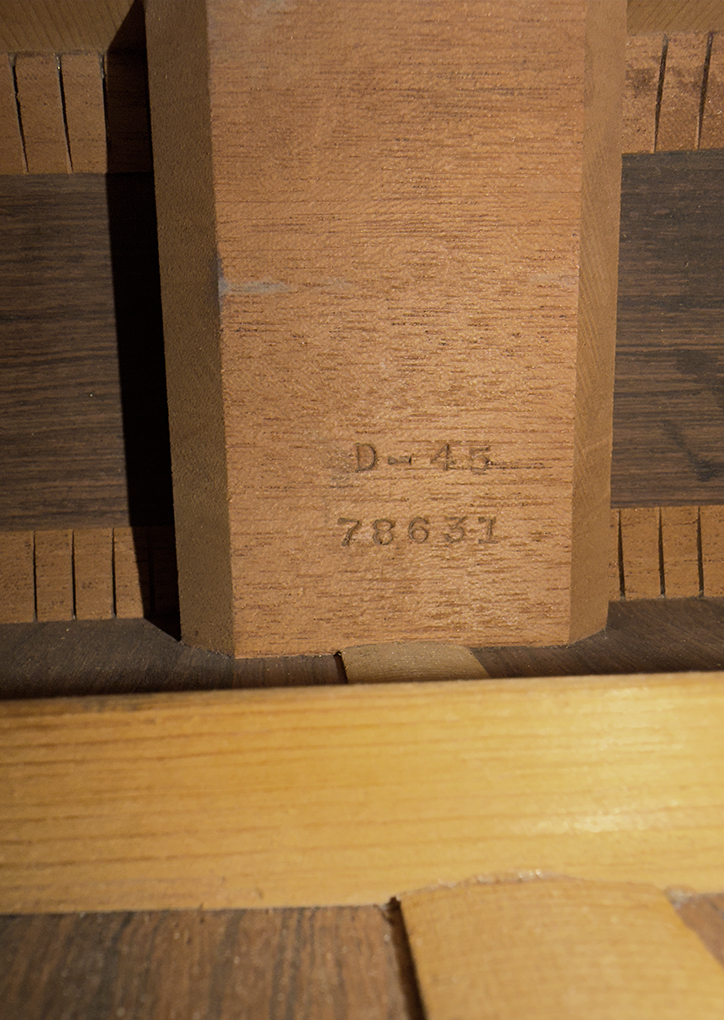
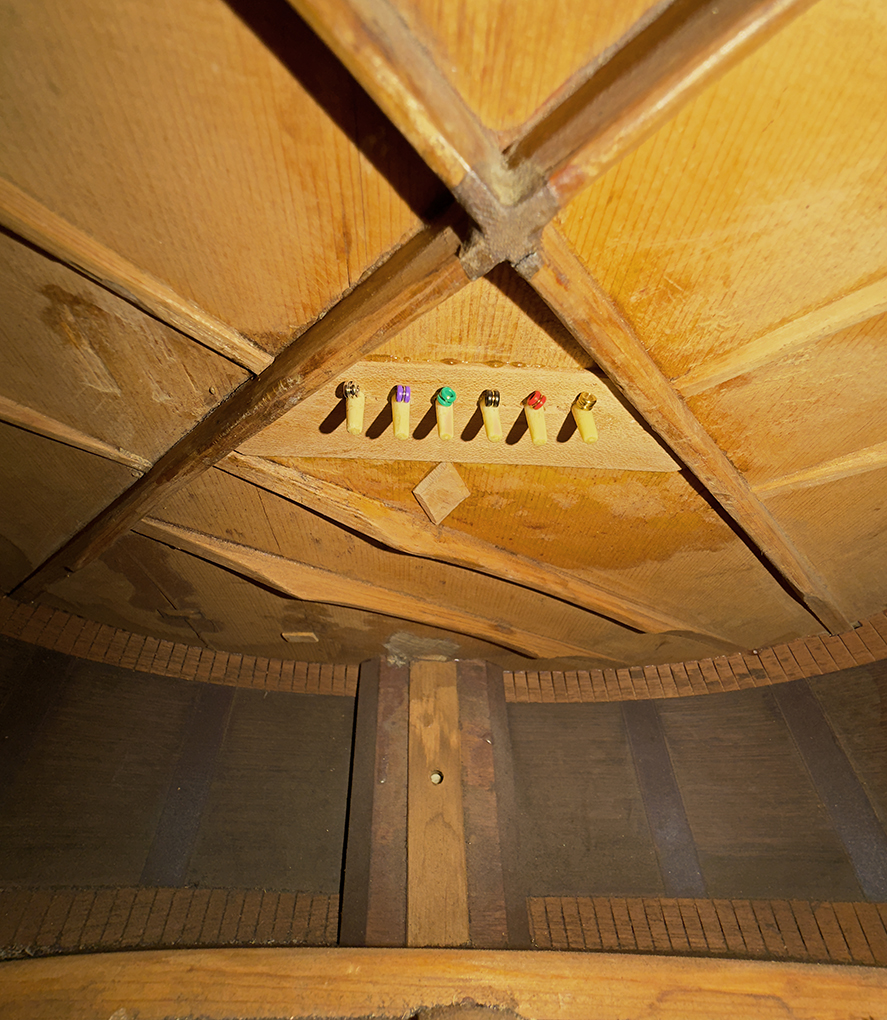
In the pre-war years, Martin produced only 91 Dreadnaught guitars in the 45 Style. The first of these were 12 fret guitars with snowflake inlays, the first of which was built for the Singing Cowboy movie star Gene Autry. After 1938, the D-45 adapted the hex inlays of the archtop F-7 and F-9.
While Vintage expert and dealer George Gruhn labels calls these the "Holy Grail" of Martin Guitars, it is interesting that he labels only the pre-war Martins with forward shifted X bracing an 1 3/4" wide necks as being "Golden Era", while all but 9 of the "Holy Grail" D-45 are wartime guitars with rear shifted bracing and 1 11/16" necks!
The D-45 was discontinued after 1942 when WWII due to wartime shortages of materials and skilled craftsmen.
After Mike Longworth of Chattanooga, Tennessee had been customizing later D-28 with pearl inlays, he was hired by Martin in July, 1968 to reintroduce the Martin D-45.

12 FRET DREADNAUGHTS
The Dreadnaught, as built for the Ditson Company, and then for Chicago Musical Instruments was originally designed as a 12 fret guitar. As early as 1932, Martin had a request for a 15 fret Dreadaught, to which Mr. Martin replied that it couldn't be done. He could build a 14 fret, but thought that it would be a terrible idea, as the bridge placement wouldn't be right, and the dealer accepted a 12 fret. On January 22nd of 1934, Martin built their first "orchestra Model" 14 fret D-28, followed by three more on March 9th.
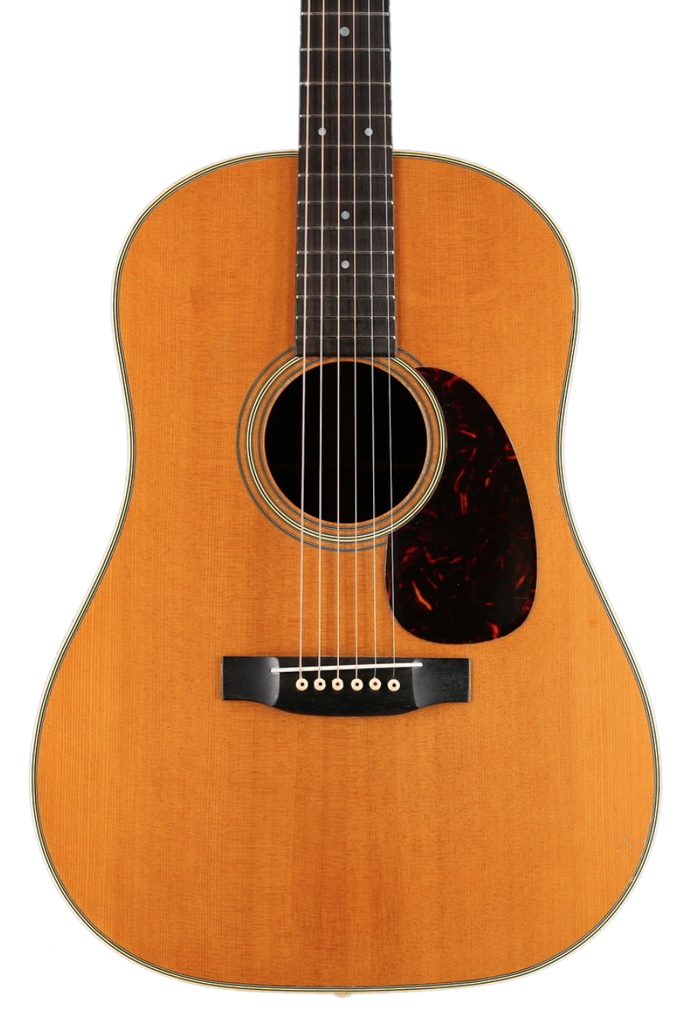
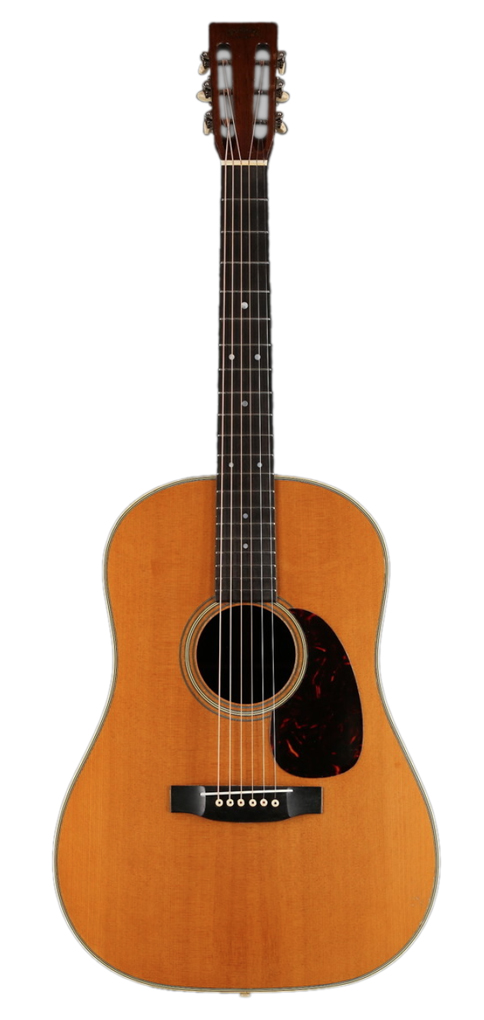
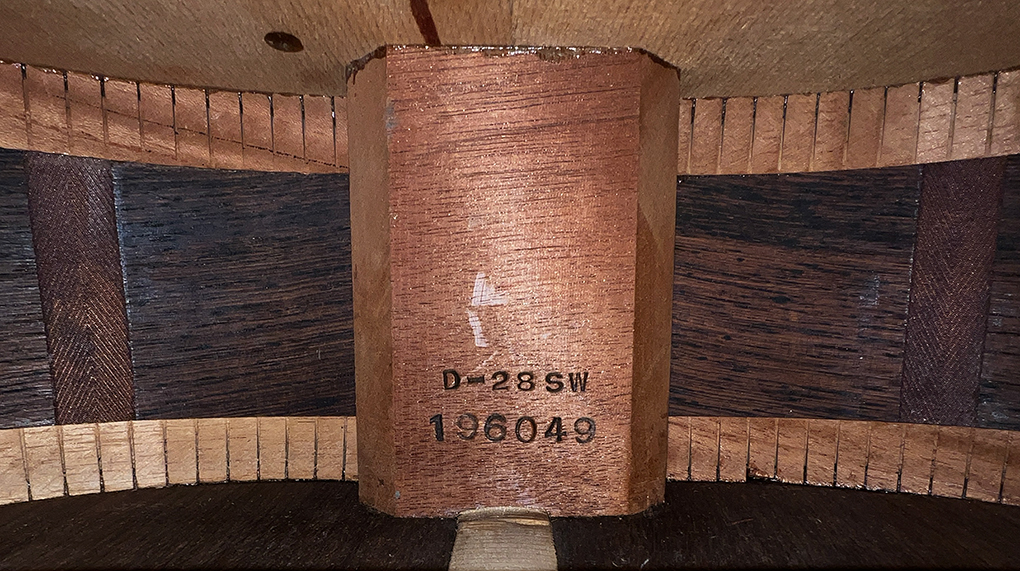
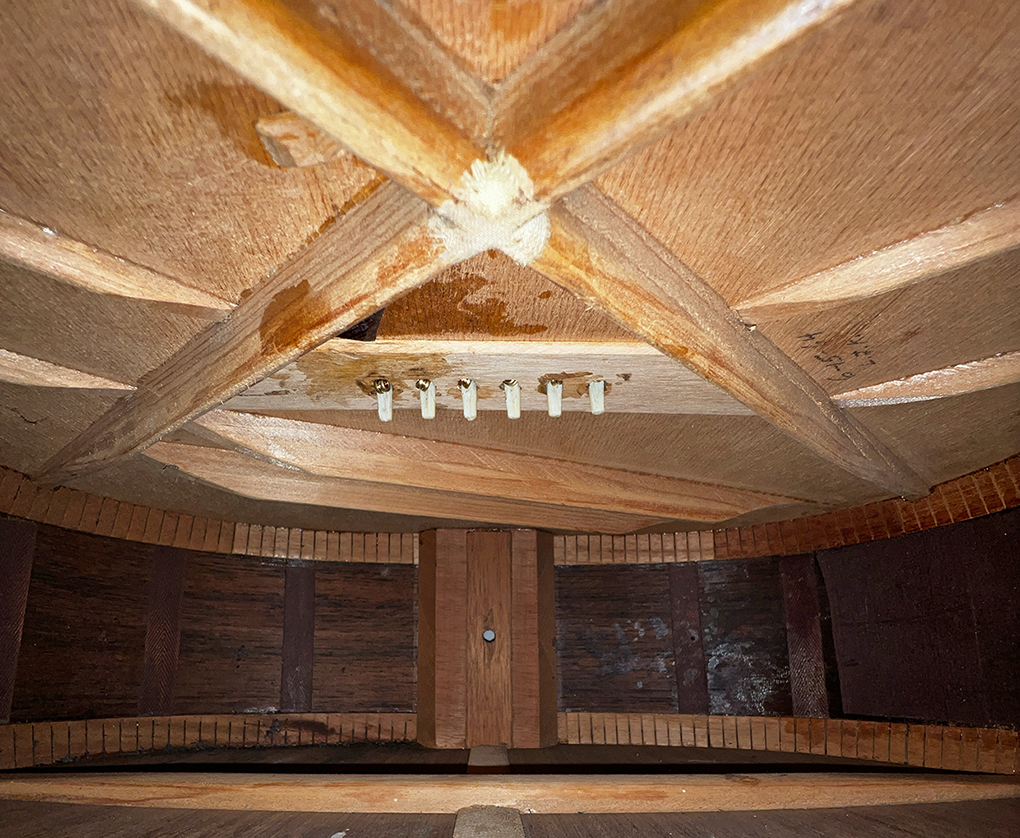
1964 D-28SW
Peter Yarrow, of Peter, Paul & Mary, who played a 0-16NY as the group formed, and on their first album, not knowing that the D-28 had started a 12 fret, asked if they could build a larger guitar with a neck like his 12 fret 0-16NY and the older 00-21 that he had lost. The result was a D-28S, a special order 12 fret D-28. As the group became a sensation, the Wurlitzer Company ordered a number of similar guitars, which were called the D-28SW, for "Special Wurlitzer".
Martin D-35
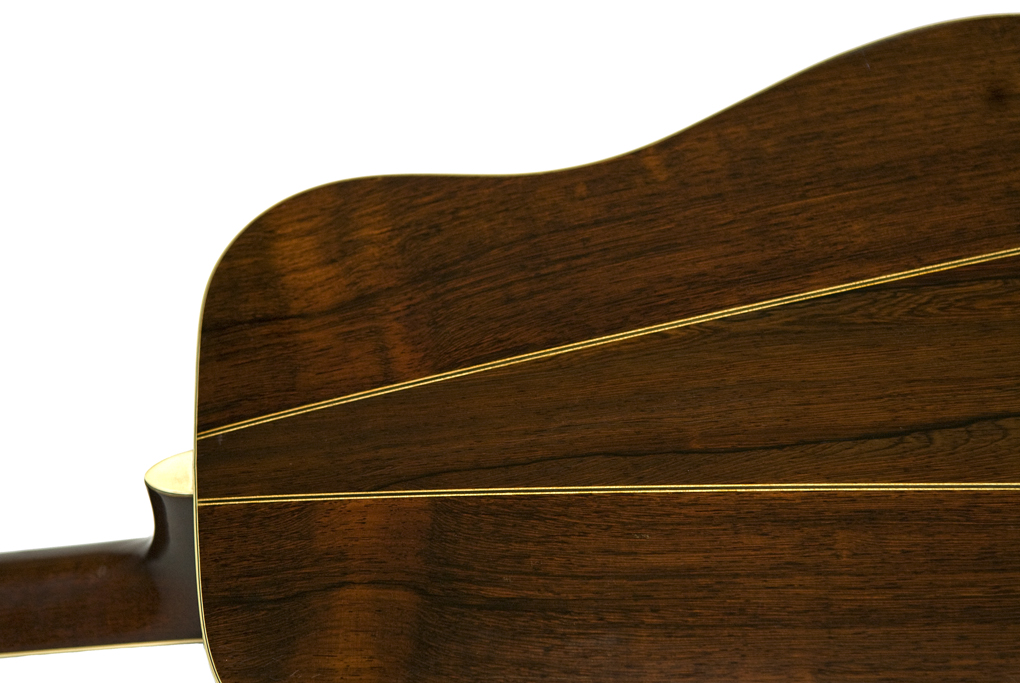
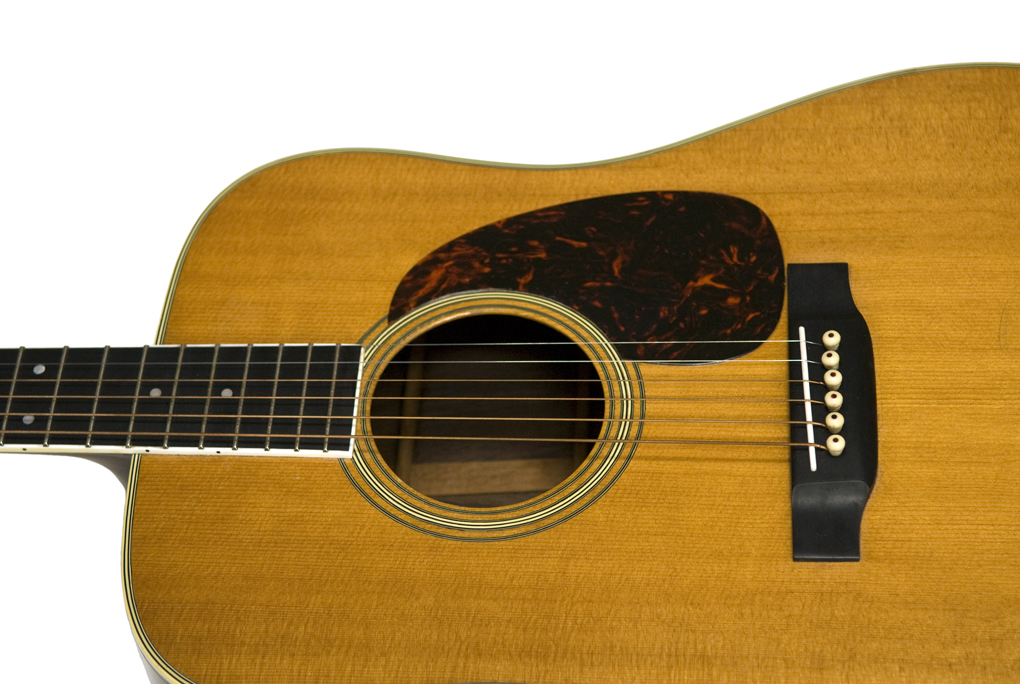
In 1965, Brazil placed an embargo on the rosewood logs Martin had been purchasing for many years, allowing only the sale of veneers used mainly for furniture. As Martin's supply of wide rosewood veneers was dwindling quickly with the increased production of large rosewood D-28, Martin made the decision to offer a new model made utlising three of the narrower pieces normally used for sides to create a 3 piece back. To make the offering attractive, Martin added more strips of binding and a bound fingerboard, while eliminating the volute which was labor intensive to build. The result was the D-35. As the supply of even the narrower Brazilian rosewood pieces began to run out by 1969, Martin began building guitars with East Indian Rosewood, while still using a center piece of Brazilian when they could.
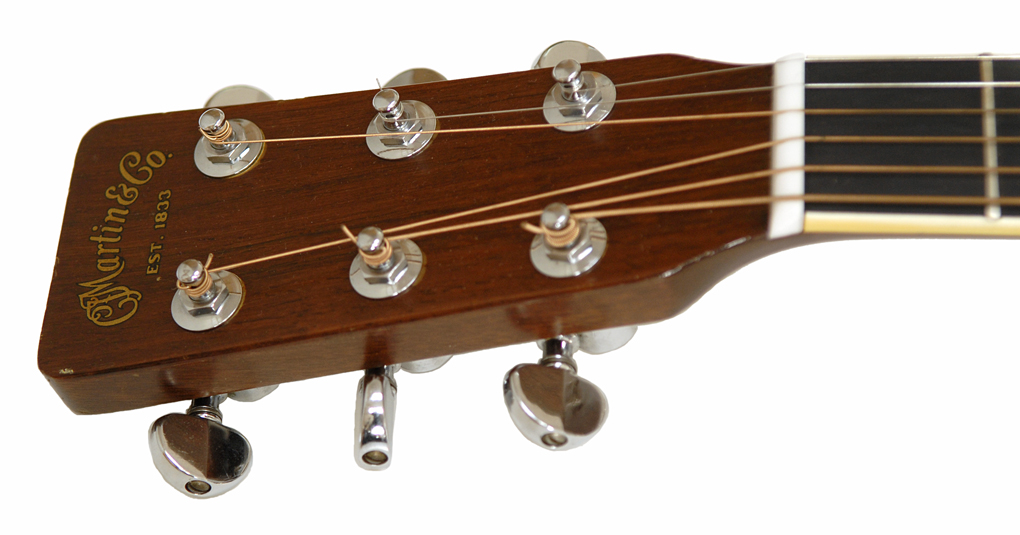
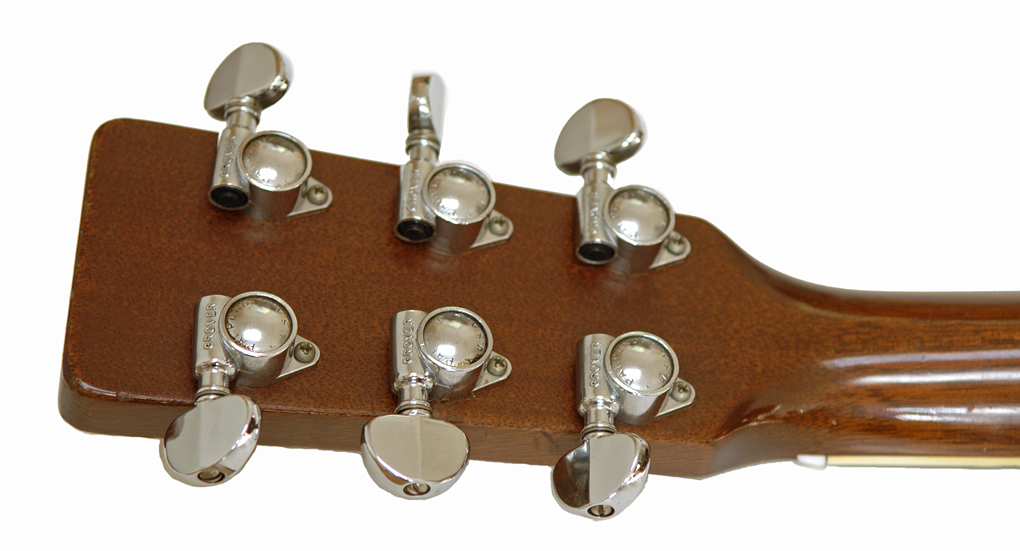
1965 D-35
Dreadnaught Production
In 1931, roughly .002% of Martins were Dreadnaughts, with only 8 built out of a total of 4272 guitars.
In 1933, roughly .009% of Martins were Dreadnaughts, with only 22 built out of a total of 2494 guitars.
In 1935, roughly 7% of Martins were Dreadnaughts, with 218 built out of a total of 3268 guitars.
In 1937, roughly 16% of Martins were Dreadnaughts, with 576 built out of a total of 3689 guitars.
In 1939, roughly 28% of Martins were Dreadnaughts, with 612 built out of a total of 2195 guitars.
In 1941, roughly 24% of Martins were Dreadnaughts, with 782 built out of a total of 3279 guitars.
In 1943, roughly 17% of Martins were Dreadnaughts, with 617 built out of a total of 3617 guitars.
In 1945, roughly 20% of Martins were Dreadnaughts, with 658 built out of a total of 3474 guitars.
In 1947, roughly 23% of Martins were Dreadnaughts, with 1225 built out of a total of 5310 guitars.
In 1949, roughly 19% of Martins were Dreadnaughts, with 877 built out of a total of 4692 guitars.
In 1951, roughly 23% of Martins were Dreadnaughts, with 1126 built out of a total of 4838 guitars.
In 1953, roughly 28% of Martins were Dreadnaughts, with 1677 built out of a total of 6065 guitars.
In 1955, roughly 32% of Martins were Dreadnaughts, with 1917 built out of a total of 5983 guitars.
In 1957, roughly 37% of Martins were Dreadnaughts, with 2305 built out of a total of 6286 guitars. (think Elvis!)
In 1959, roughly 27% of Martins were Dreadnaughts, with 1453 built out of a total of 5471 guitars.
In 1961, roughly 24% of Martins were Dreadnaughts, with 1283 built out of a total of 5608 guitars.
In 1963, roughly 28% of Martins were Dreadnaughts, with 1687 built out of a total of 5943 guitars.
In 1965, roughly 32% of Martins were Dreadnaughts, with 2366 built out of a total of 7404 guitars.
In 1966, at the height of the folk scare, the number of Dreadnaughts jumped to 50% of Martin production, with 5193 built out of a total of 10185 guitars.
*plus a small handful for Ditson
vintagemartin.com
To See Robert Corwin's Classic Photography of Folk and Roots Musicians, visit:
For Information on Photography for
Exhibition, Publication, CD's, Promotion, Web Pages, Tour Books,
to Purchase Photographic Prints, or
If You Have Questions or Suggestions About This Web Site or Vintage Martin Guitars:
e-mail: Robert Corwinentire site copyright ©1998 through 2026 Robert Corwin/Photo-Arts. All rights reserved.