"As early as 1910, the Chas. Ditson & Co. store in New York had included a Hawaiian guitar and ukulele in a display of "Musical Instruments You Don't See Every Day". The display was put together by William J. Smith, who was Ditson's floor salesman in the small goods department." *
This was five years before the "Panama-Pacific International Exposition" in San Francisco, from February to December of 1915, sparked a Hawaiian music craze that would sweep across the country.
In May of 1915, Harry L. Hunt, manager of the small goods department at Ditson, noted that Mr. Smith, who "ranked among the first guitar players in the country", had "become very expert at playing the ukulele and also the Hawaiian Guitar."
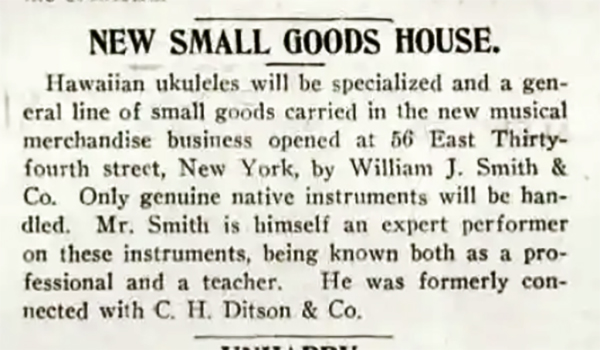
Within five months, Smith had left to establish his own store to specialize in these instruments.
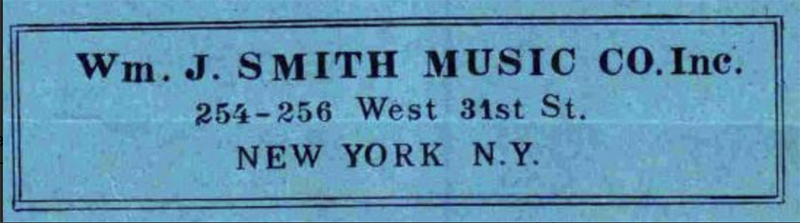
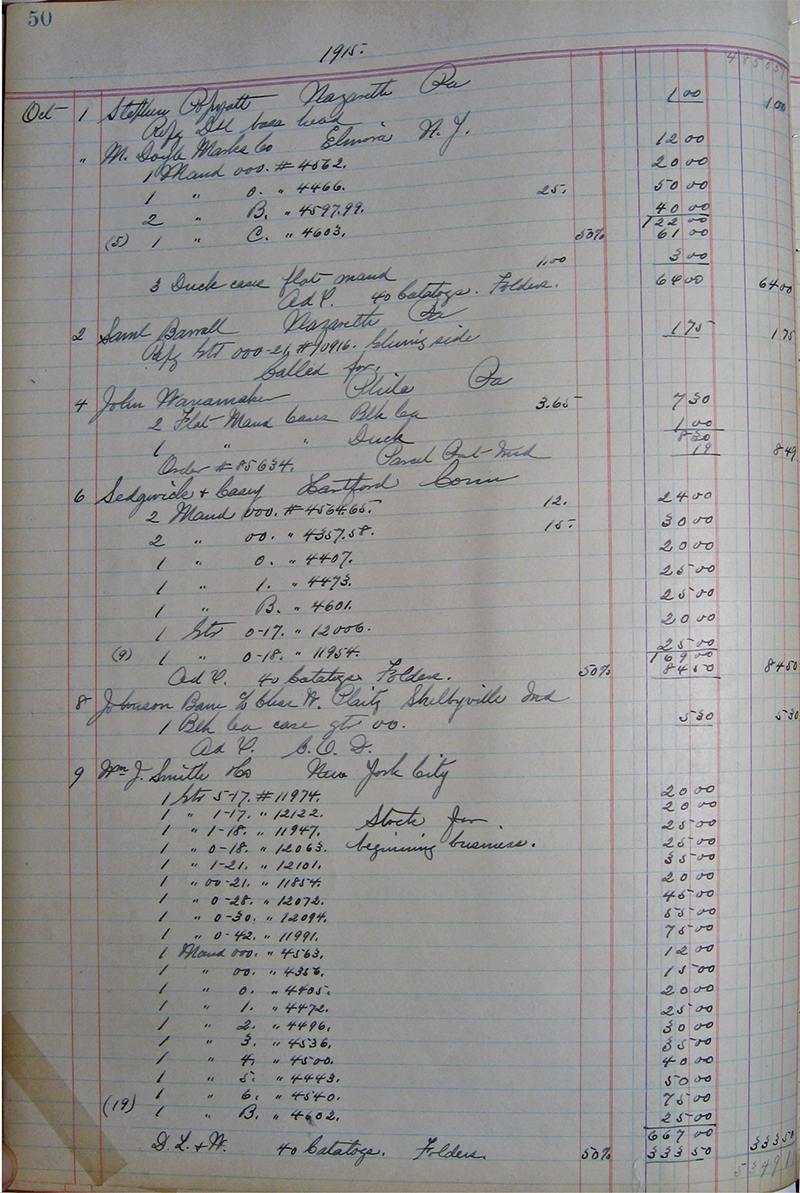
On October 9, 1915 he was shipped his initial order of guitars and mandolins as "Stock for beginning business."
The Music Trade Review noted it's inception...
As you can see, Smith actually did order a full line of Martin guitars and mandolins.
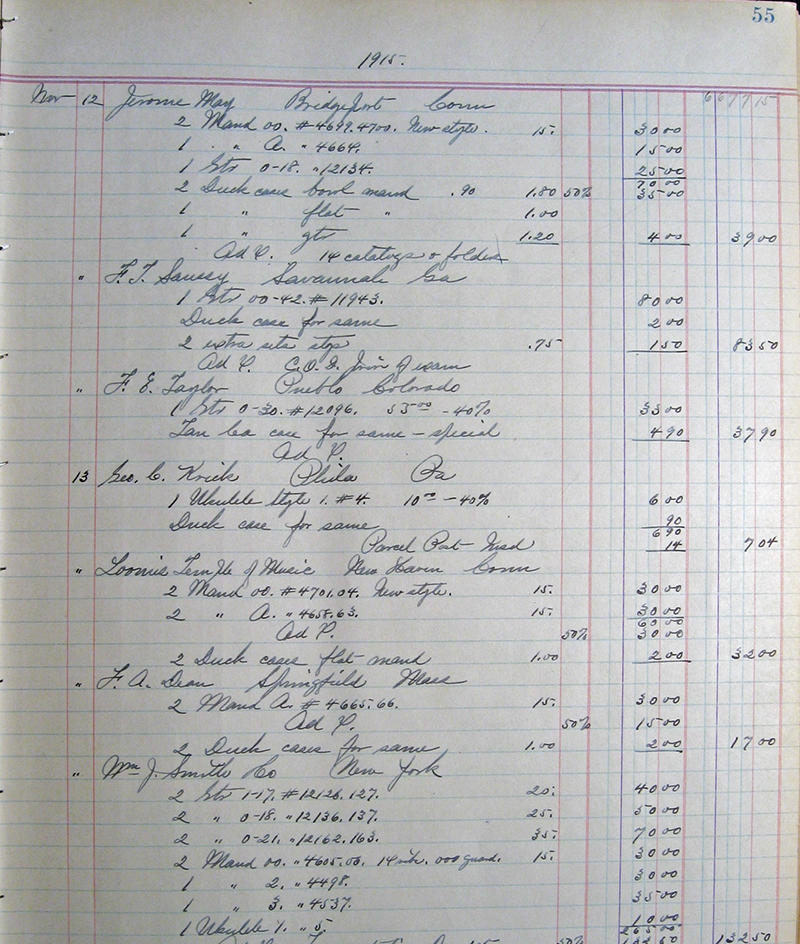
On October 28, Martin shipped the first of their initial batch of ukuleles, serial #1 and #3, to Geo. Stannard, in Trenton, NJ.
On Friday, November 13, 1915, Martin shipped serial #4 to Geo. C. Crick in Philadelphia and #5 to Wm. Smith.
The following Monday, the Ditson store was shipped their first ukuleles.
Charles Ditson and Wm. Smith would become Martin's largest customers for ukuleles
Serial #2 would be delivered to C. F. Martin's alma mater, Princeton, after the first of the year.
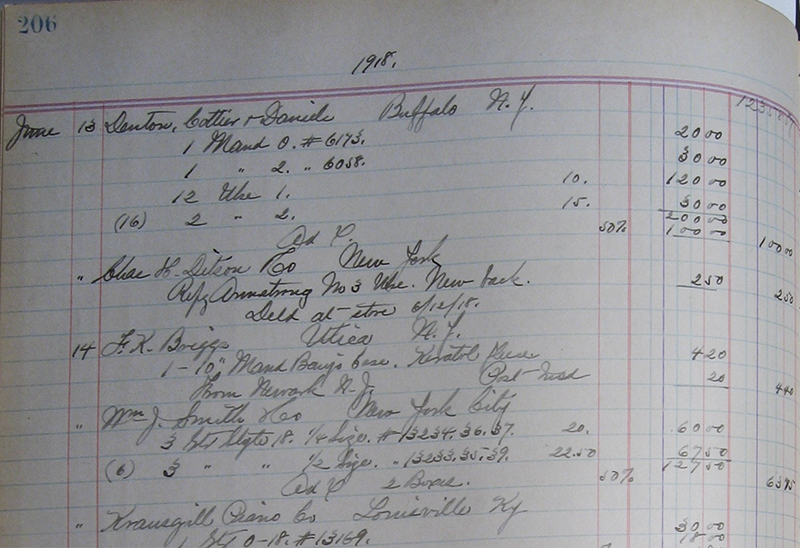
Nearly three years later, on June 14, 1918, Wm. Smith was shipped three Style 18 guitars in 1/4 size, and three in 1/2 size. It appears that he was experimenting.
On September 26, 1918, Wm. Smith was shipped three more.
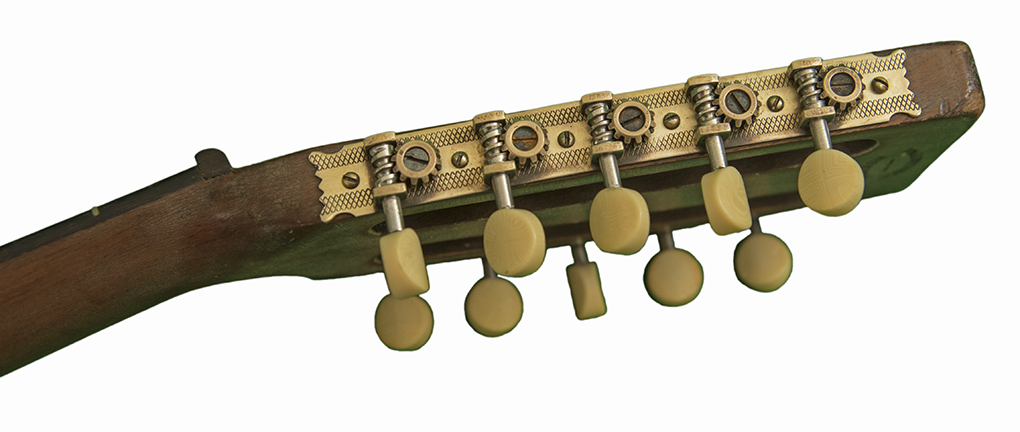
Smith had an idea to create a unique small guitar, inspired by the South American Tiple, a guitar sized instrument with ten or twelve strings in four courses, often 2-3-3-2 strings tuned as D-G-B-E.
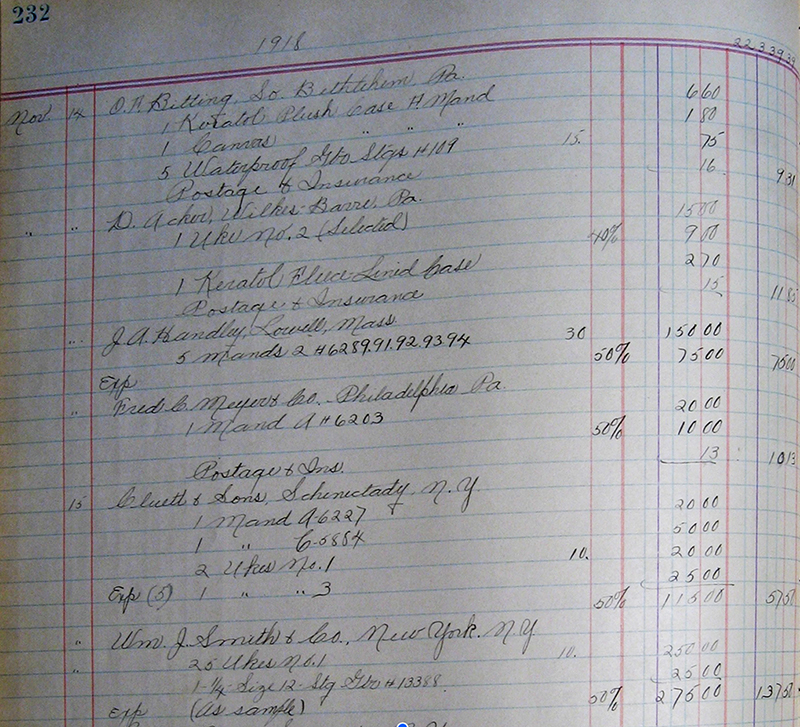
On November 15 of 1918, Smith was shipped a 12 string 1/4 size guitar, as a sample.
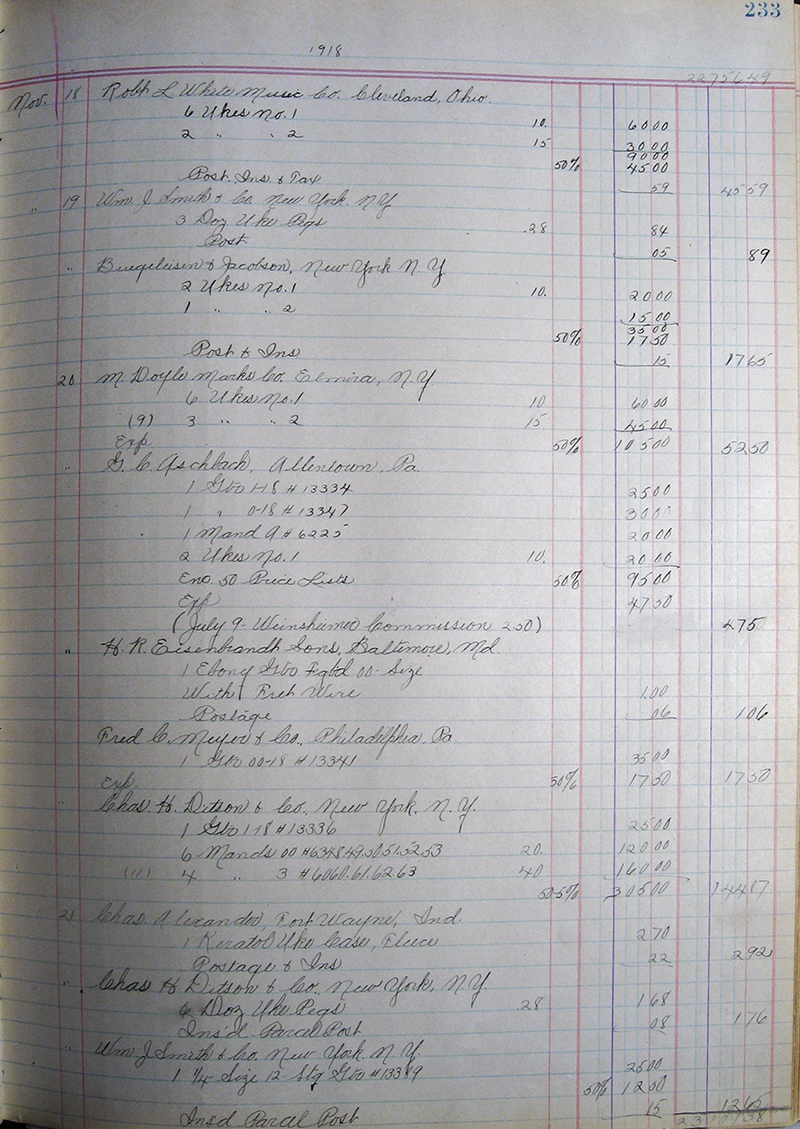
..and six days later, on November 21, he was shipped another.
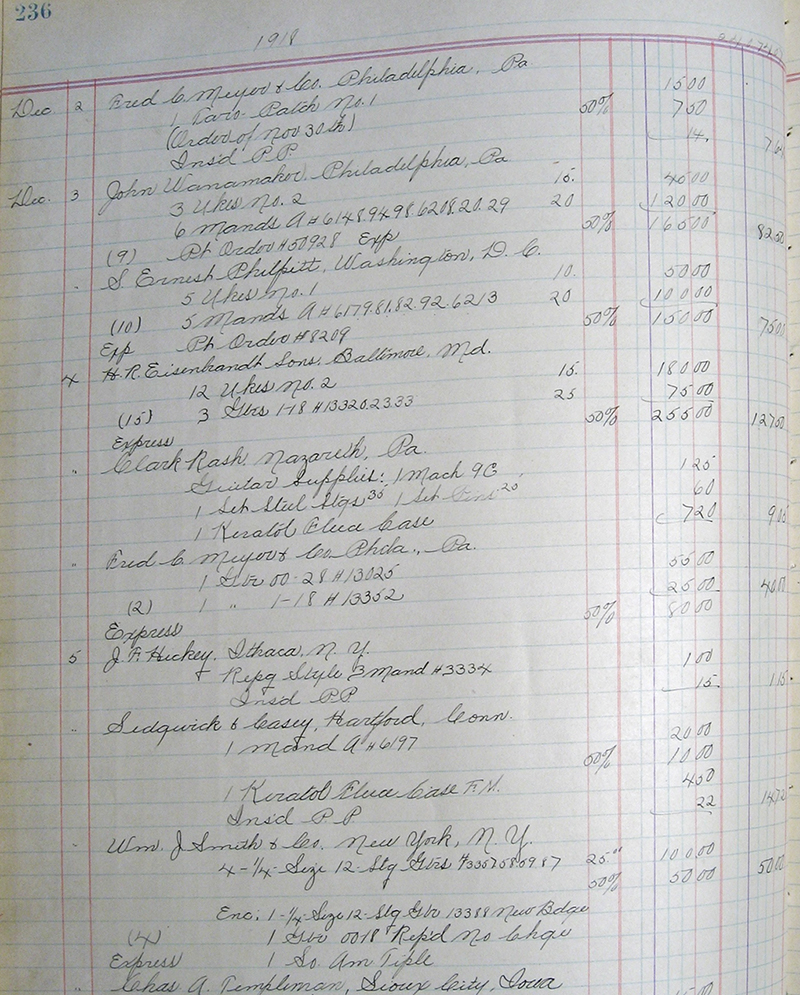
Two weeks later, he was shipped four more, and Martin also returned an original South American Tiple that Smith had sent as a sample.
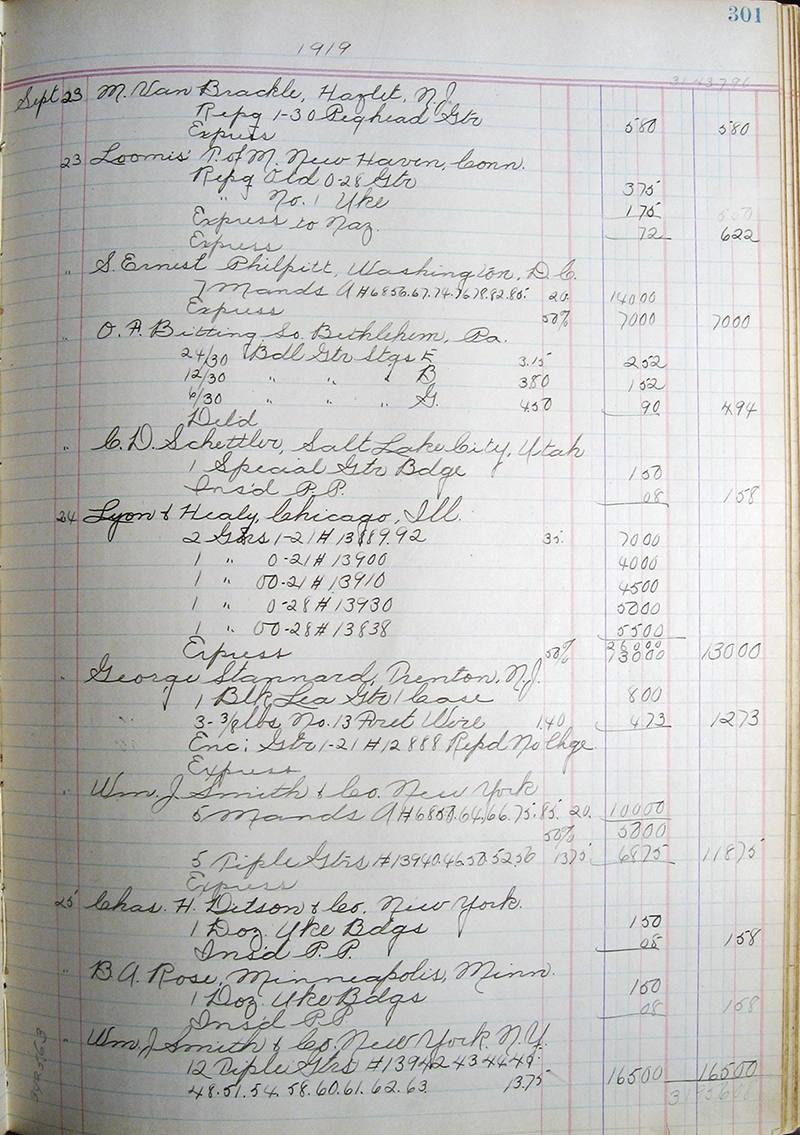
On March 31, 1919, we see the first shipment with the instrument name labeled as a "Tiple". It appears that Smith had settled by then on the 2-3-3-2 ten string arrangement.
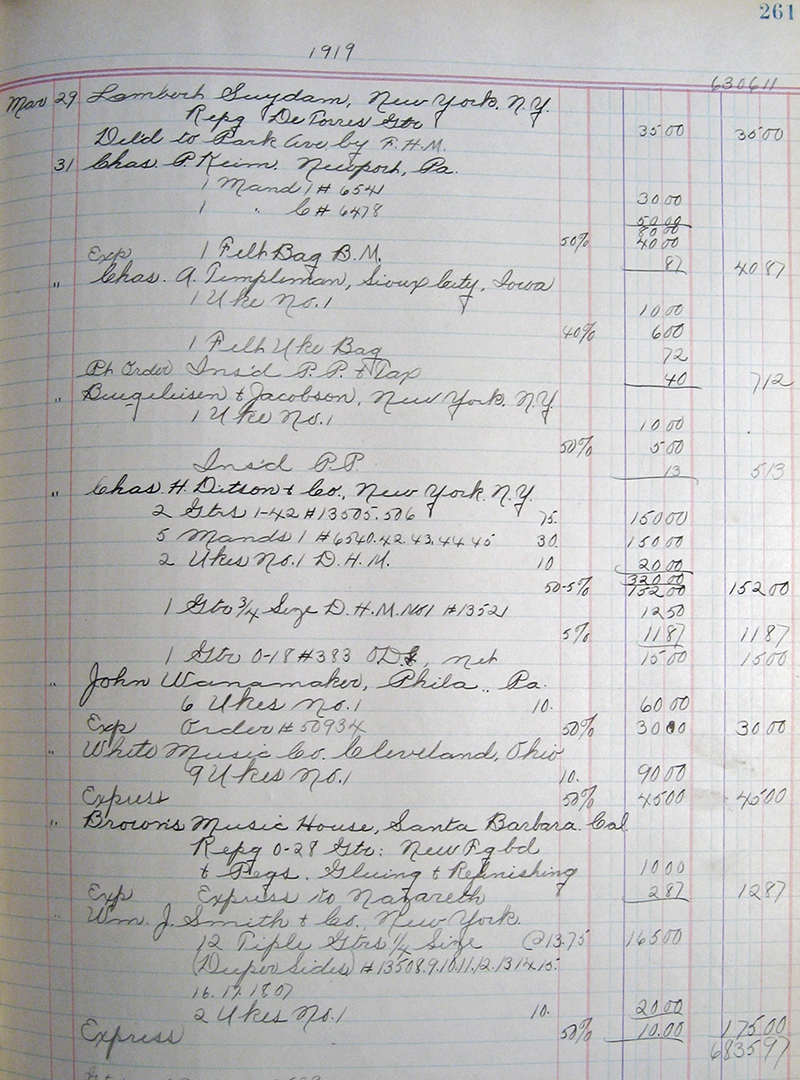
Note here that the Tiples were still labeled as "Tiple Guitars", and unlike the ukuleles, they were always given regular Martin guitar serial numbers.
Smith became not only one of only two Martin dealers in New York City, but also one of Martin's largest customers in the country.
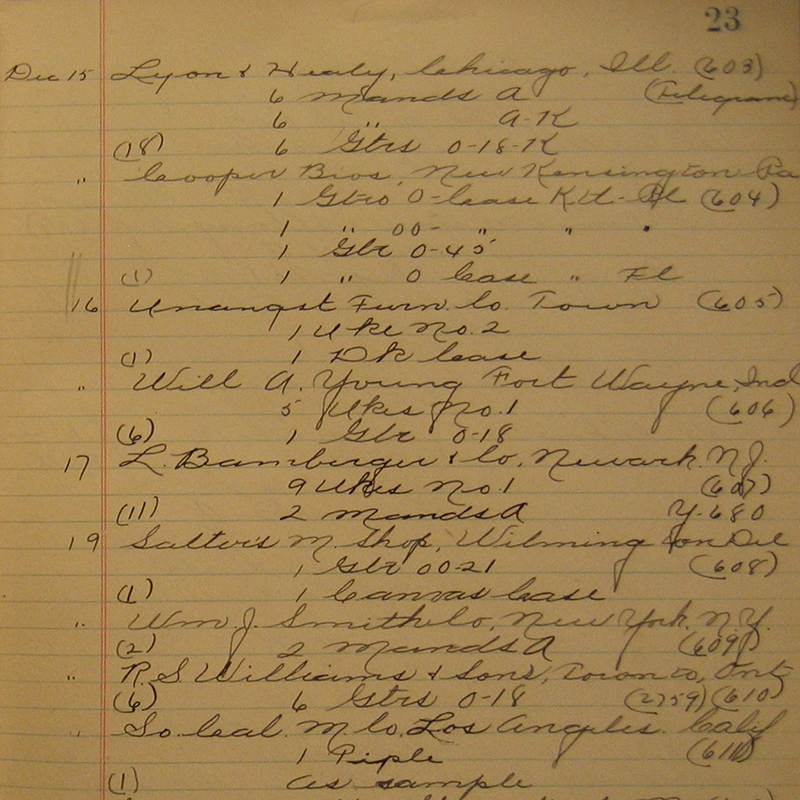
In August, 1919, the Robert L. White Music Company of Cleveland, Ohio placed an order for a tiple, followed by Southern California Music Company on December 19, 1921.
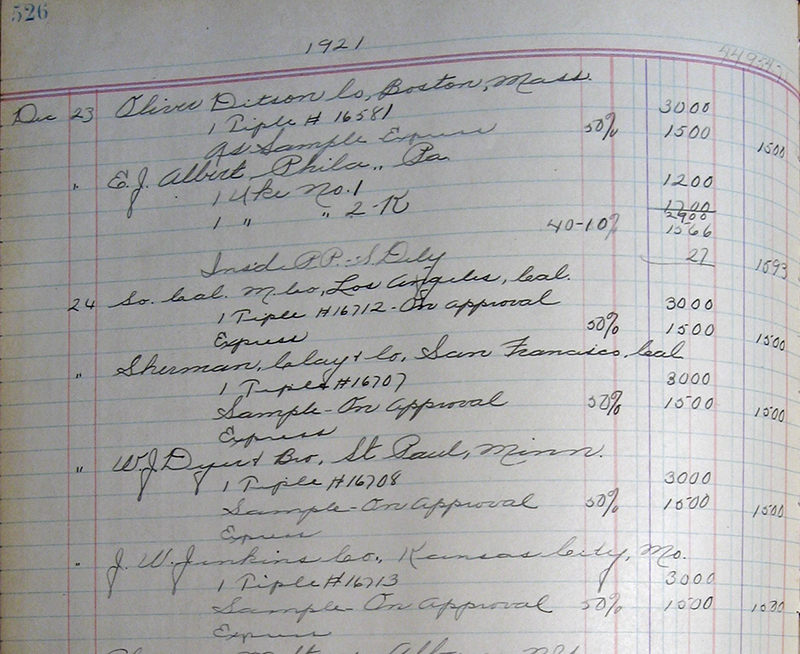
On December 23, Martin shipped samples on approval to Oliver Ditson of Boston, SoCal in Los Angeles, Sherman Clay in San Francisco, W.J. Dyer in St. Paul, and Jenkins CO. in Kansas City, MO.
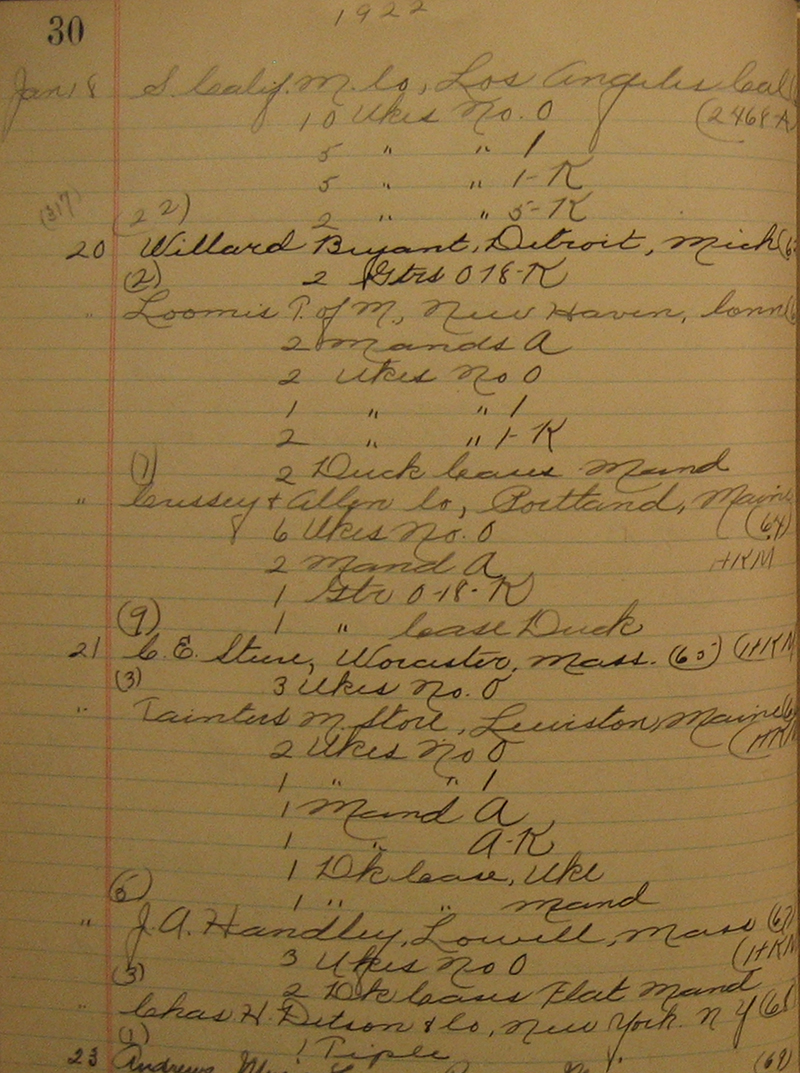
On January 21, 1922, the Charles Ditson Store, Wm. Smith's competitor in New York, ordered a tiple as a sample.
Smith was not pleased.
Correspondence was typically rather formal at the time. Smith was unusually candid and honest with his feelings.
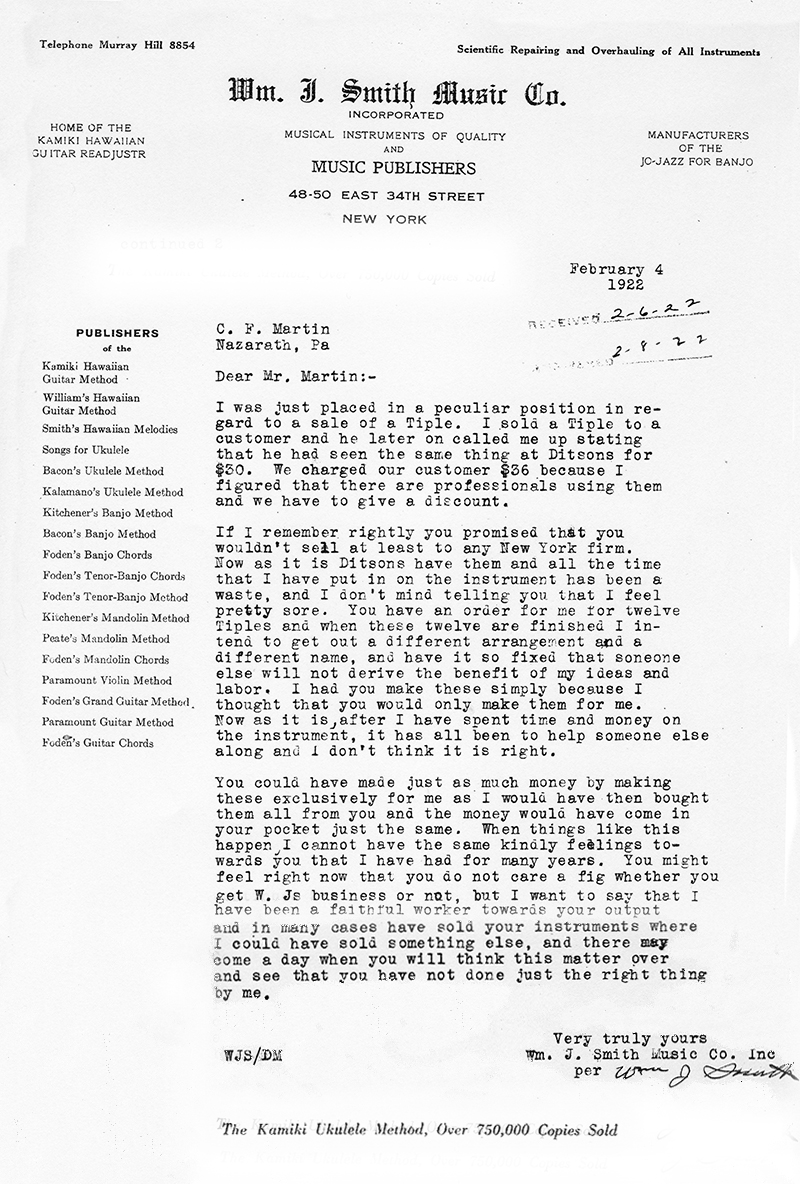
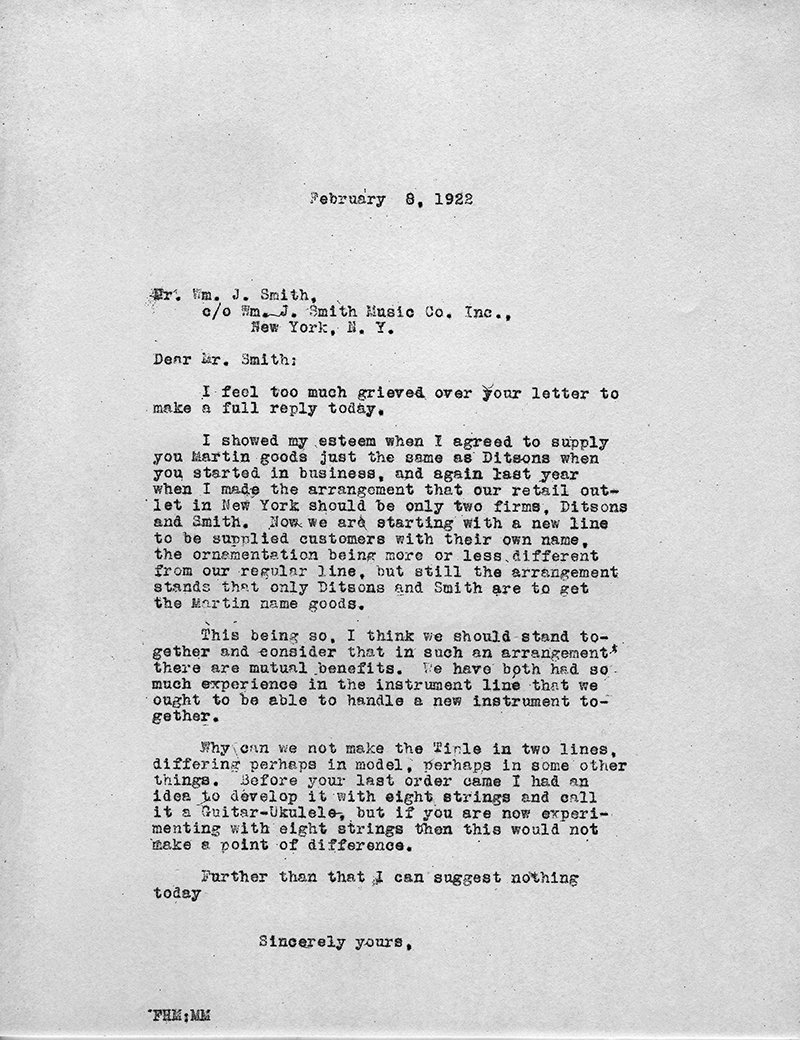
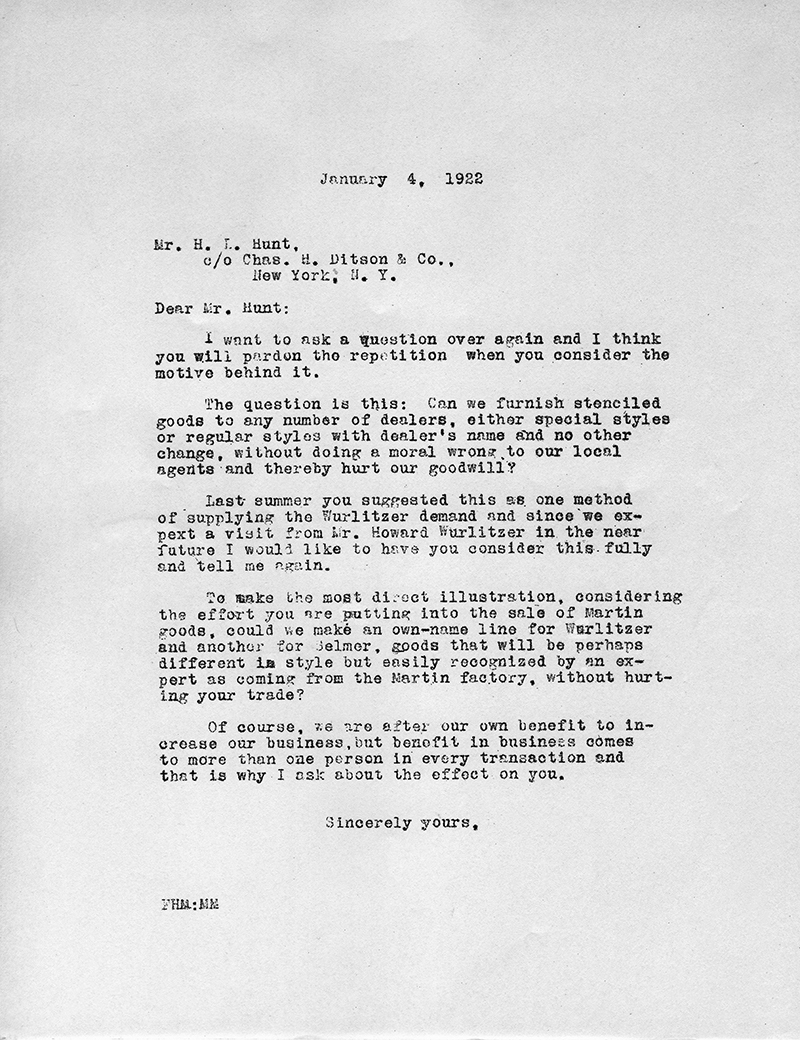
Martin was strict about giving dealers exclusive rights to sell Martin instruments in their territories, all at full retail price, to avoid conflicts, but a few larger dealers did serve as jobbers selling at wholesale to stores in smaller cities and towns. Martin had already had complaints from dealers about Wurlitzer selling to dealers who were re-selling at cut rate prices. Martin was also beginning to feel that the policy was holding them back. Martin attempted to remedy the problem by creating the "Company Line" of guitars. These were a separate line of guitars of identical quality but with some unique features and with the store name in place of the Martin stamps.
After H. & A. Selmer requested a direct agency in New York, Martin wrote this letter to Harry Hunt:
...and Harry responded:
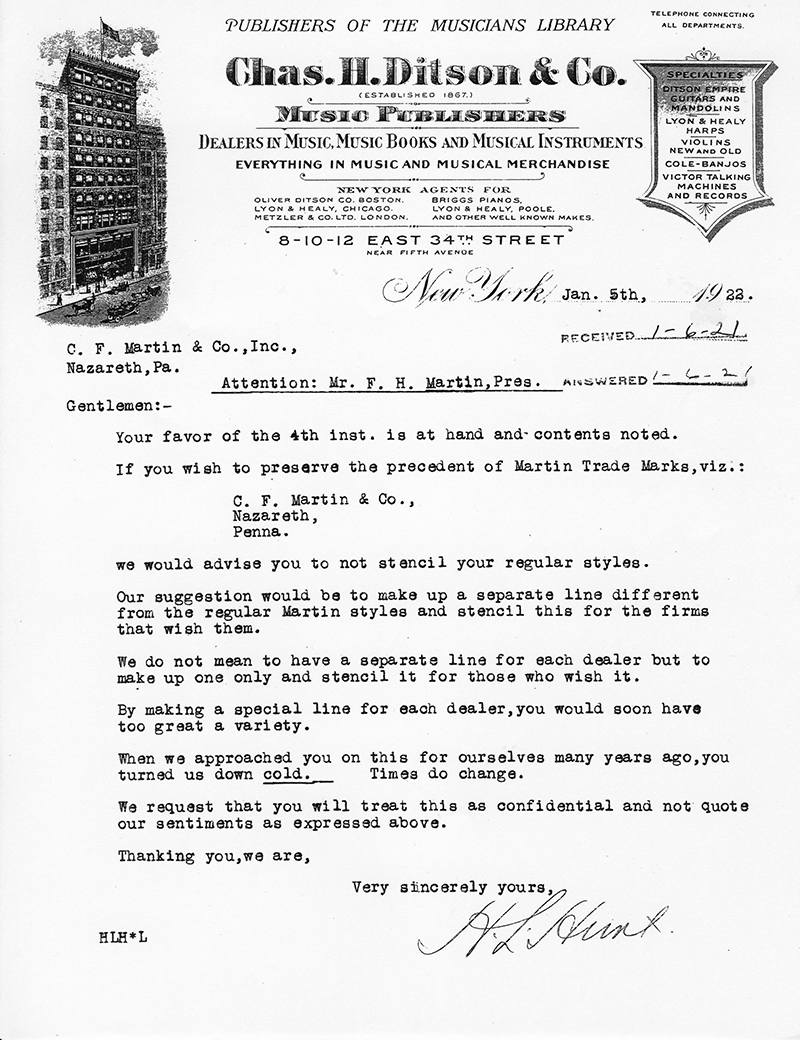
Within weeks Martin had begun to reach out to dealers to offer the Company Line instruments.
By the end of 1922, however, Martin was struggling to keep up with ukulele sales, and manufacturing the Company Line instruments had become an unnecessary burden. At this point Martin began to supply regular Martin models with the "stencil" of the dealer.
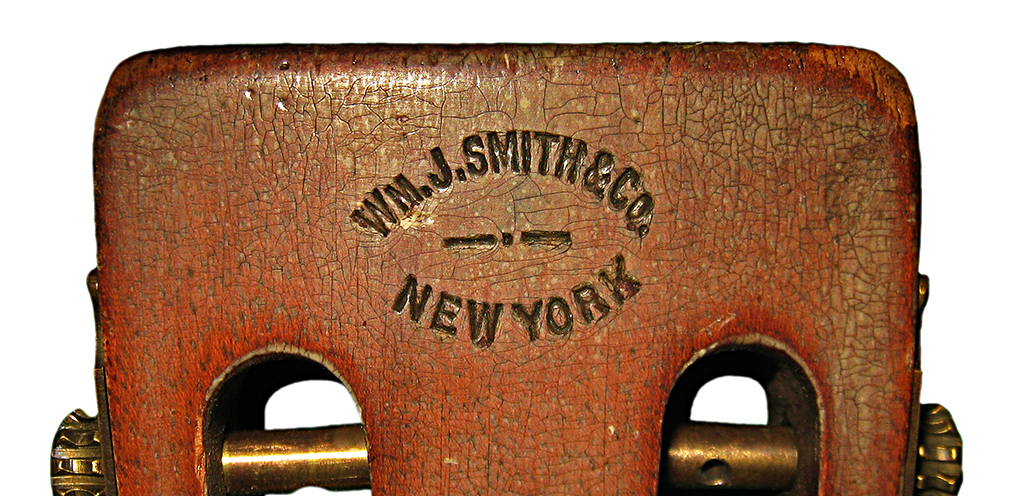
Note that by "stencil", Martin is referring to the dealer's imprint from stamps supplied by "The New York Stencil Works"...
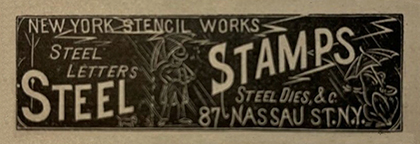
...that are stamped on the back of the instrument headstocks:
For more information about Tiples, check out the wonderful book "The Martin Ukulele, The Little Instrument That Helped Create a Guitar Giant" by Tom Walsh & John King.
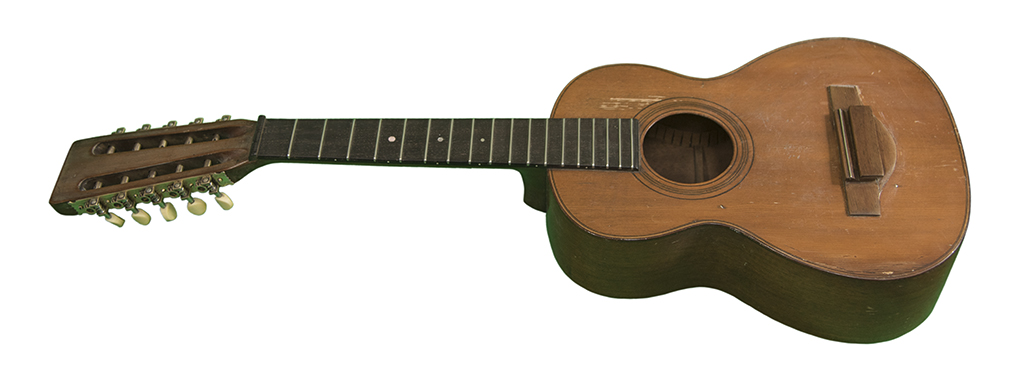
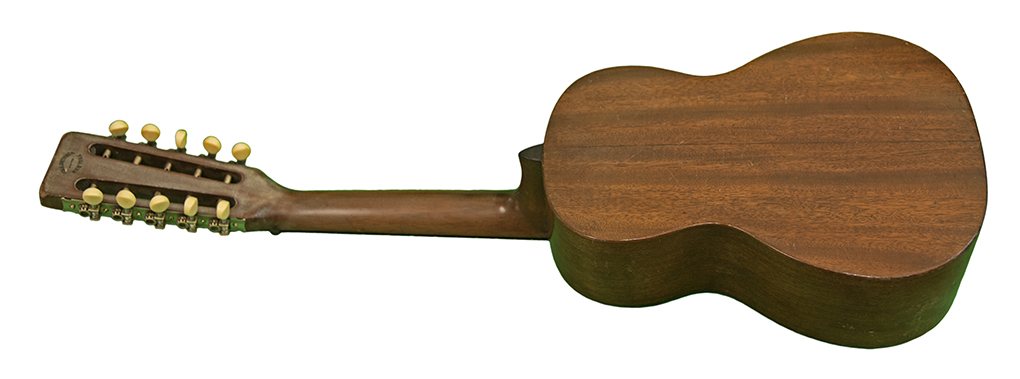
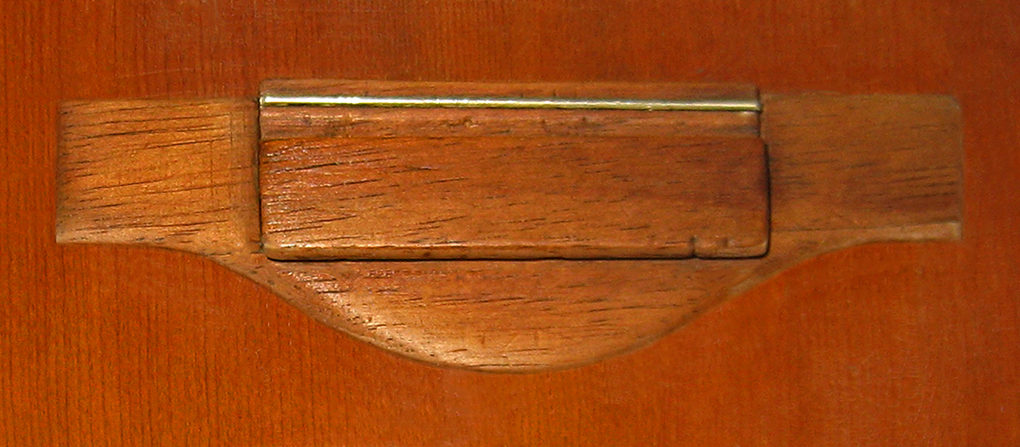
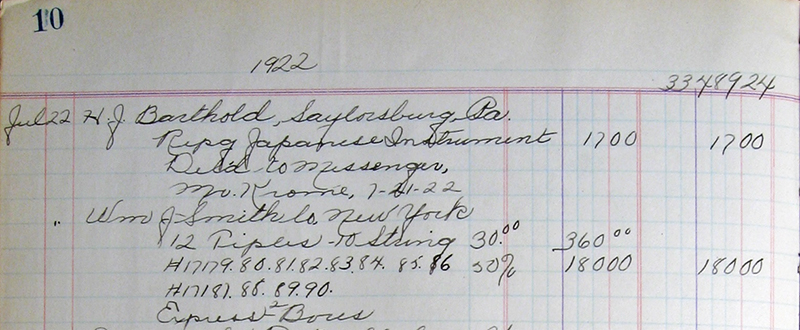
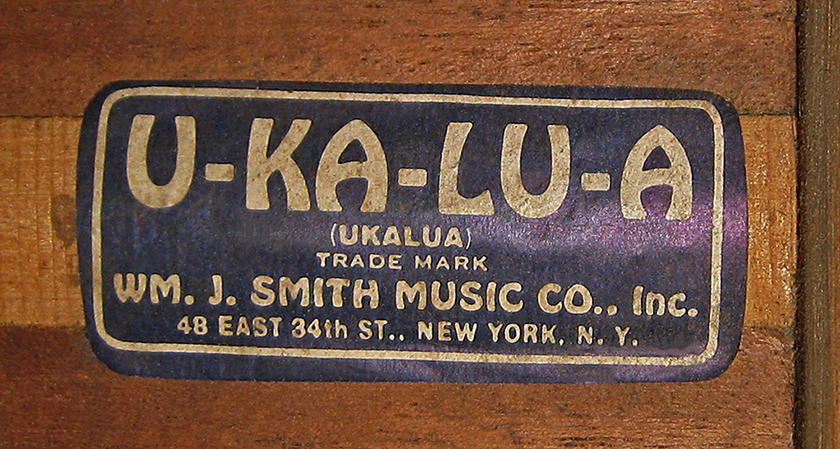
1922 Martin / Wm. J. Smith 10 String Tiple
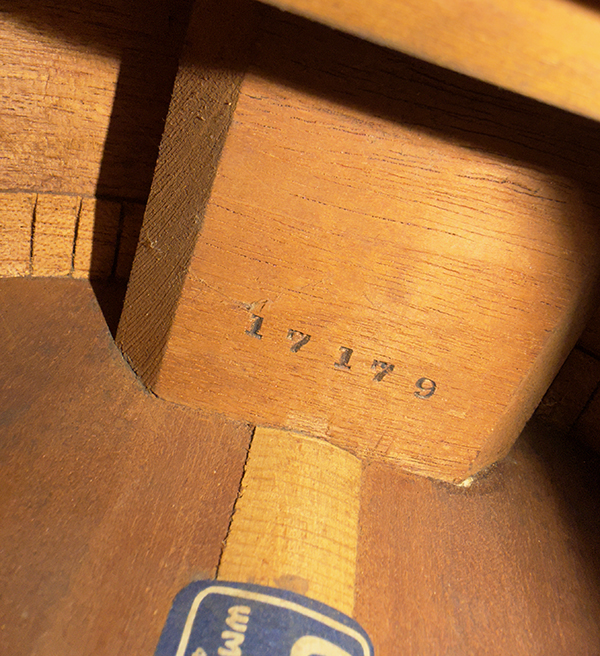
Serial #17179
Shipped July 22, 1922