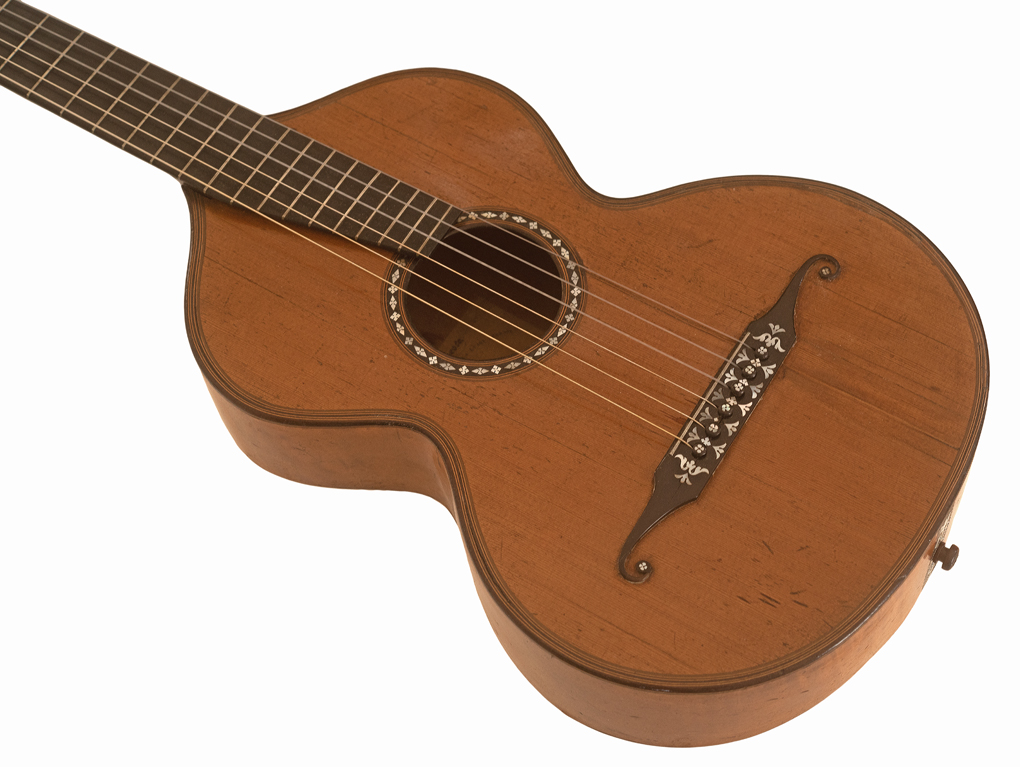
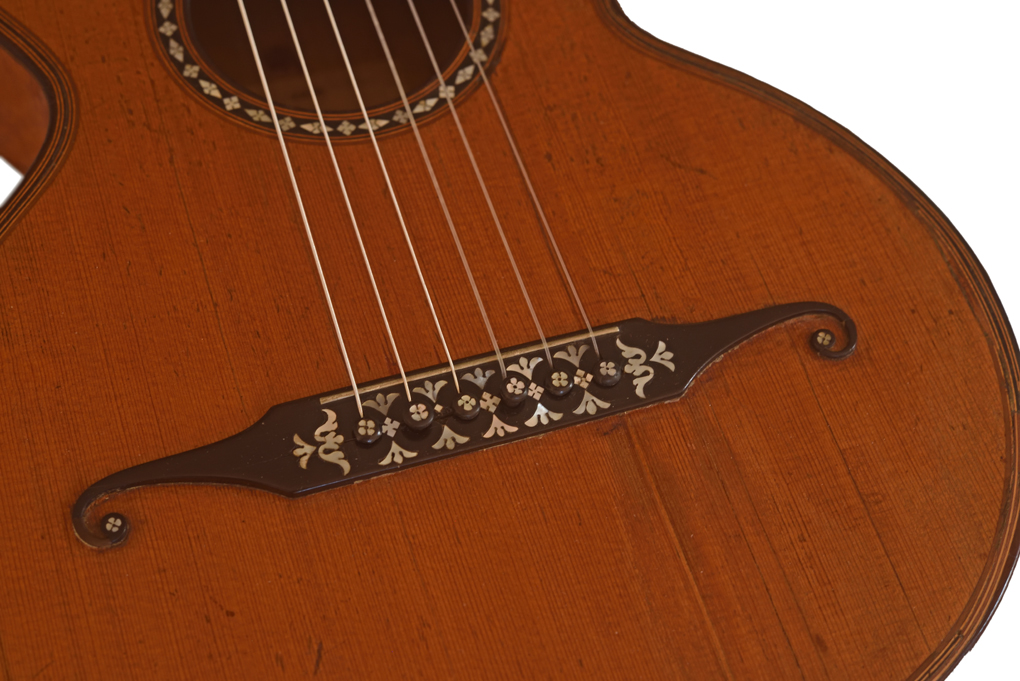
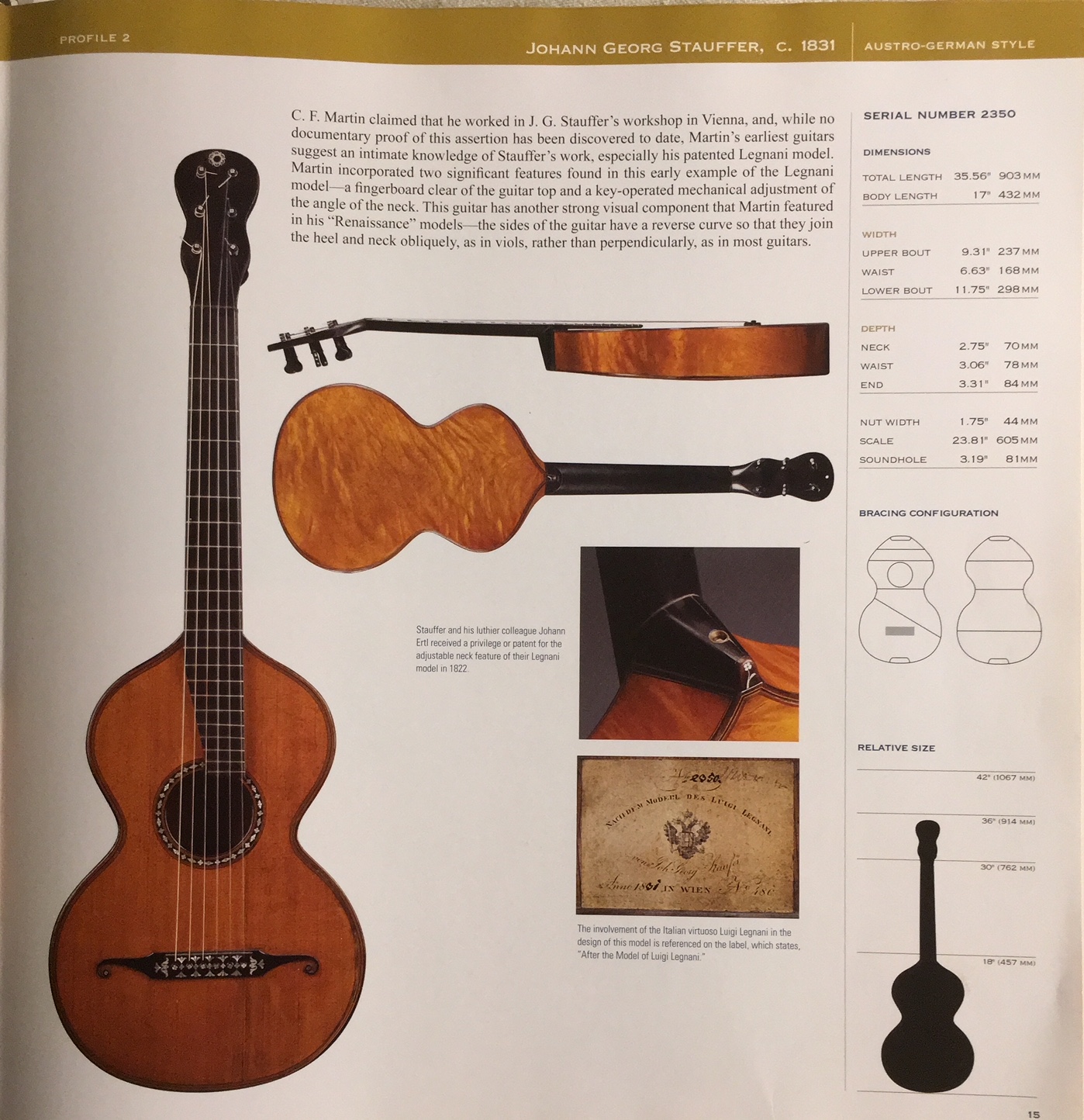
1831 "Renaissance" Style Stauffer
Legnani Model Guitar
Long before C.F. Martin came
to New York from Markneukirchen, Saxony and established his
music store on the lower East Side of New York City,
Martin
is said to have apprenticed in the acclaimed workshop of
Johann Georg Stauffer of Vienna, builder of the Stauffer
"Legnani" Model,
and
referred to as the most modern of European guitars.
Stauffer
guitars typically have a thin, wide "figure 8" shaped body
with an upper bout more equal in size to the lower bout,as
opposed to the guitars of
Spain, with a smaller upper bout on a narrow body.
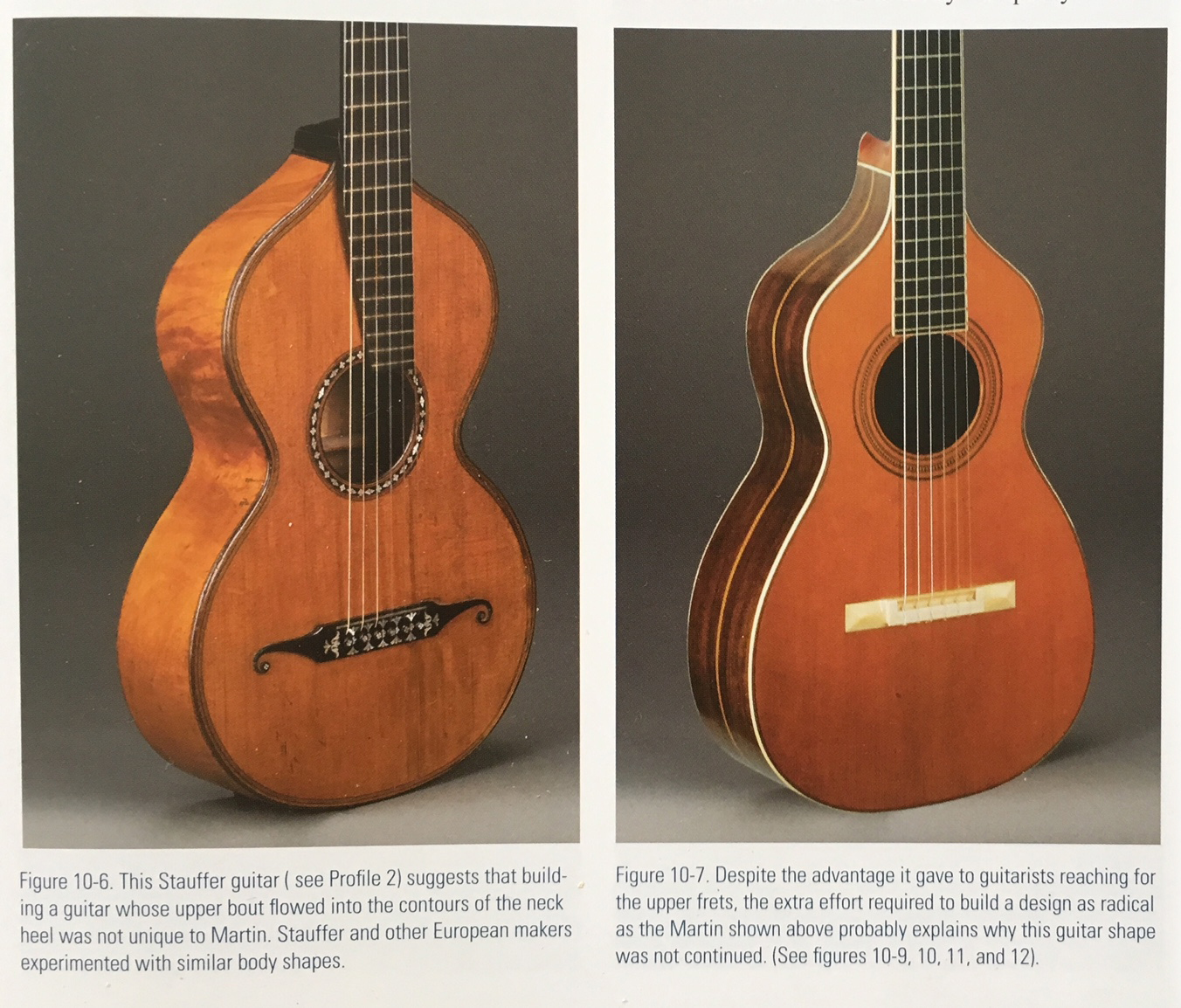
The
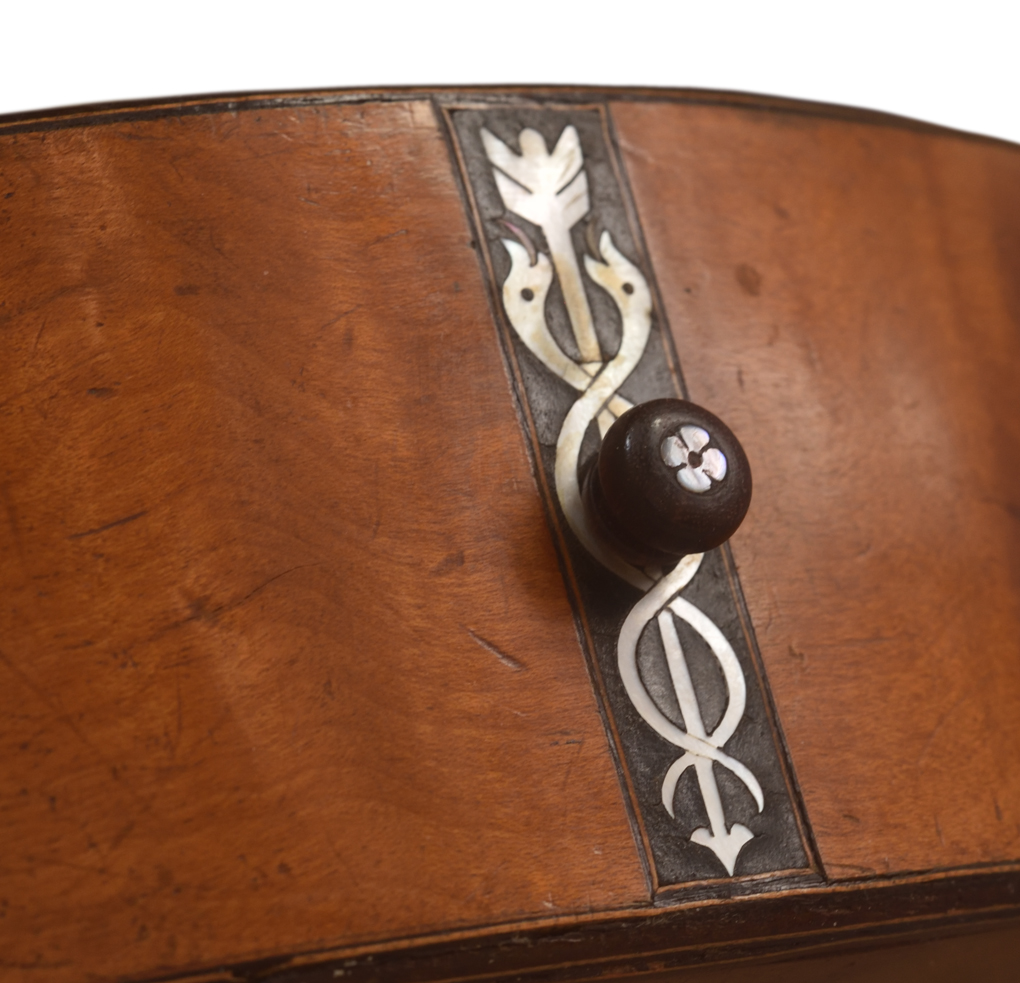
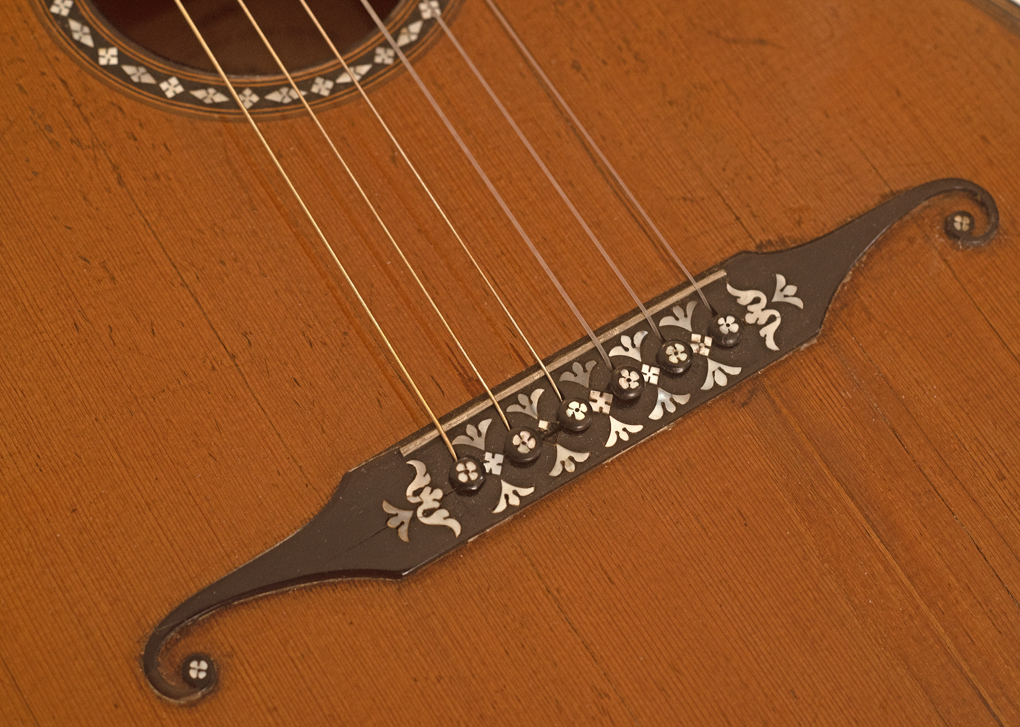
unique one of a kind "Renaissance" Style Stauffer guitar seen
here, with a body that flows seamlessly into the neck, is
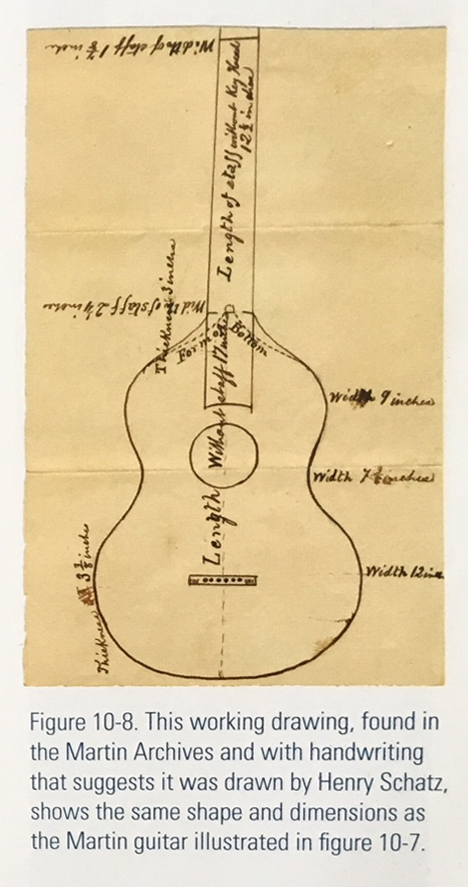
clearly the model for the
unique
one of a kind "Renaissance"
Style Martin guitar seen
below, so we're lucky that both have survived.
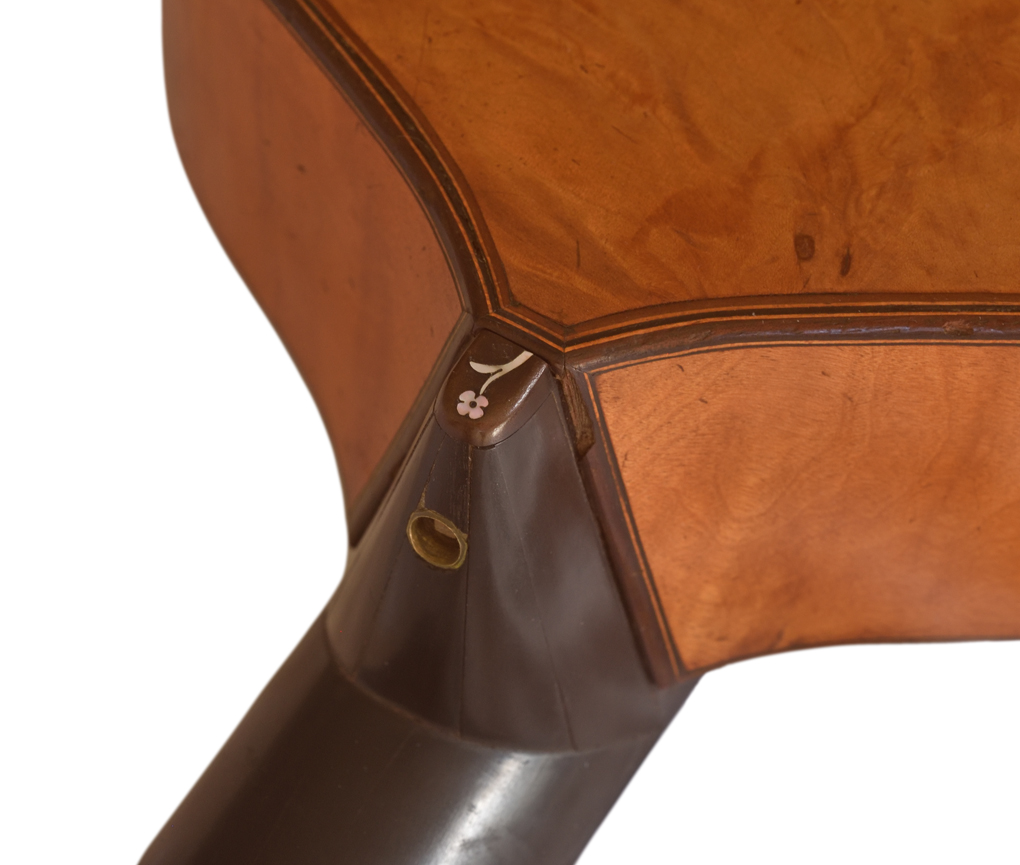
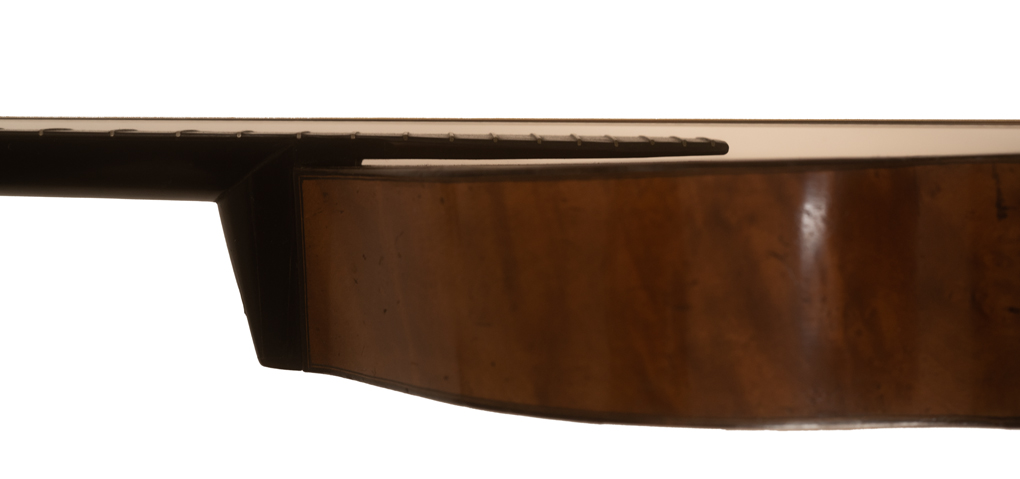
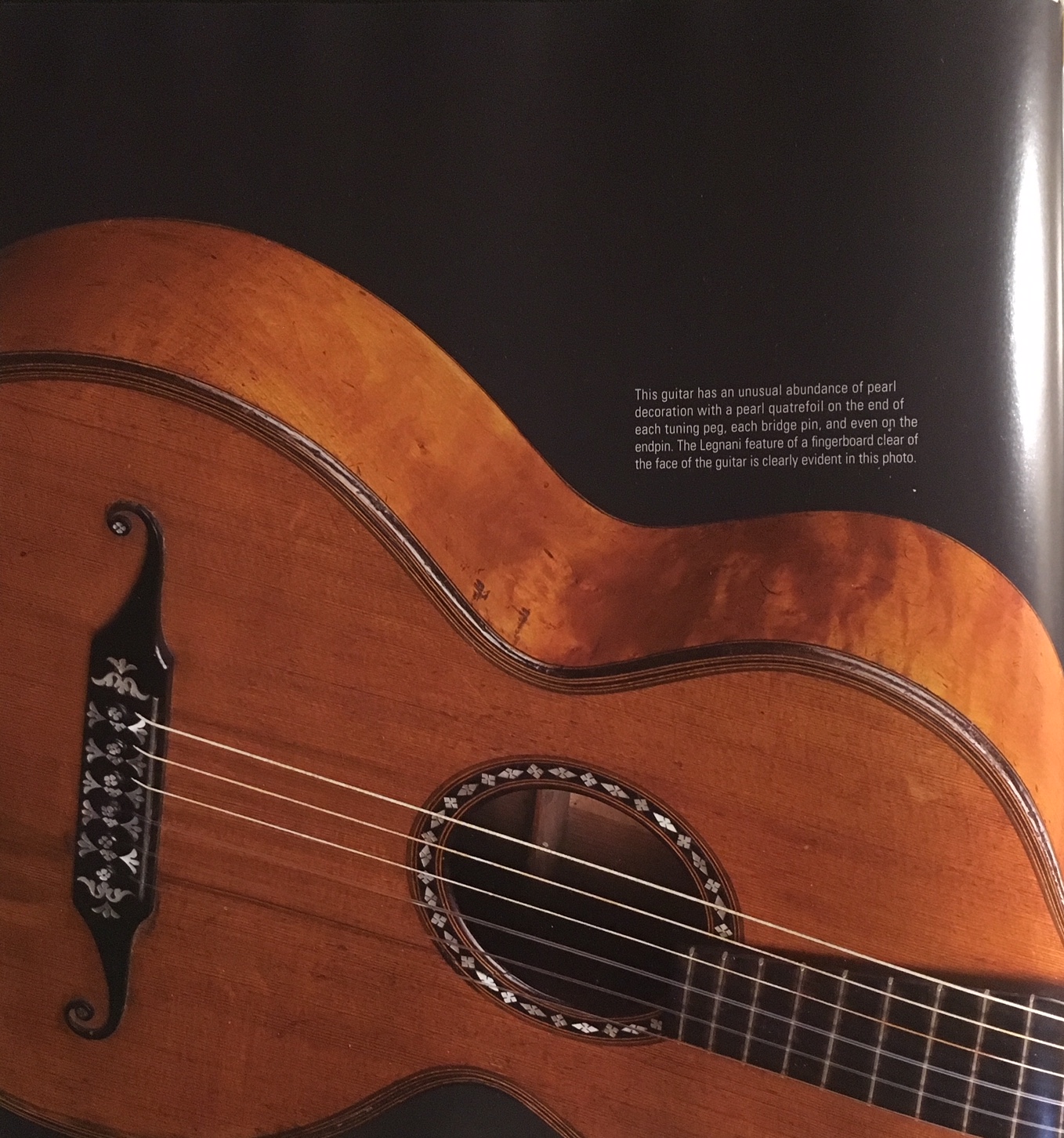
Distinctive
features of the Stauffer Legnani guitar adopted by Martin
include the raised fingerboard extension and the ice cream
cone heel with a clock key adjustment, to alter the angle of
the neck.
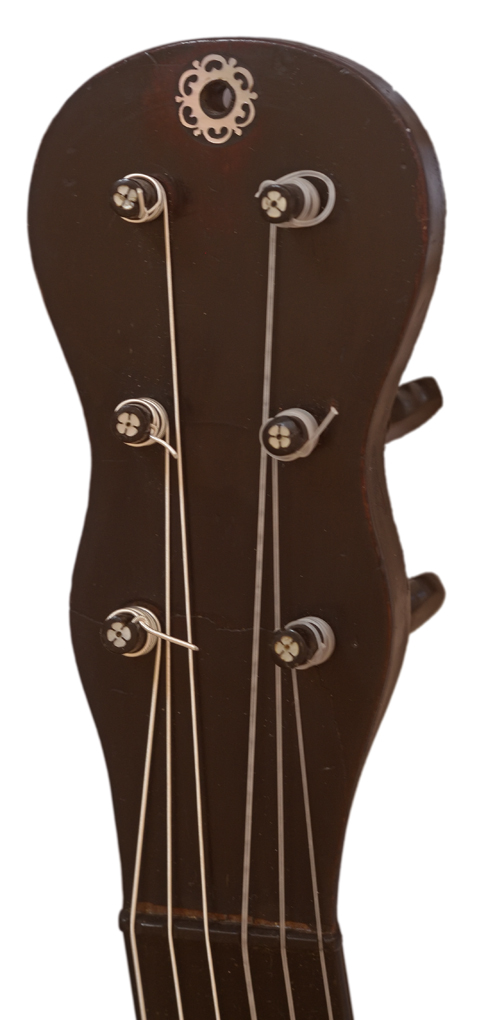
Ironically,
while early Martin guitars are often noted for their "Stauffer
headstock", with six tuning
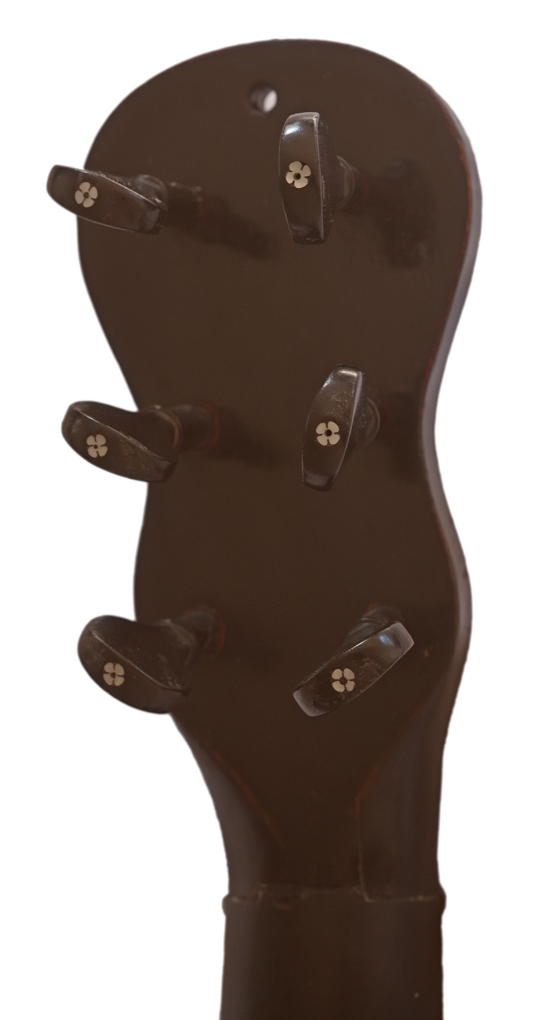
machines in line on one side of the headstock, as emulated today on Fender guitars, more Stauffer guitars have a paddle shaped headstock with ebony friction
pegs, and not the "Vienna Gears", or "one-side screws" that have
come to be known as the "Stauffer" head.
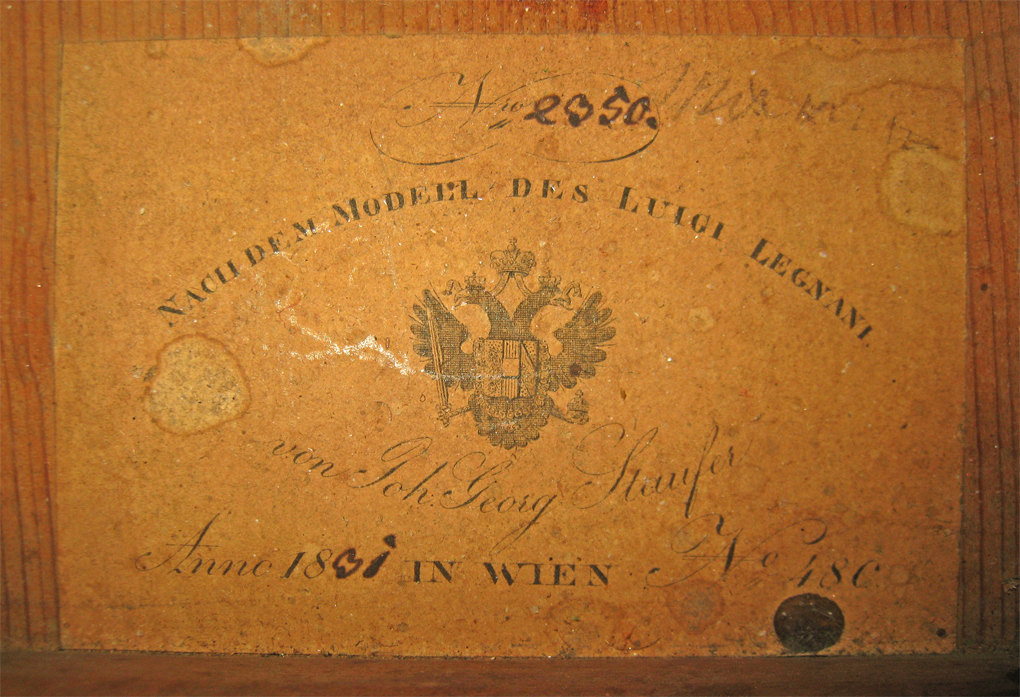
Even
the style of the Stauffer label has been copied in Martin
guitars...
To See Robert Corwin's Classic Photography of Folk and
Roots Musicians, visit:
For
Information on Photography for
Exhibition,
Publication, CD's, Promotion, Web Pages, Tour Books,
to
Purchase Photographic Prints, or
If You Have
Questions About An Early Martin Guitar:
e-mail: Robert Corwin
entire
site copyright ©1998 through 2026 Robert
Corwin/Photo-Arts. All rights reserved.