Schmidt & Maul Guitars
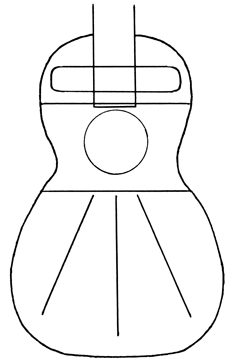
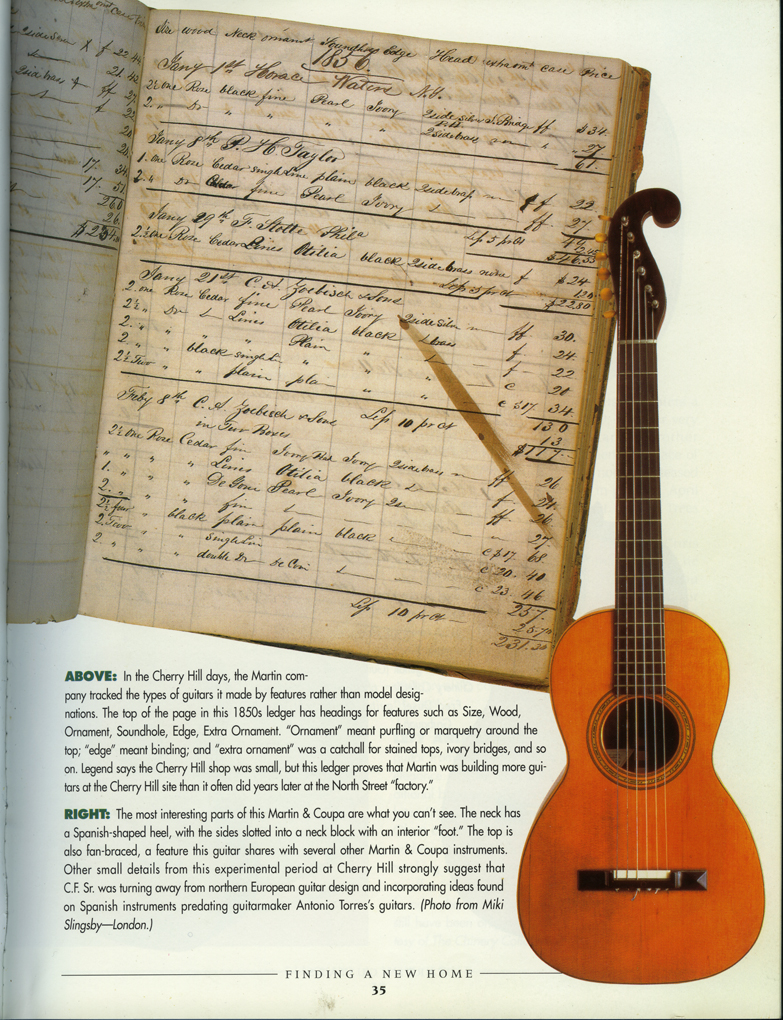
The "Spanish" Martin is a distinct style with specific features, including a line though the middle of the sides, a delicate tapered heel, fan bracing, and a Spanish Foot.
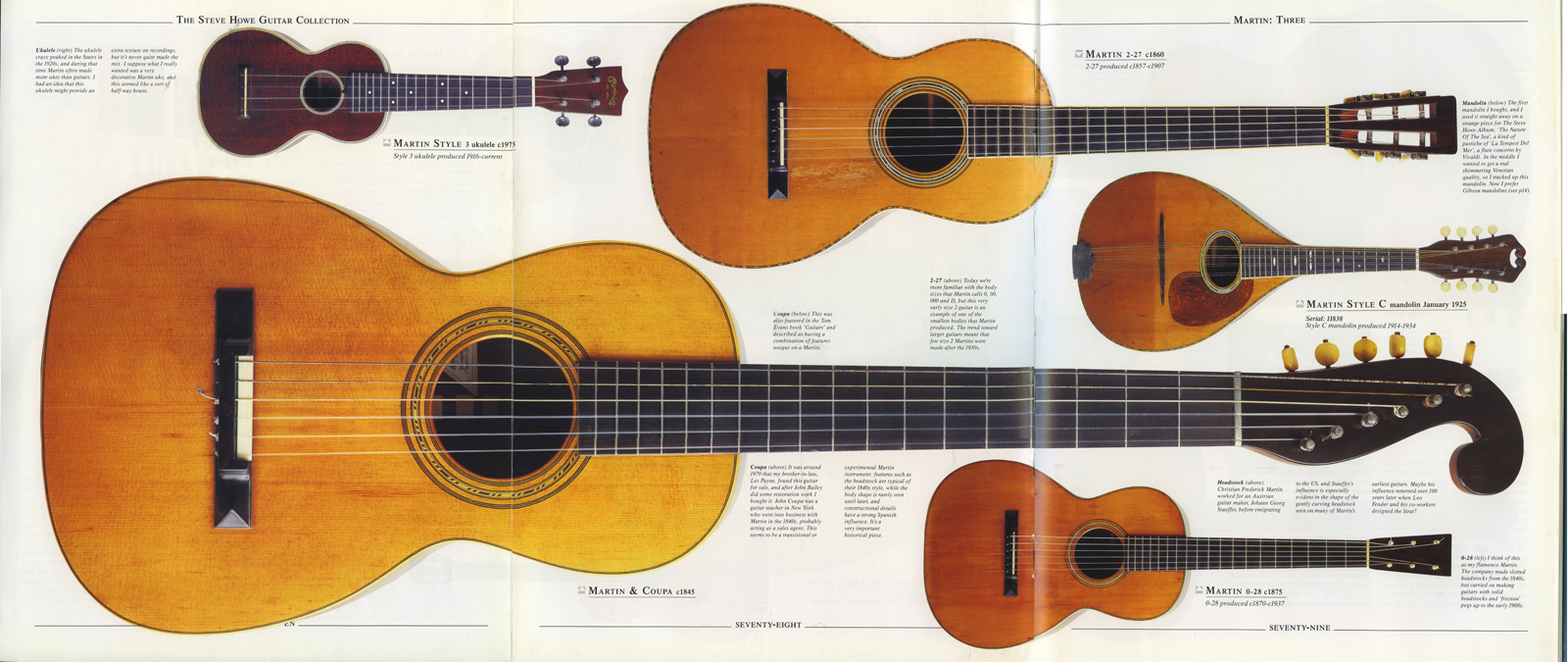
The Martin & Coupa above has been touted as containing a singularly unique combination of features not found on any other known Martin guitar,
including elements showing Martin's Viennese and Spanish influences, as well as the beginnings of his own style. When I purchased this 1844 Schmidt
and Maul guitar at auction from Christie's, I was shocked to discover that it contained every single one of the unique elements recognized by Evans in the
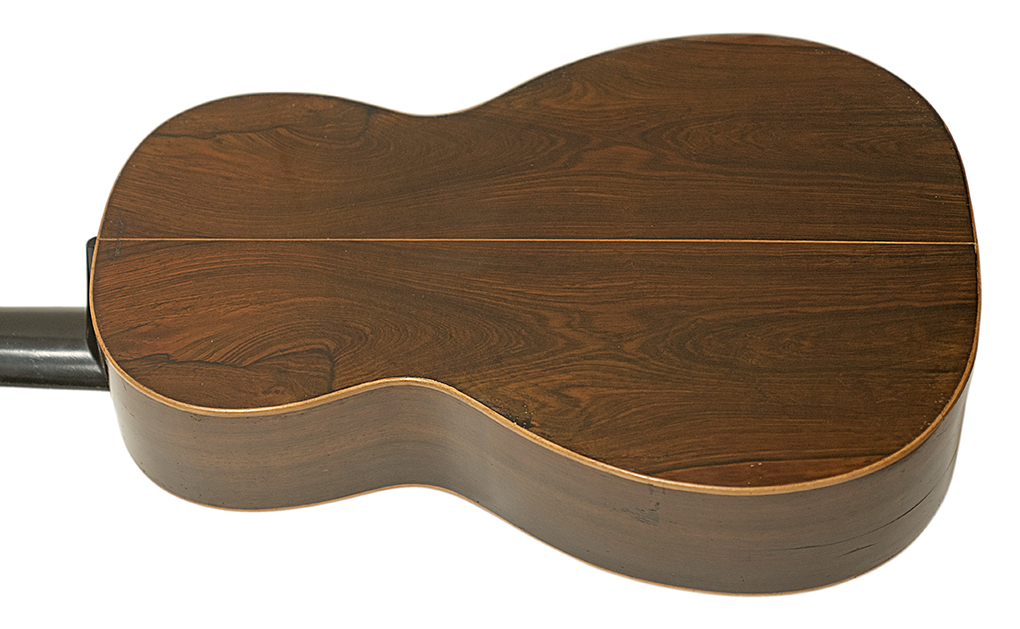
Martin & Coupa above, including Viennese gears and Spanish fan bracing, split sides with marquetry, simple holly borders and back strip following through
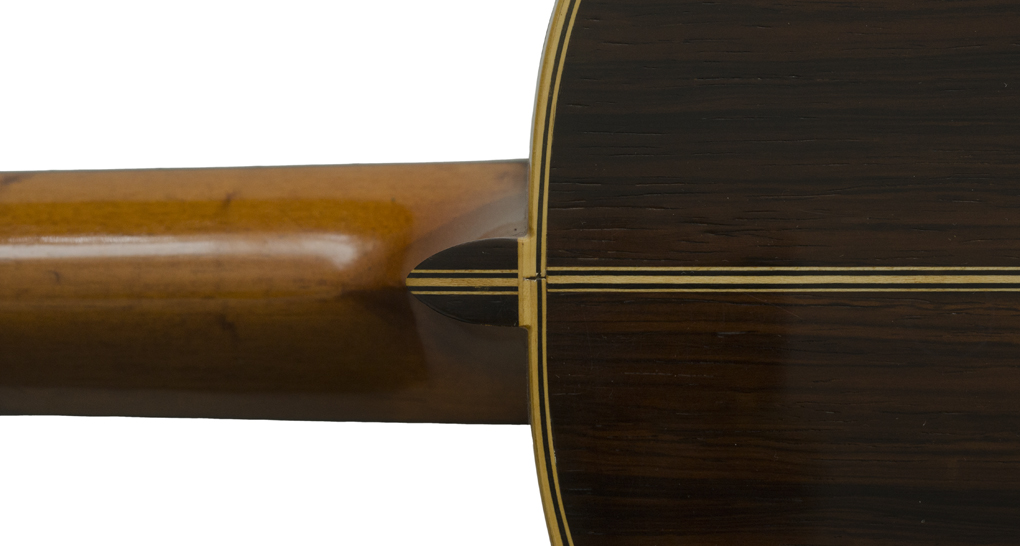
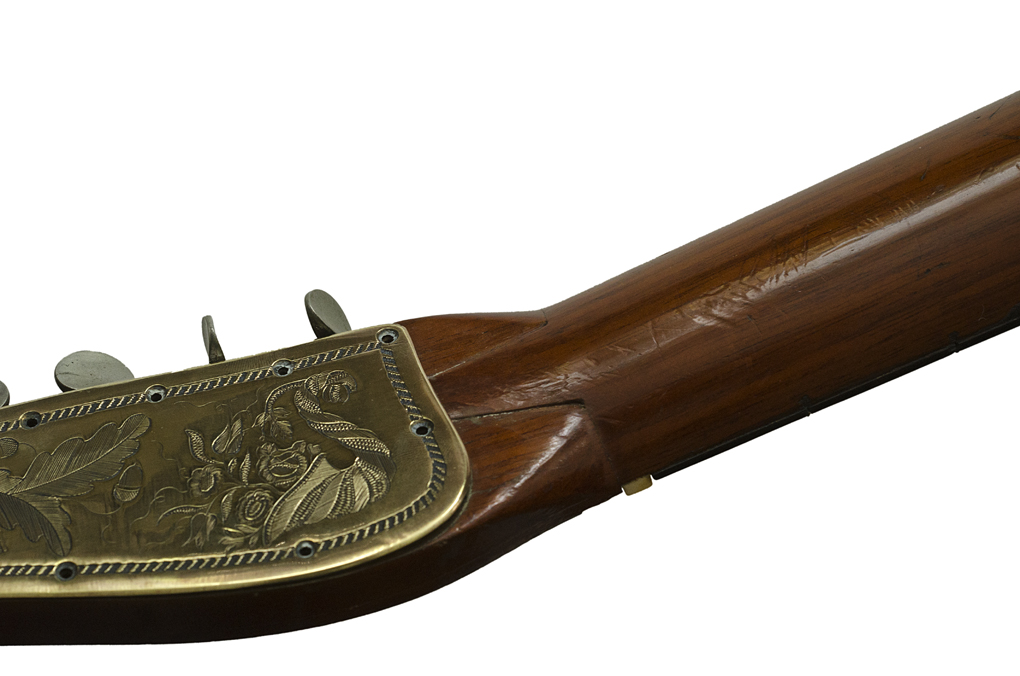
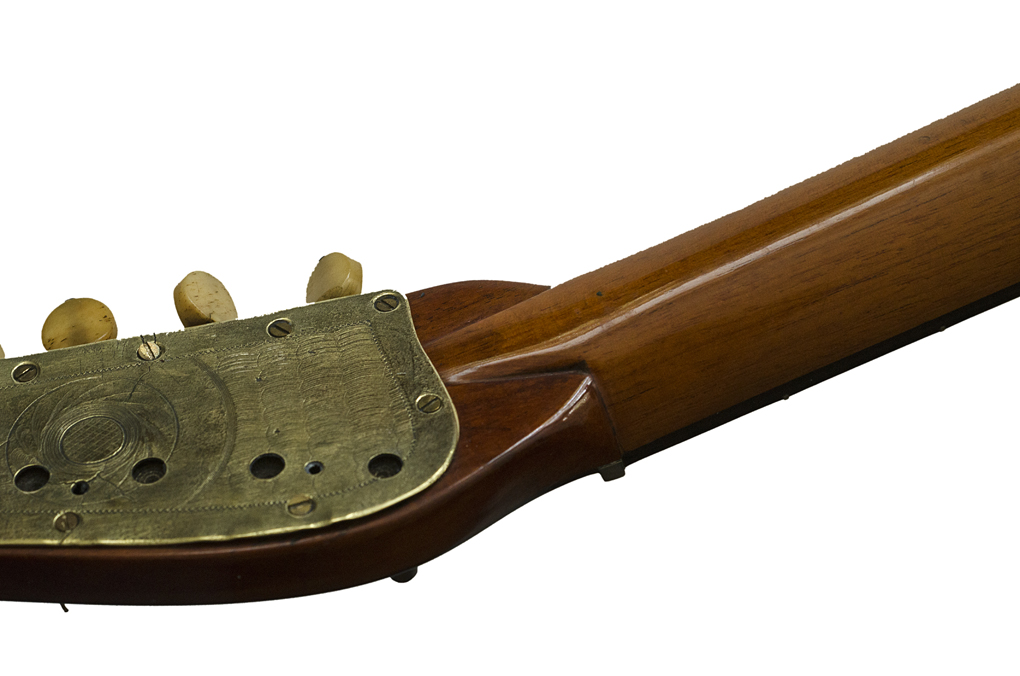
the Viennese Style headstock with gears, and Spanish Style cedar neck with a distinctive raised volute that has been flattened to fit under the gear plate. This
guitar shows us that Schmidt & Maul were also influenced by Spanish guitars at an early date.
It is inconceivable in the small community of German immigrants
that Schmidt and Maul were formerly both employees of Martin, and
distributor, and a classical guitarist who introduced Martin to Spanish guitars, also introduced the Spanish guitars to Schmidt & Maul, who
worked upstairs at the same address as Coupa.
1844 Spanish Style Schmidt & Maul
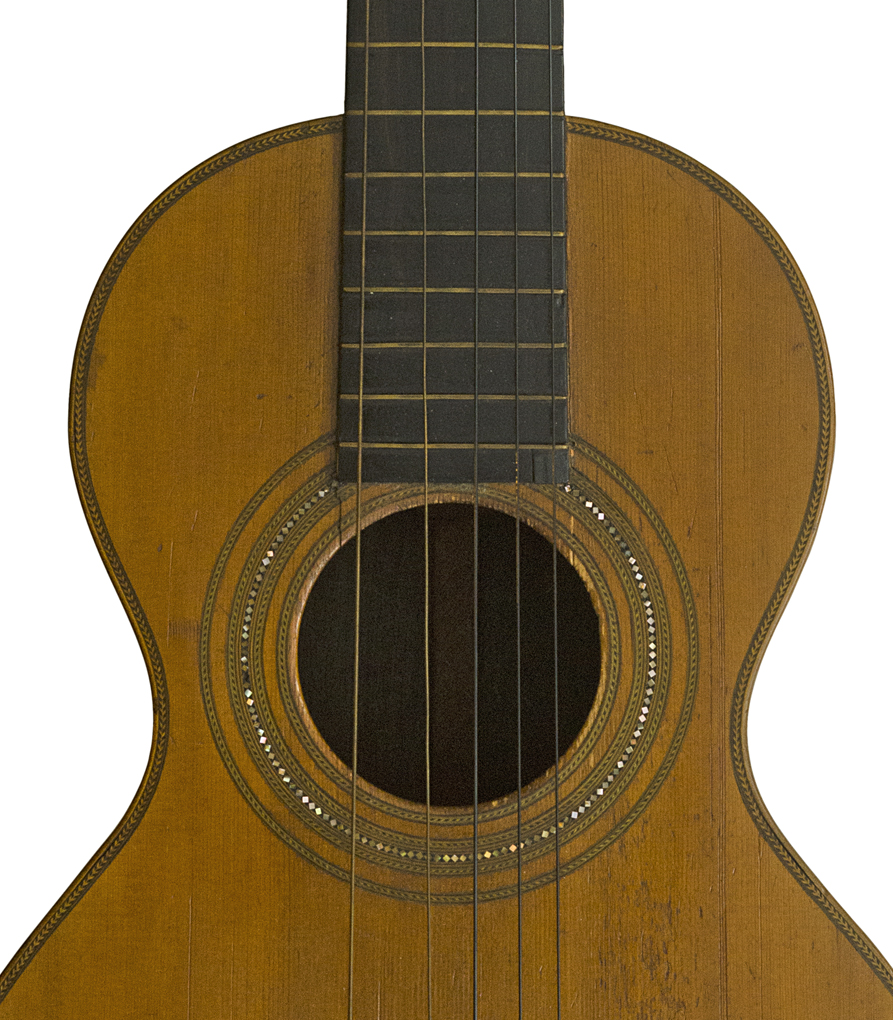
This Schmidt & Maul has virtually every feature of the rare Spanish Martin & Coupa from the Howe Collection which was thought by students of the early guitar to be extremely unique, as described here:
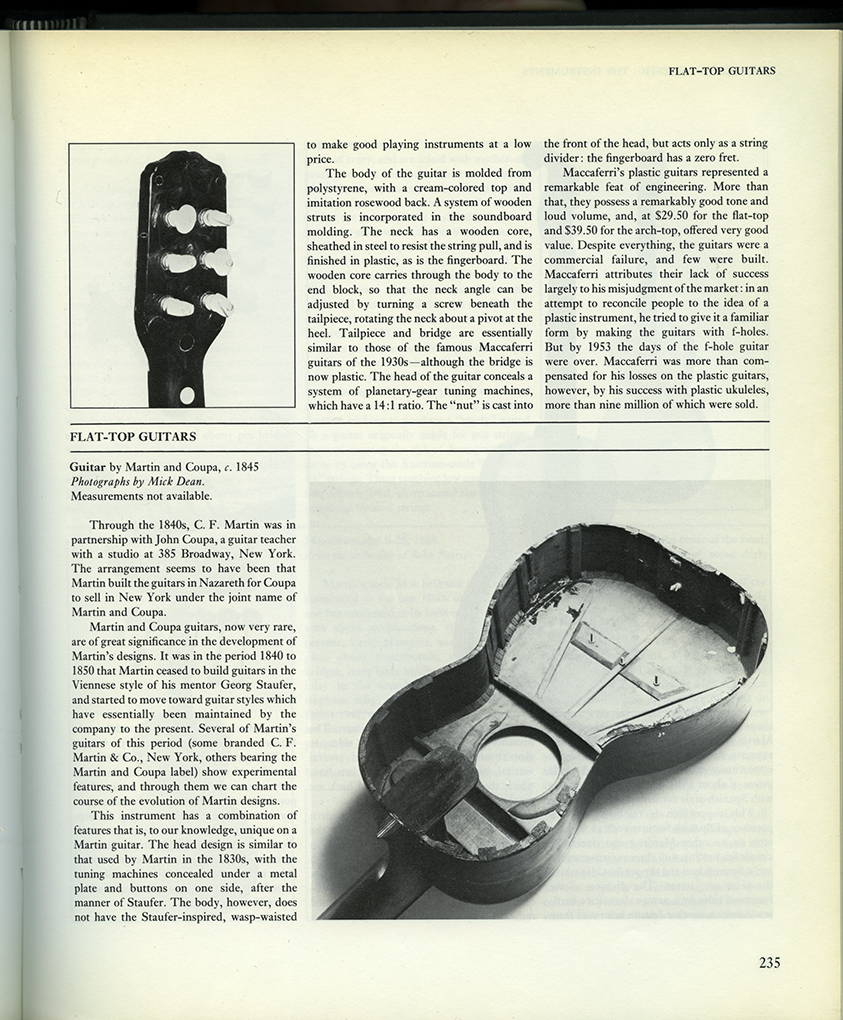
The importance of this particular example as a transitional guitar with the head design of the Viennese Staufer, the fan bracing, cedar neck with Spanish heel, interior foot, tied bridge, and two-piece sides of a pre-Torres Spanish guitar, and Martin's new body shape and pyramid bridge design, is described by Evans:
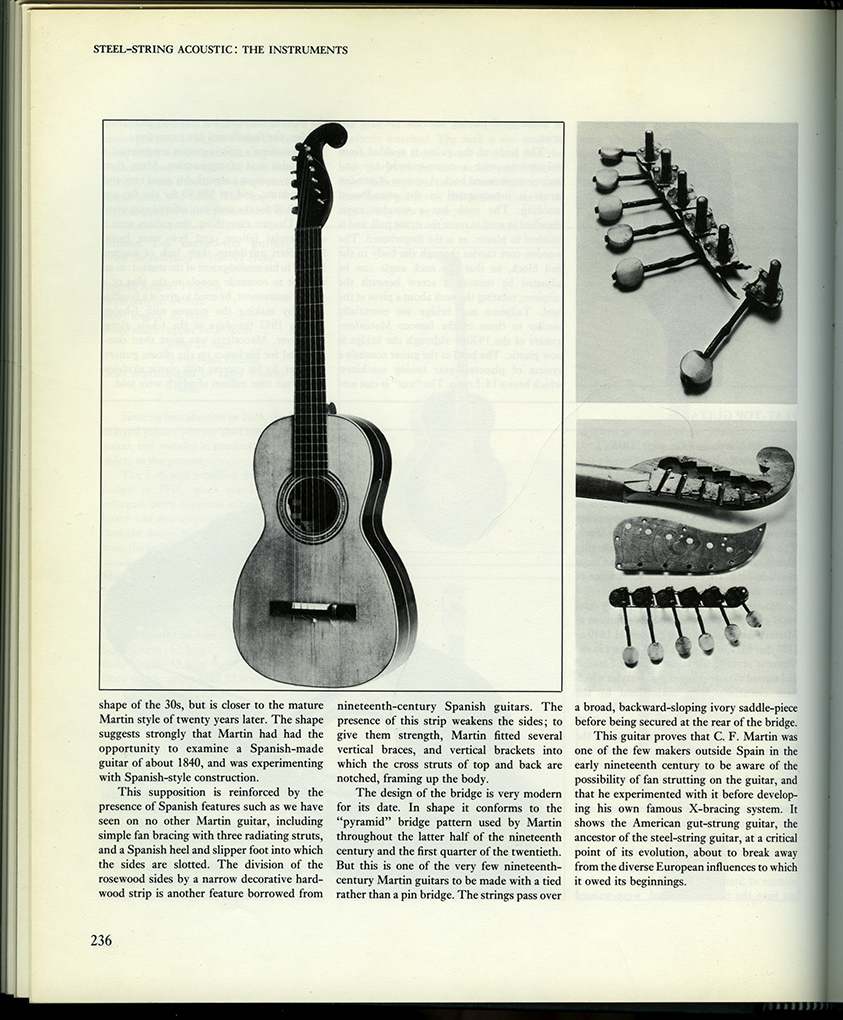
"This instrument has a combination of features that is, to our knowledge, unique on a Martin guitar. The head design is similar to that used by Martin in the 1830's, with the tuning machines concealed under a metal plate and buttons on one side, after the manner of Staffer. The body, however, does not have the Staufer-inspired, wasp-waisted shape of the 1830's, but is closer to the mature Martin style of twenty years later. The shape suggests strongly that Marin had had the opportunity to examine a Spanish-made guitar of about 1840, and was experimenting with Spanish-style construction."
"This supposition is reinforced by the presence of Spanish features such as we have seen on no other Martin guitar, including simple fan bracing with three radiating struts, and a Spanish head and slipper foot into which the sides are slotted. The division of the rosewood sides by a narrow decorative hardwood strip is another feature borrowed from the nineteenth-century Spanish guitars. The presence of this strip weakens the sides; to give them strength, Martin fitted several vertical braces int which the cross struts of the top and back are notched, framing up the body."
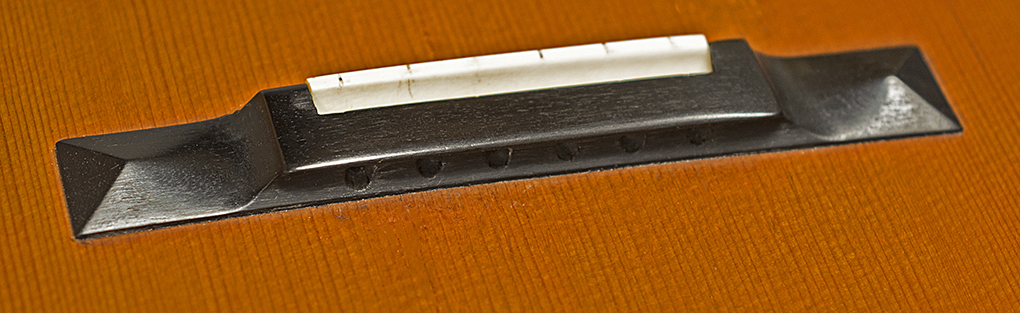
"The design of the bridge is very modern for it's date. In shape it conforms to the "pyramid" bridge pattern used by Martin throughout the latter half of the nineteenth century and the first quarter of the twentieth. But this is one of the very few nineteenth-century Martin guitars to be made with a tied rather than a pin bridge. The strings pass over a broad, backward sloping ivory saddle-piece before being secured at the rear of the bridge."
"This guitar proves that C.F. Martin was one of the few makers outside Spain in the early nineteenth century to be aware of the possibility of fan strutting on the guitar, and that he experimented with it before developing his own famous X-bracing system. It shows the American gut-stringed guitar, the ancestor of the steel-sting guitar, at a critical point of it's evolution, about to break away from the diverse European influences to which it owed it's beginnings."
The unique headstock design of this example further reinforces the transitional nature of this guitar. The Staufer style head with Viennese gears combined with this style of attachment to the neck, with the volute common on Martins to this day, is quite the surprise, never seen on another Martin. All other Viennese gears seen on Martin guitars to date have had metal tuning buttons.
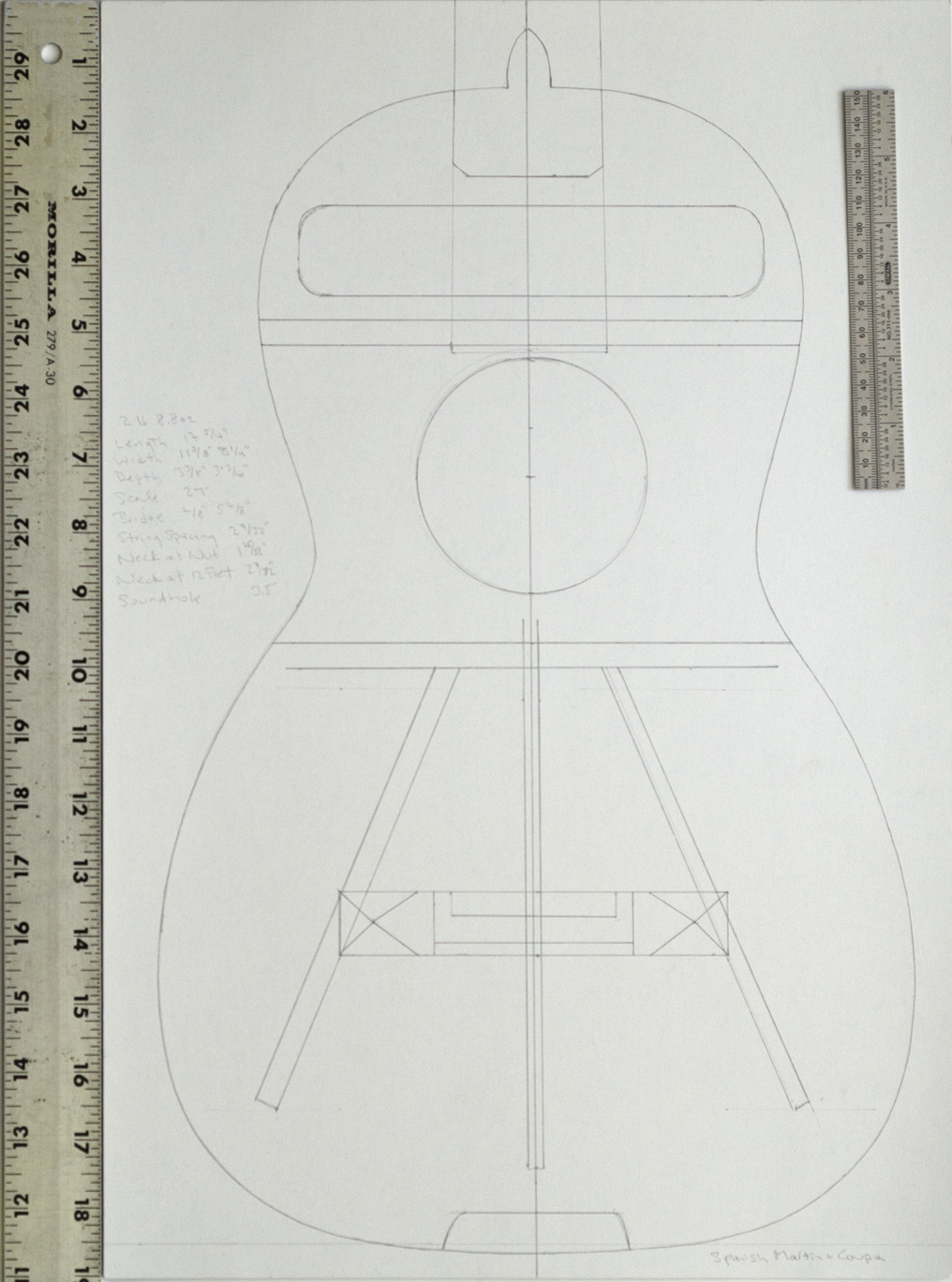
The primary distinction between these guitars is the body shape, with the Martin & Coupa having the more typical wider waist, flat bottom Spanish shape which was adopted by Martin as a trademark of his 12 fret guitars.
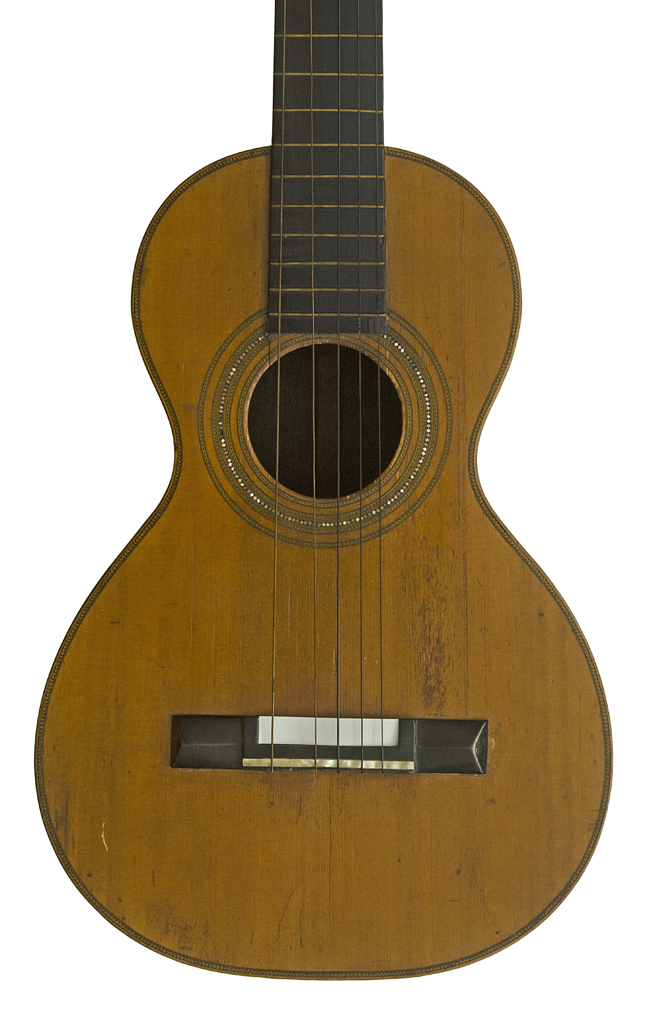
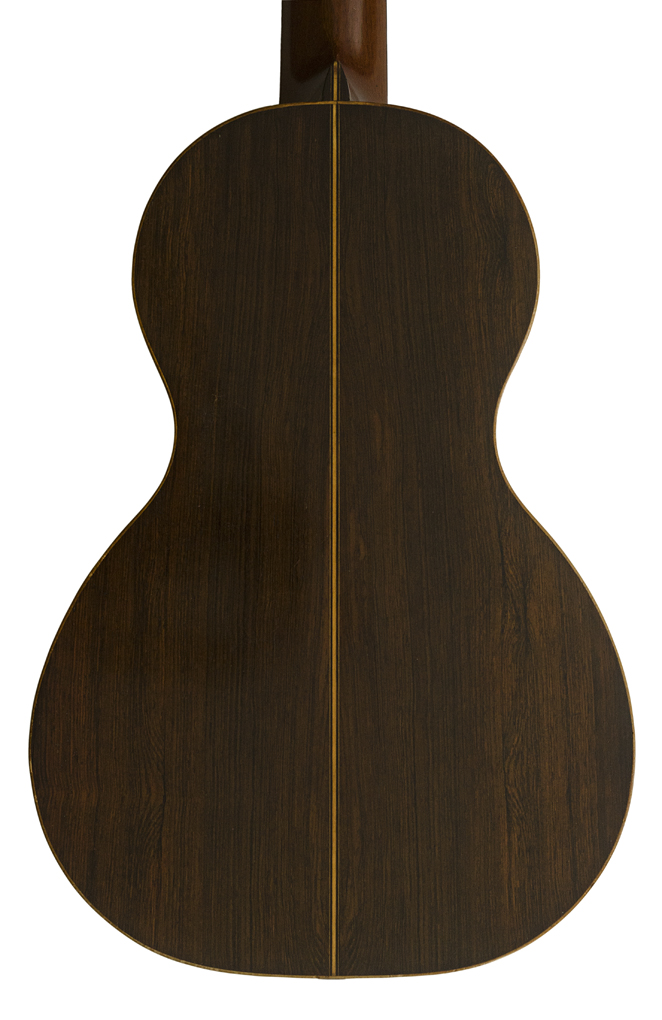
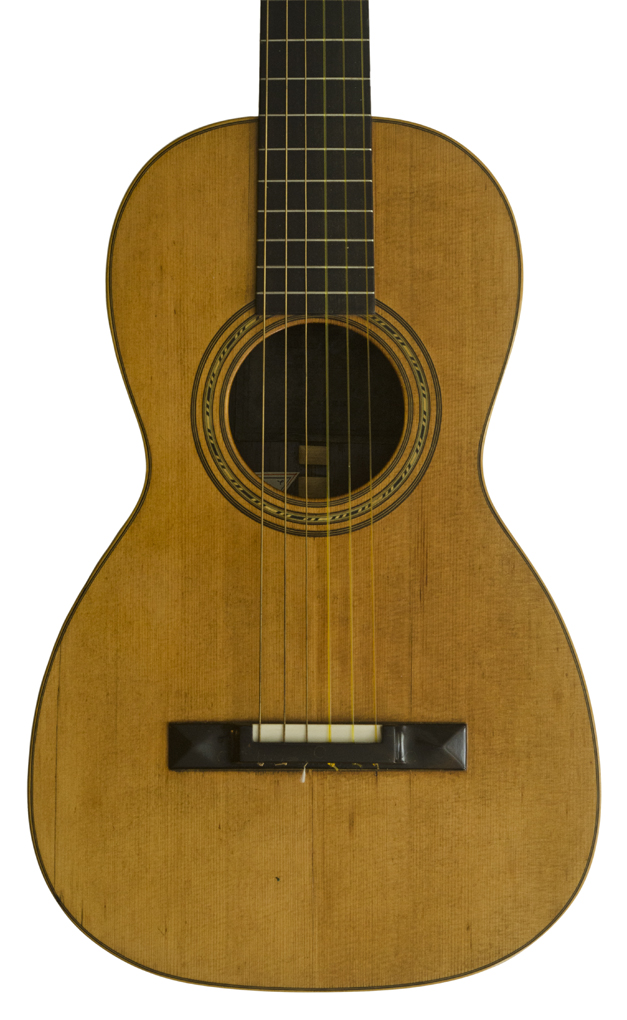
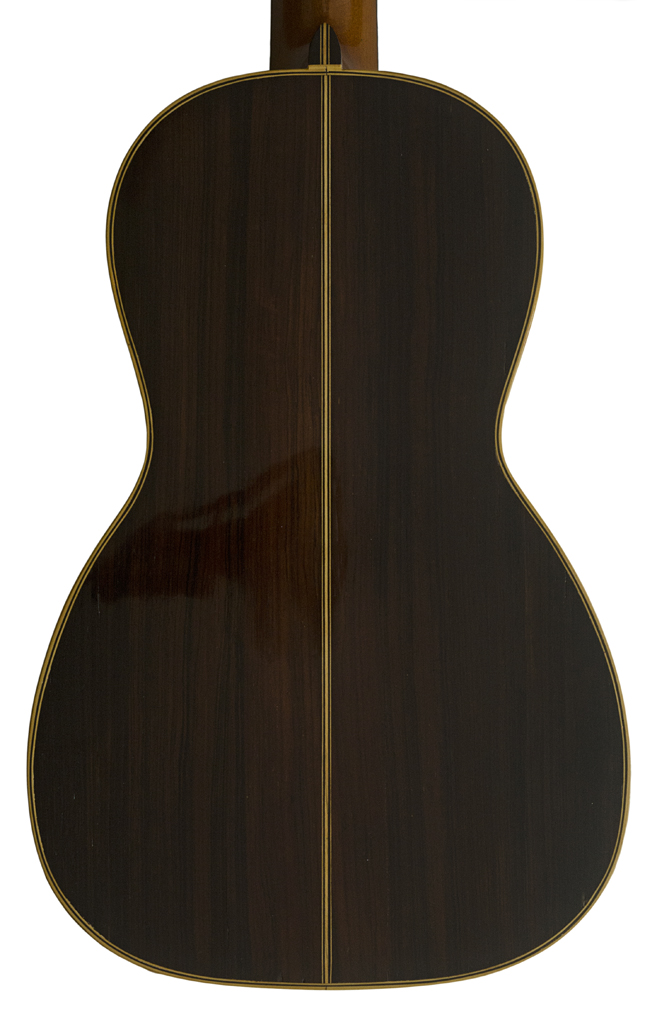
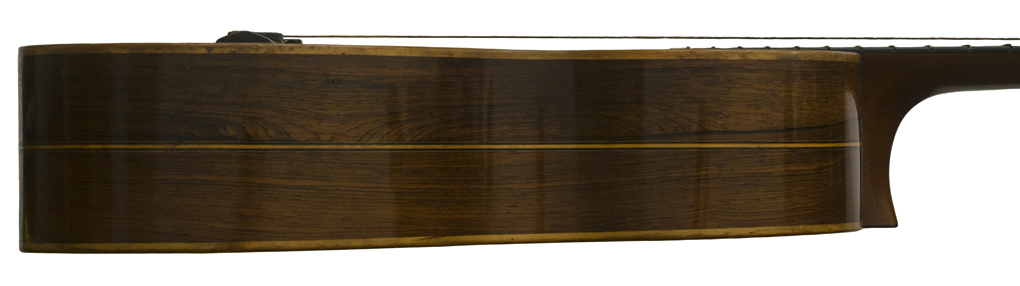
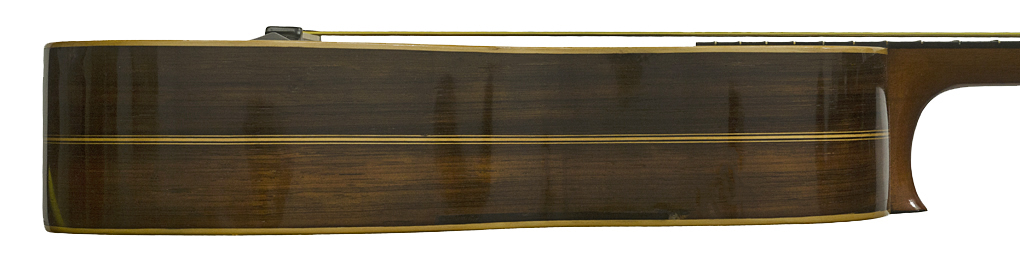
Both the Schmidt & Maul and Martin & Coupa have two piece sides divided by a straight lines of holly, matching the holly binding.
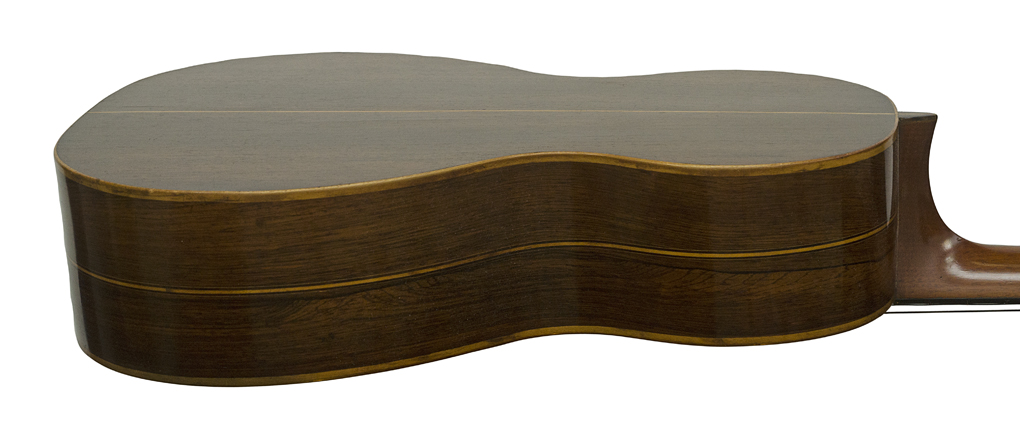
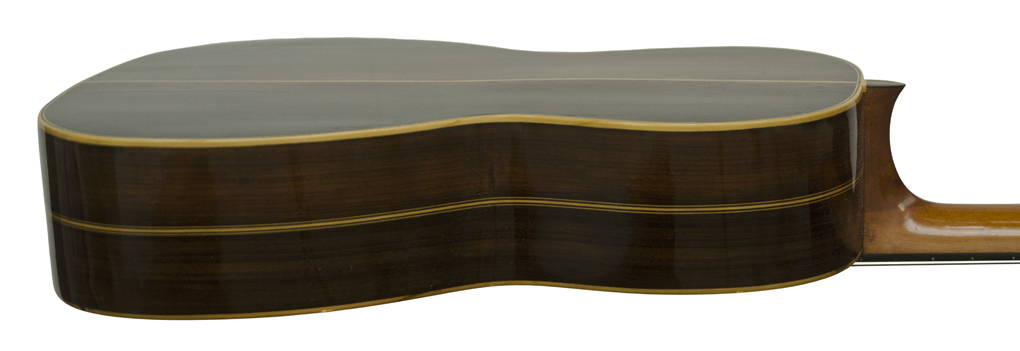
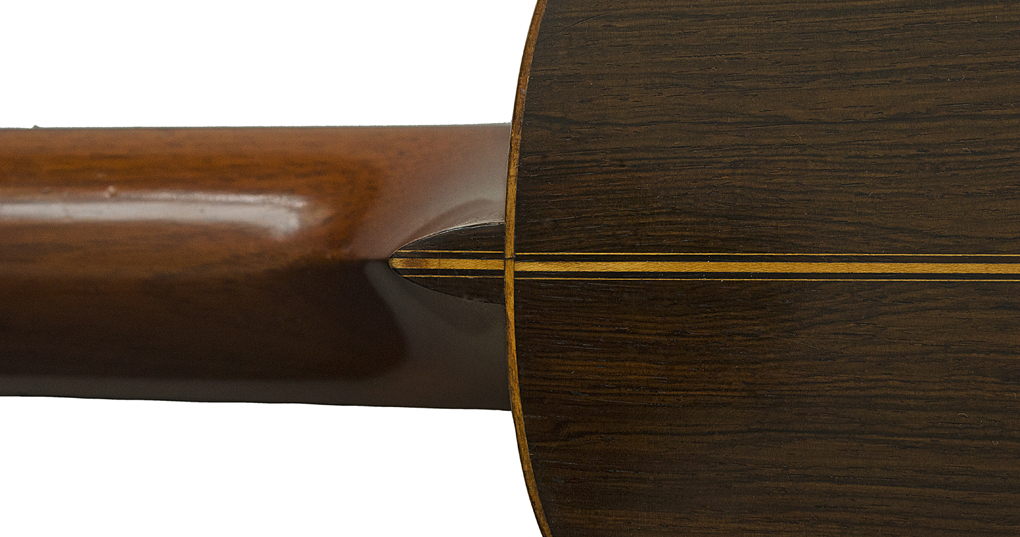
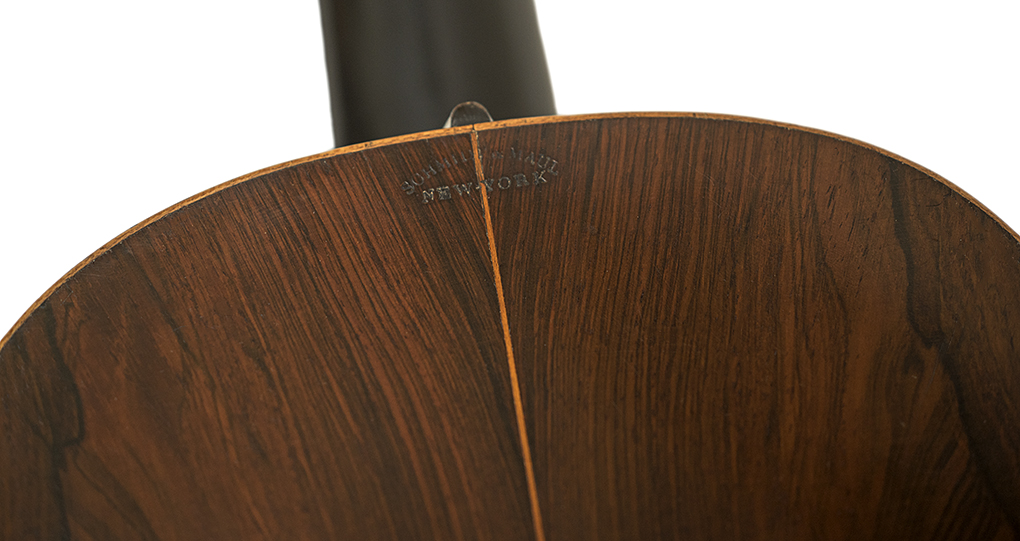
Both the Schmidt & Maul and Martin & Coupa have a simple back strip of straight lines of holly, which extends to the cap of an elegantly curved heel on a cedar neck.
Both the Schmidt & Maul and Martin & Coupa have a 24" scale.
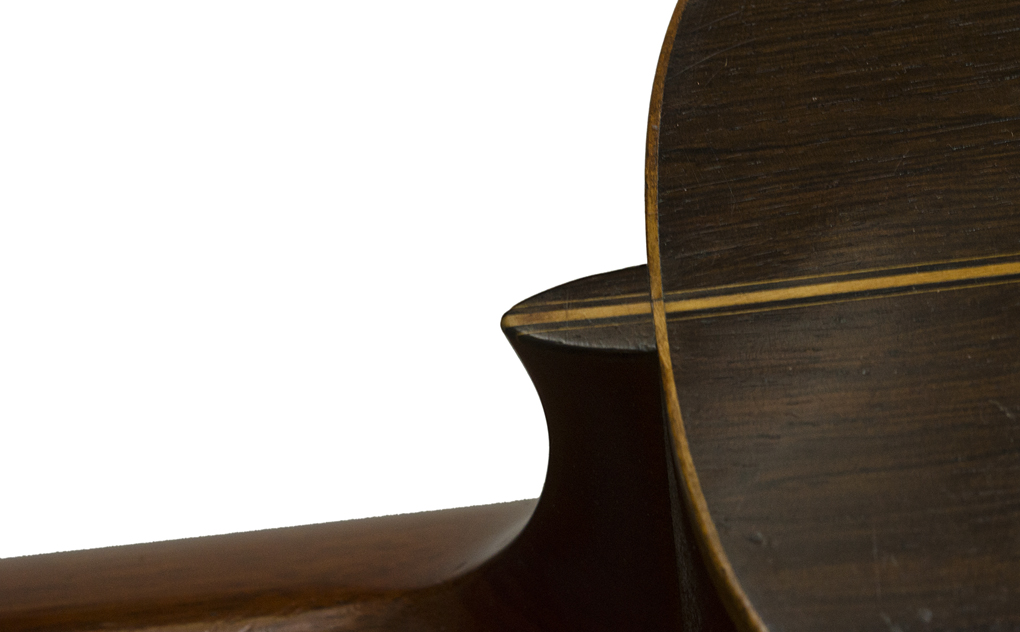
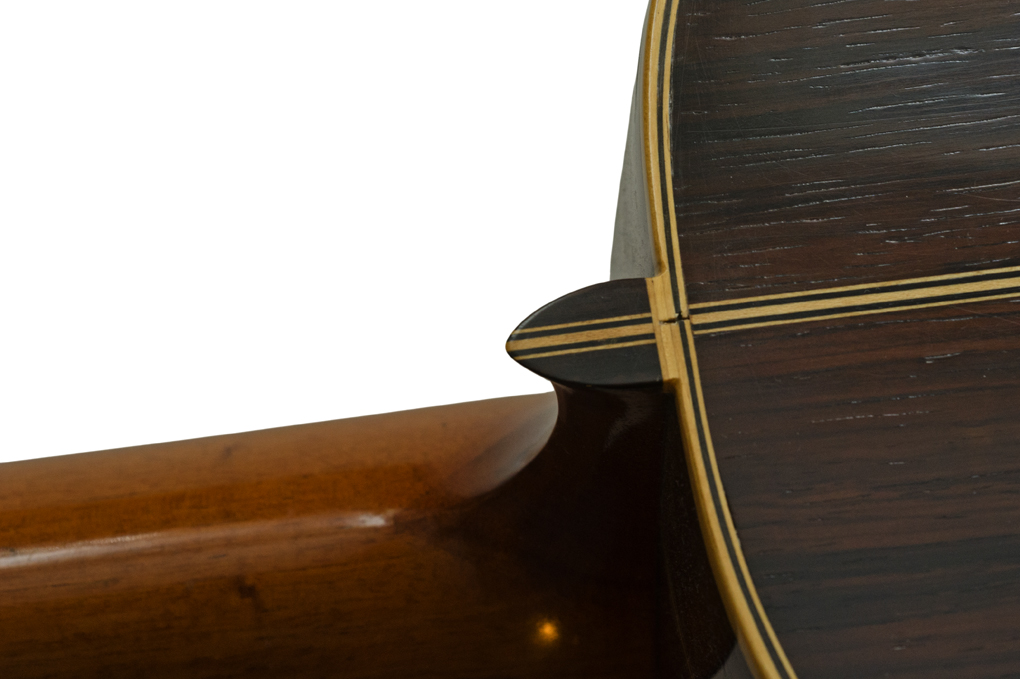
Both the Schmidt & Maul and Martin & Coupa have long headstocks with Viennese gears.
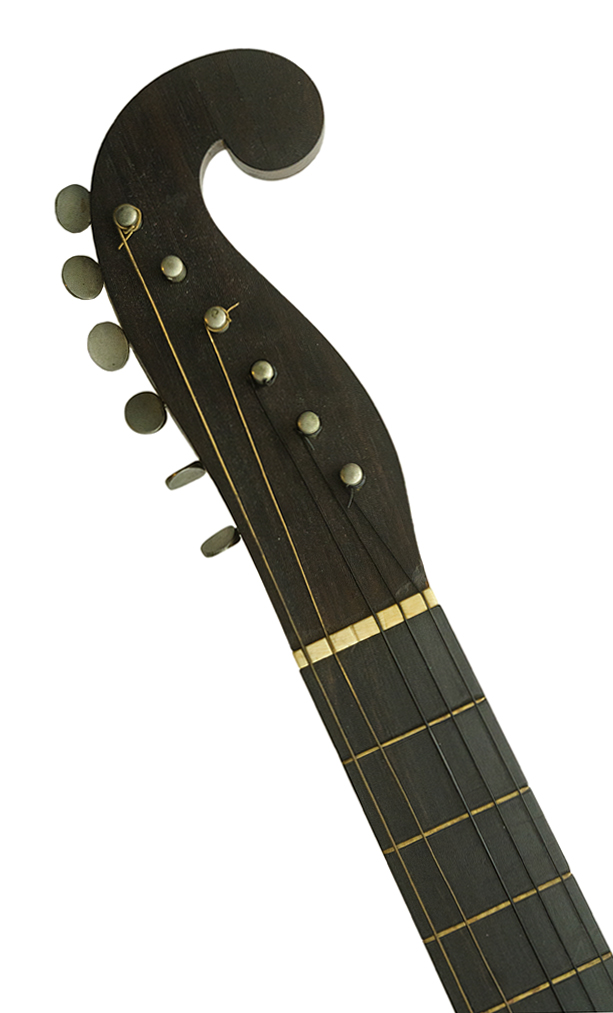
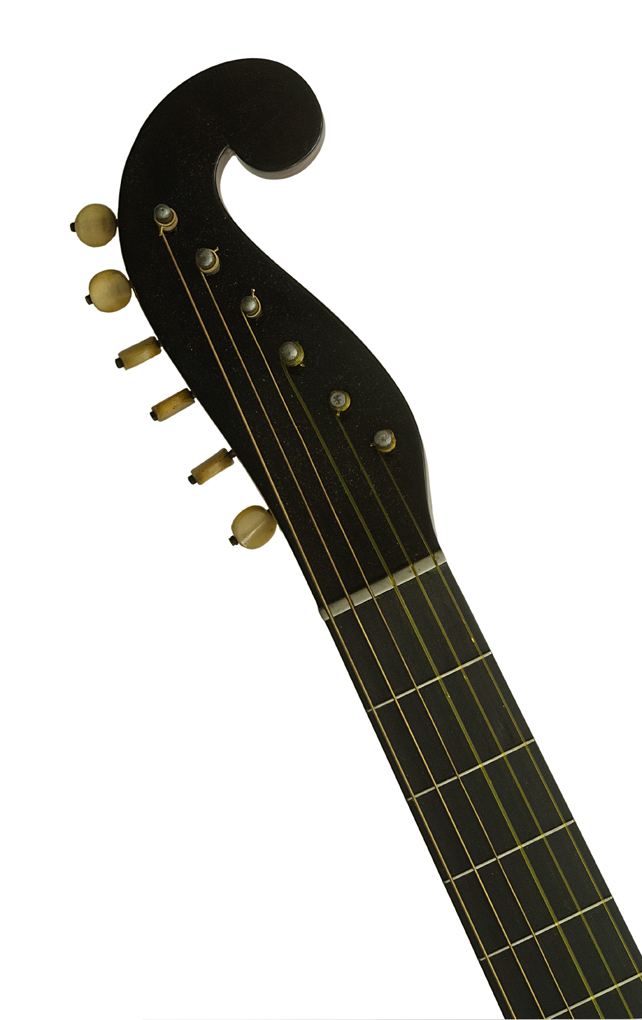
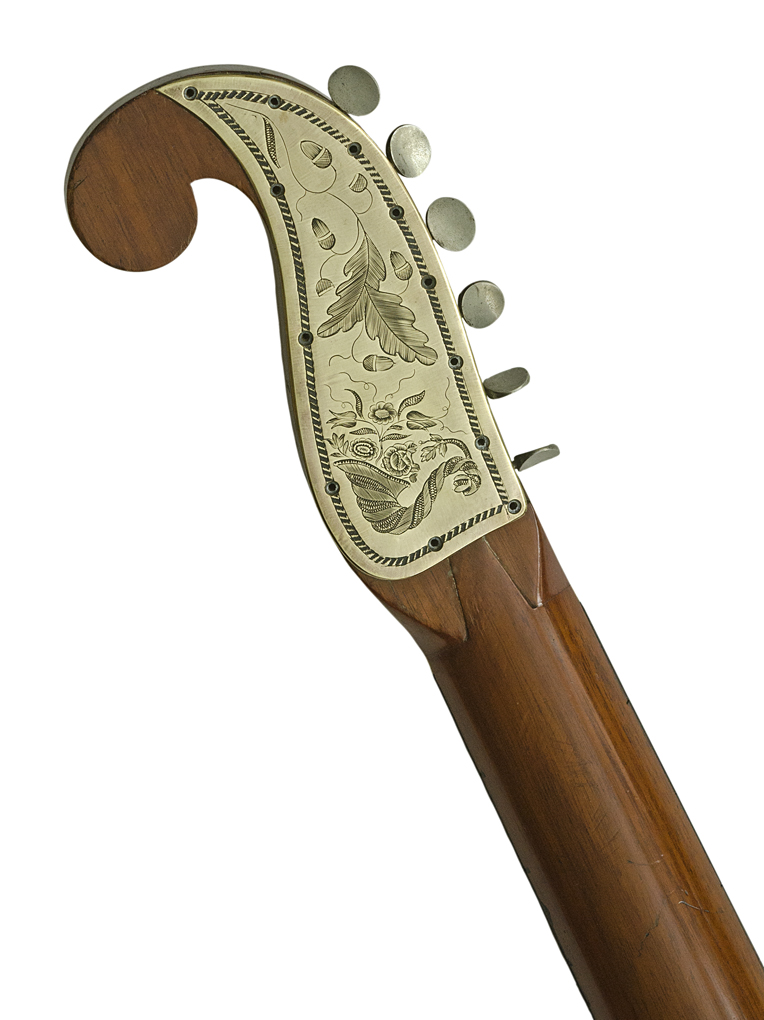
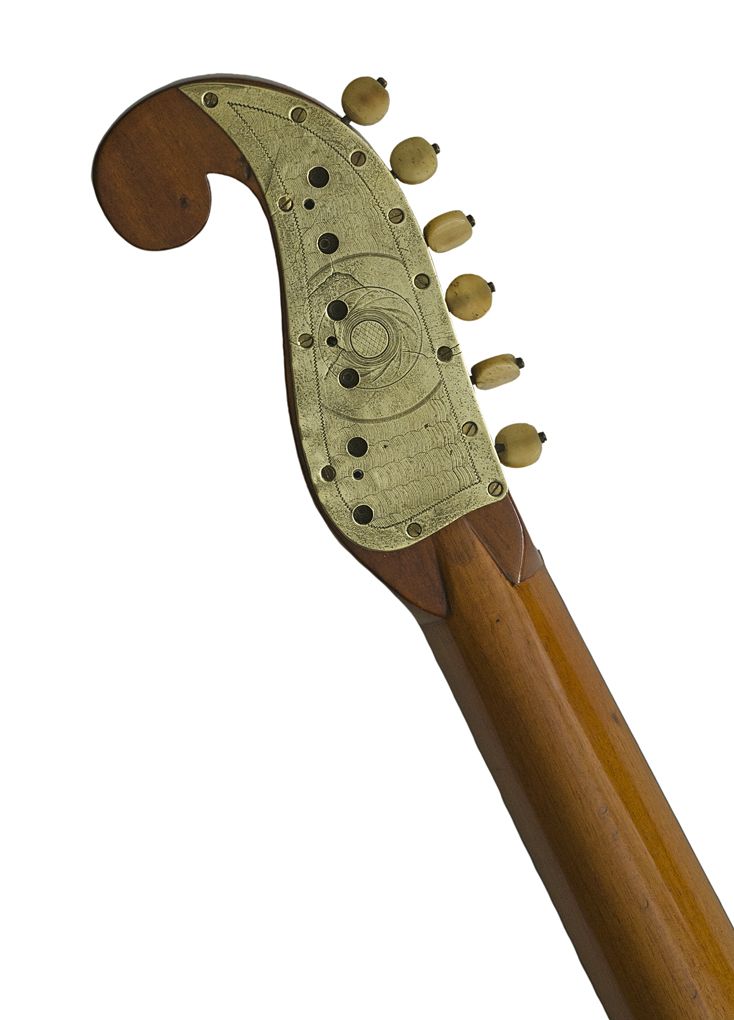
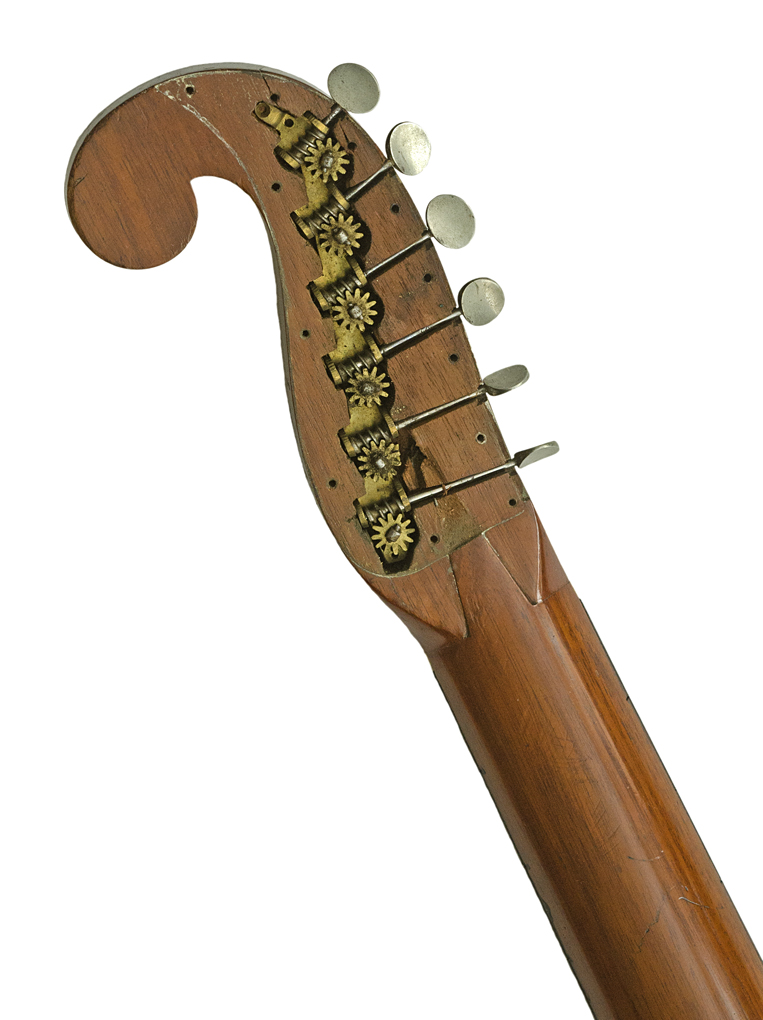
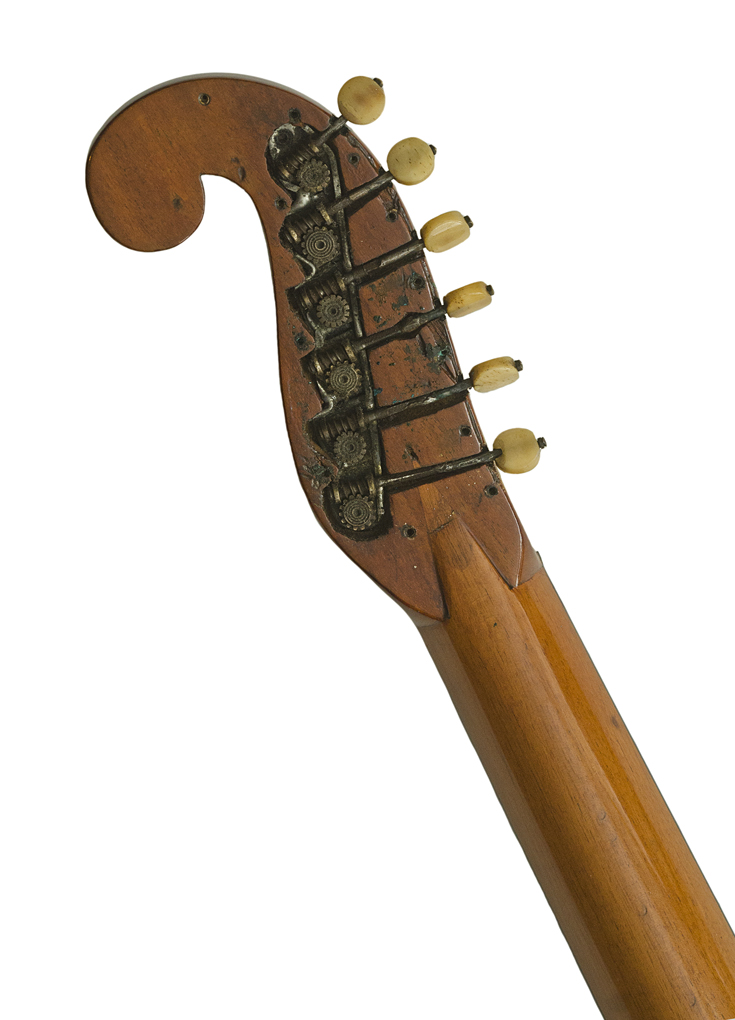
Both the Schmidt & Maul and Martin & Coupa have the unique combination of Viennese Gears on a headstock joined with a raised volute with flattened ends to make room for the gear cover.
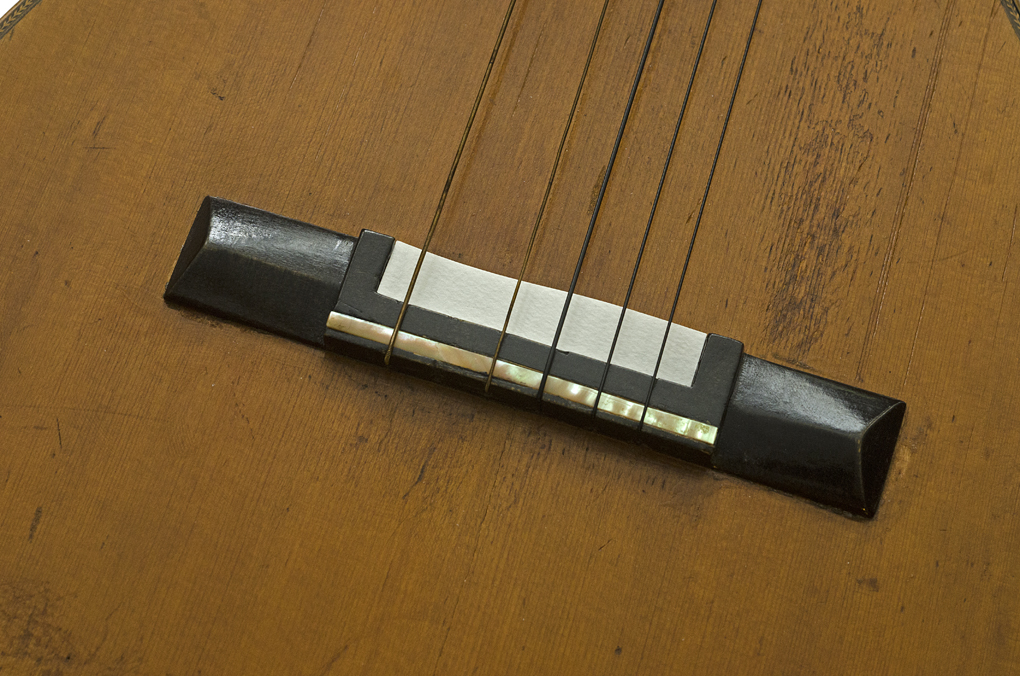
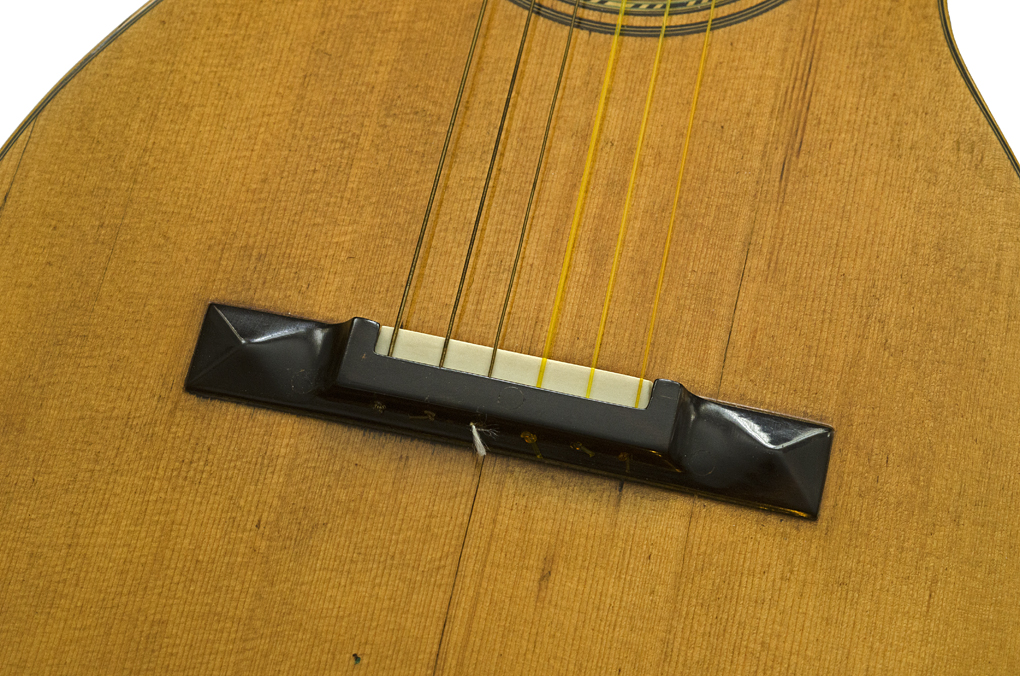
Both the Schmidt & Maul and Martin & Coupa have an ebony tie style pyramid bridge with flat, broad inset ivory saddle.
The Schmidt & Maul bridge is larger than the Martin & Coupa bridge, but the Spanish Martins that followed tended to have a larger than usual bridge for a Martin.

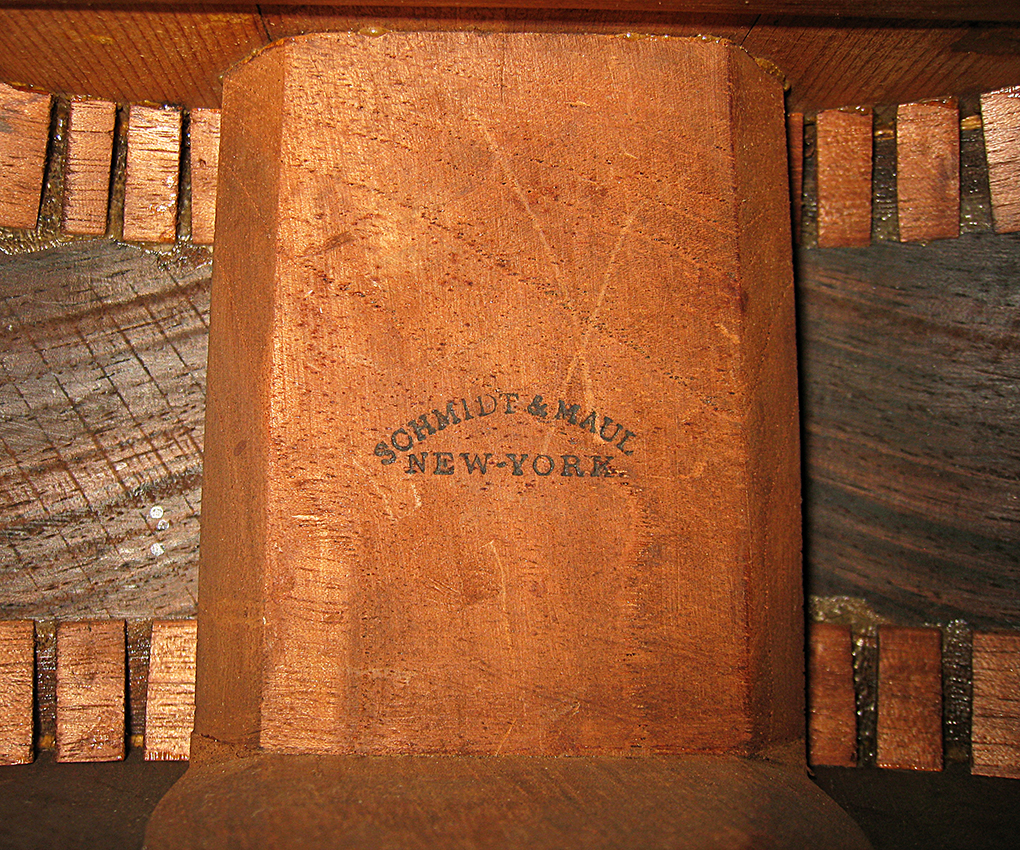
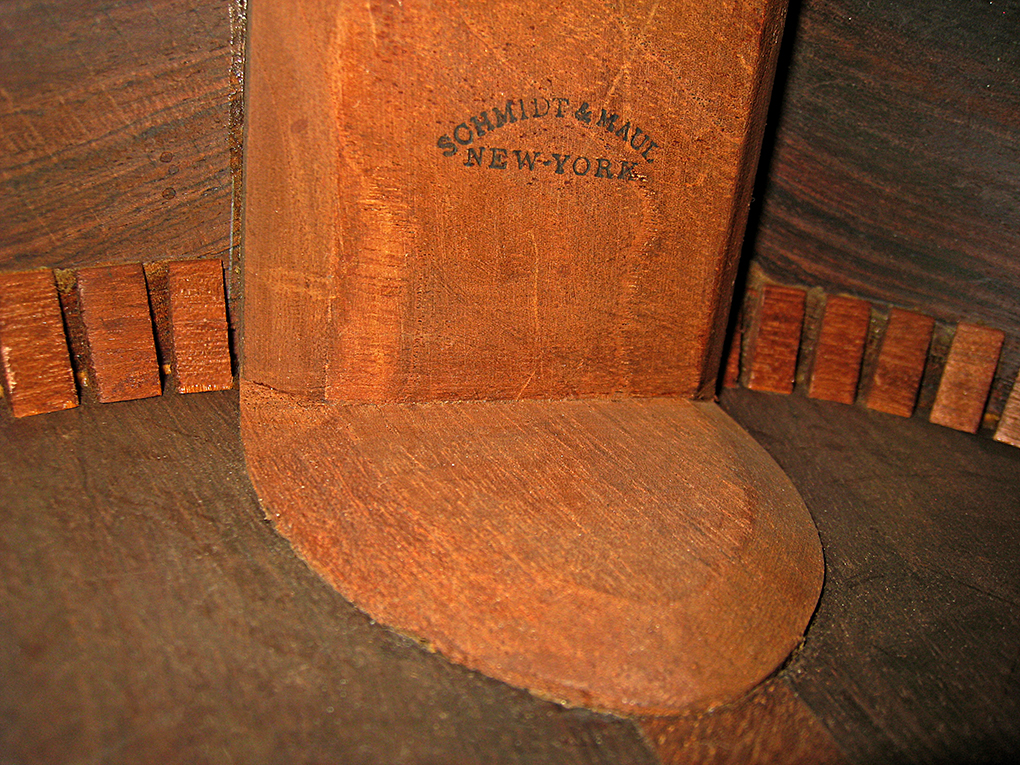
Both the Schmidt & Maul and Martin & Coupa have a broad, thick false Spanish Foot extending from the neck block.
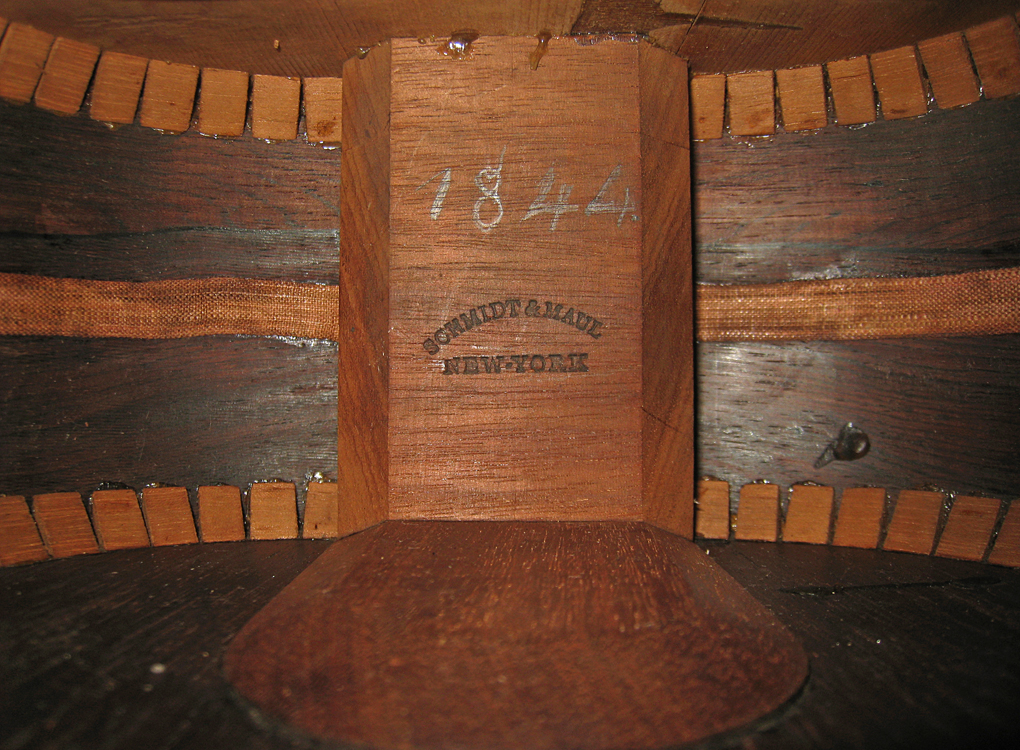
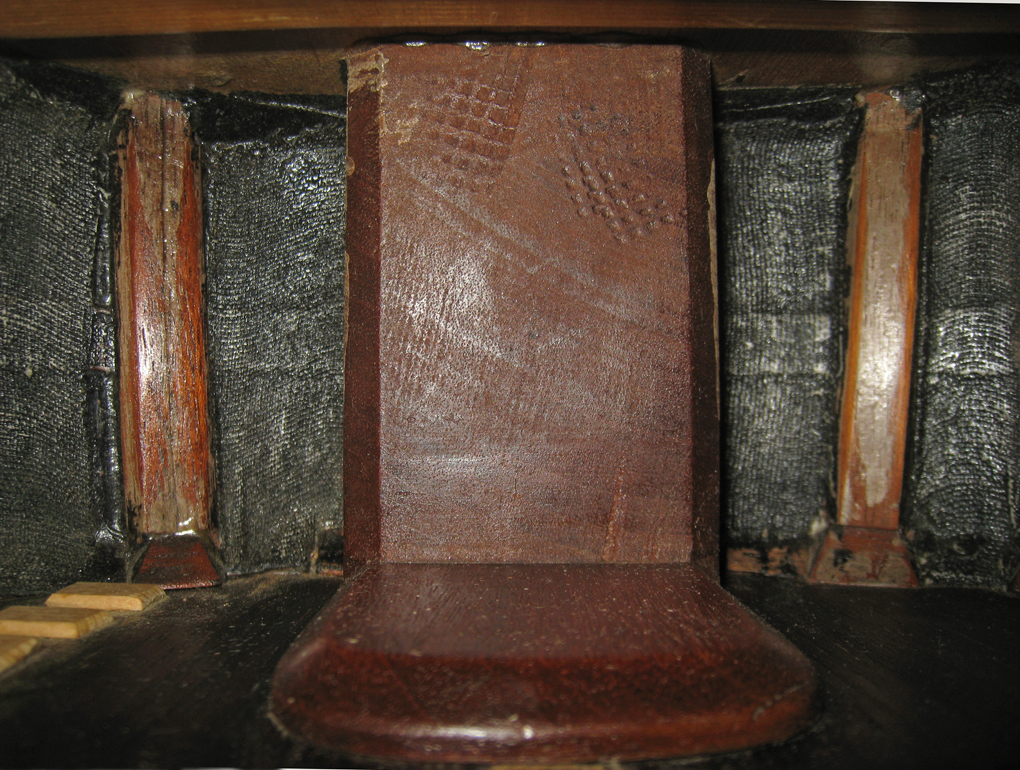
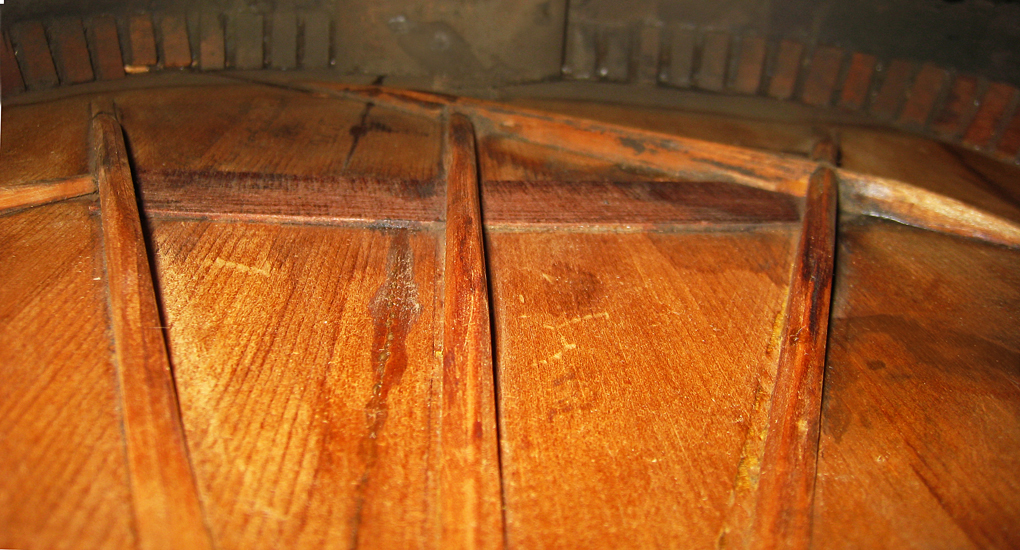
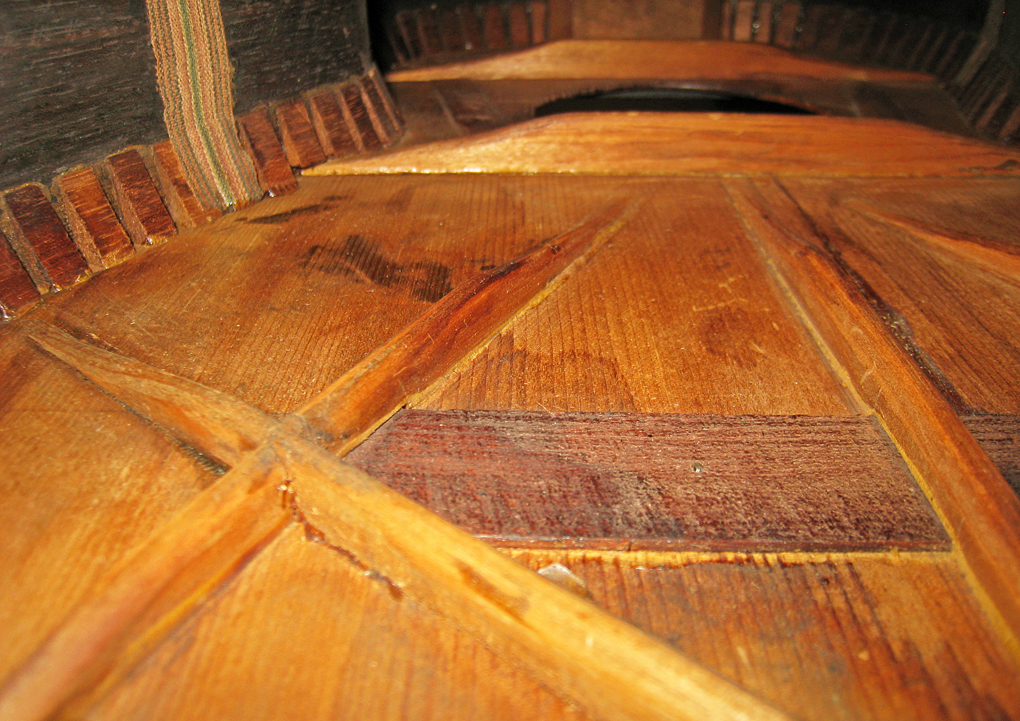
Both the Schmidt & Maul and Martin & Coupa have mahogany braces extending from the top and back braces to a cloth strip joining the center of the sides.
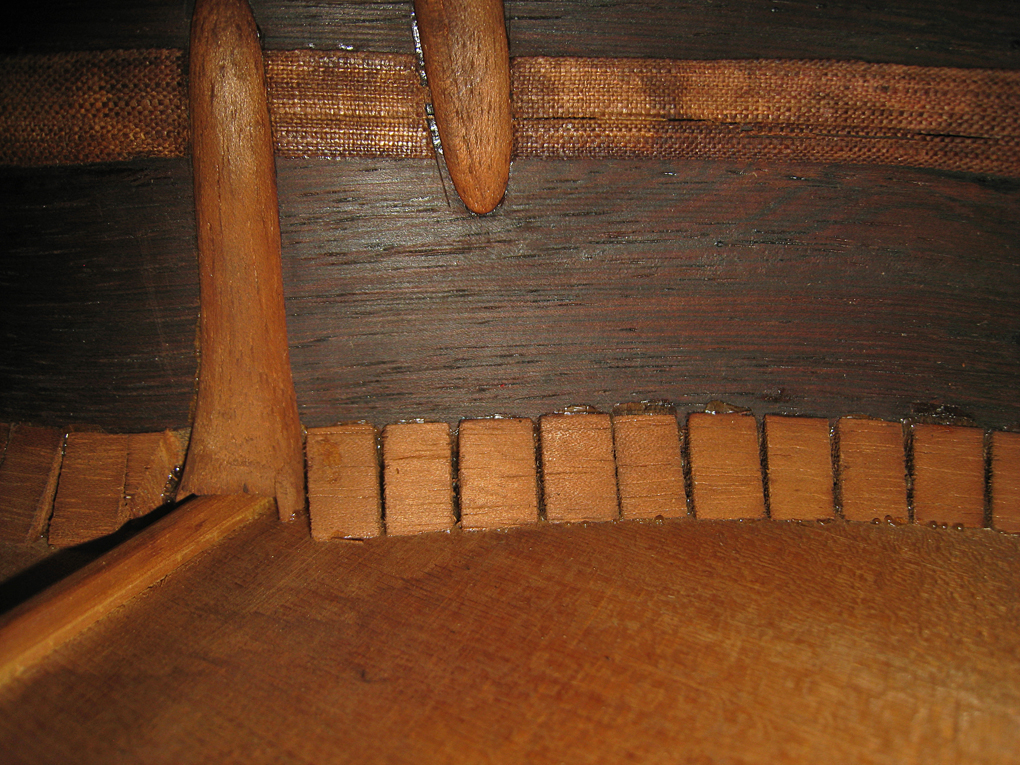
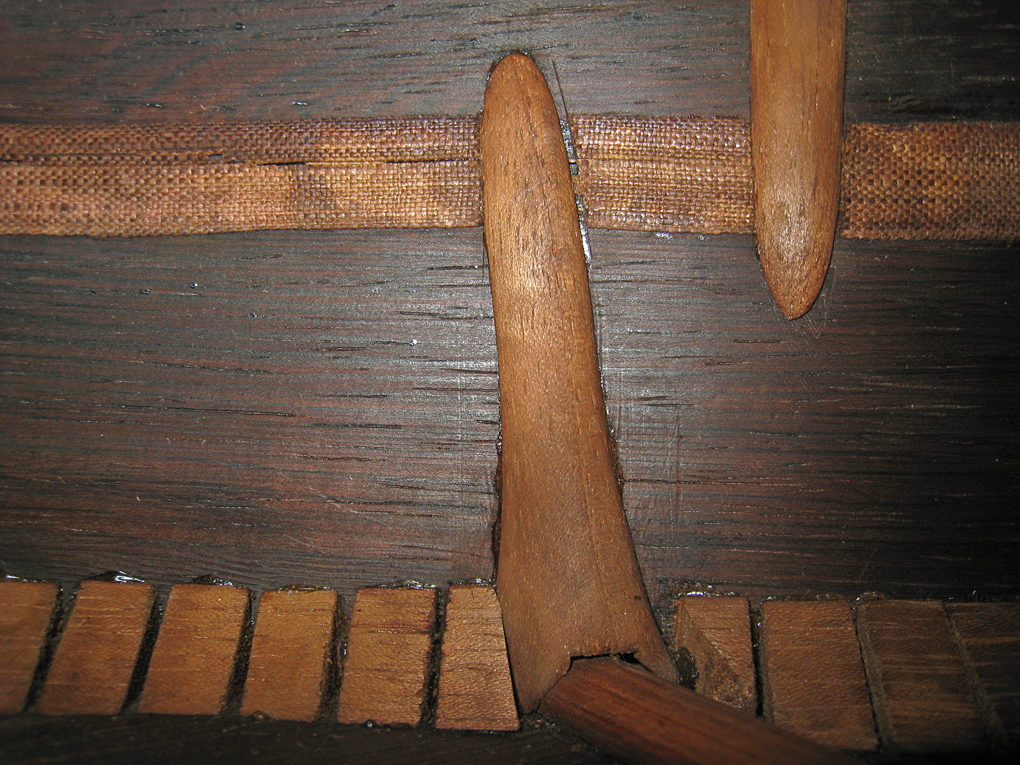
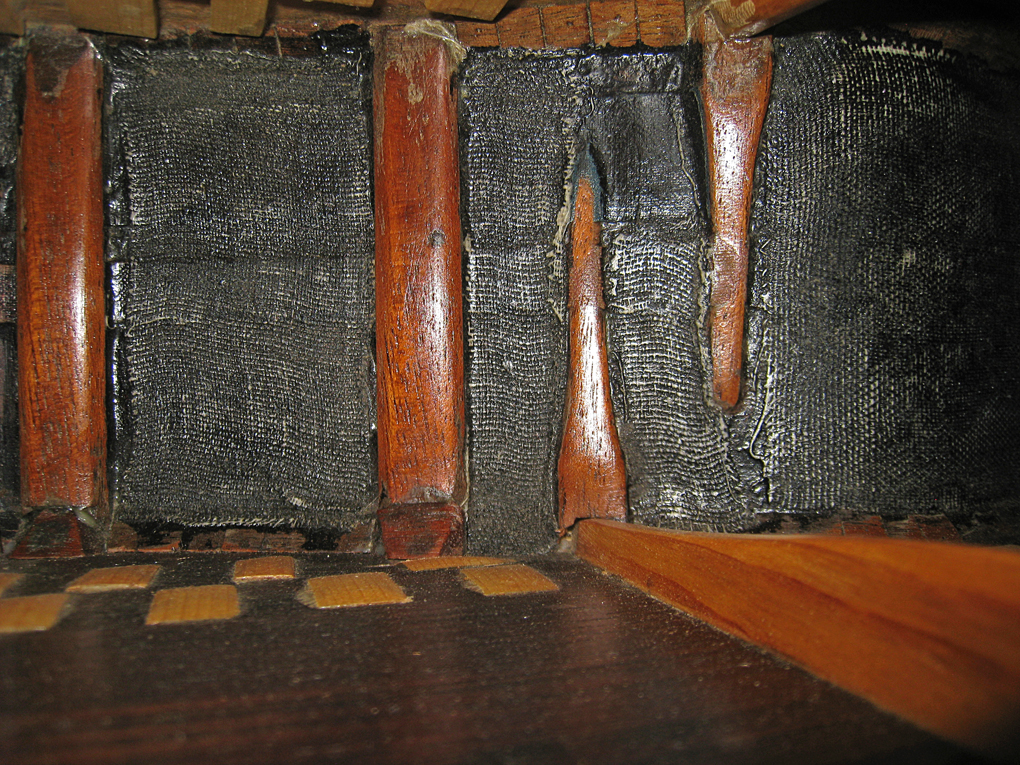
Both the Schmidt & Maul and Martin & Coupa have thick beveled blocks with bolts between the three rounded blades of the fan in place of a bridge plate.
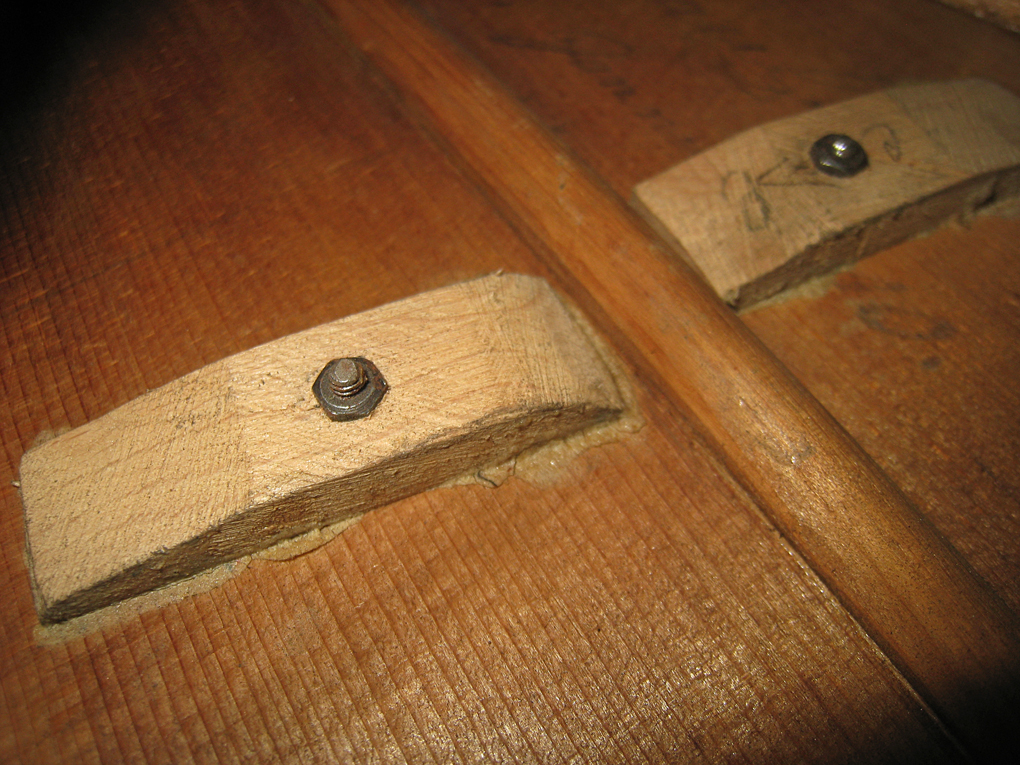
The guitar is signed underneath the top: "George Maul, New York, January 30, 1944"
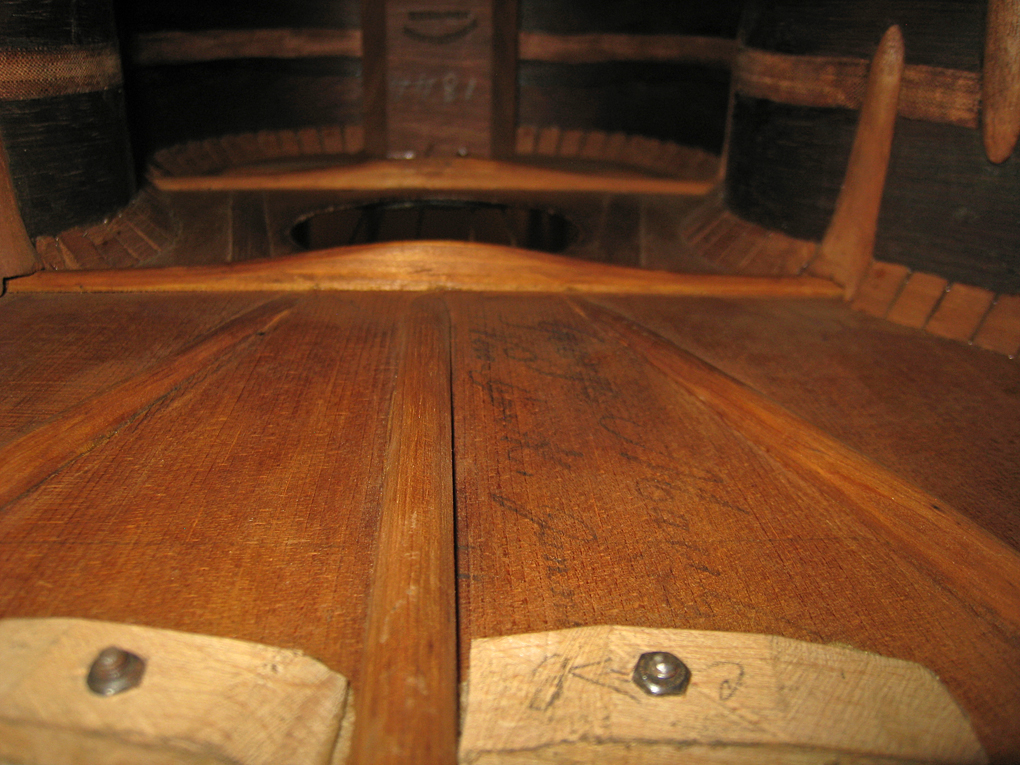
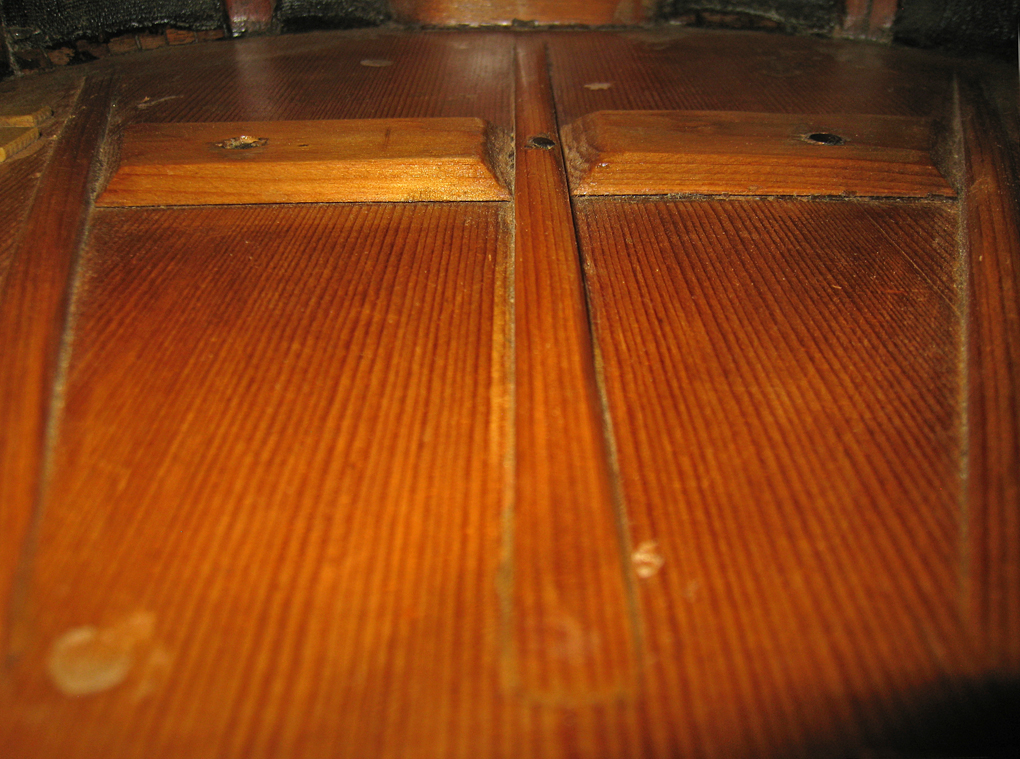
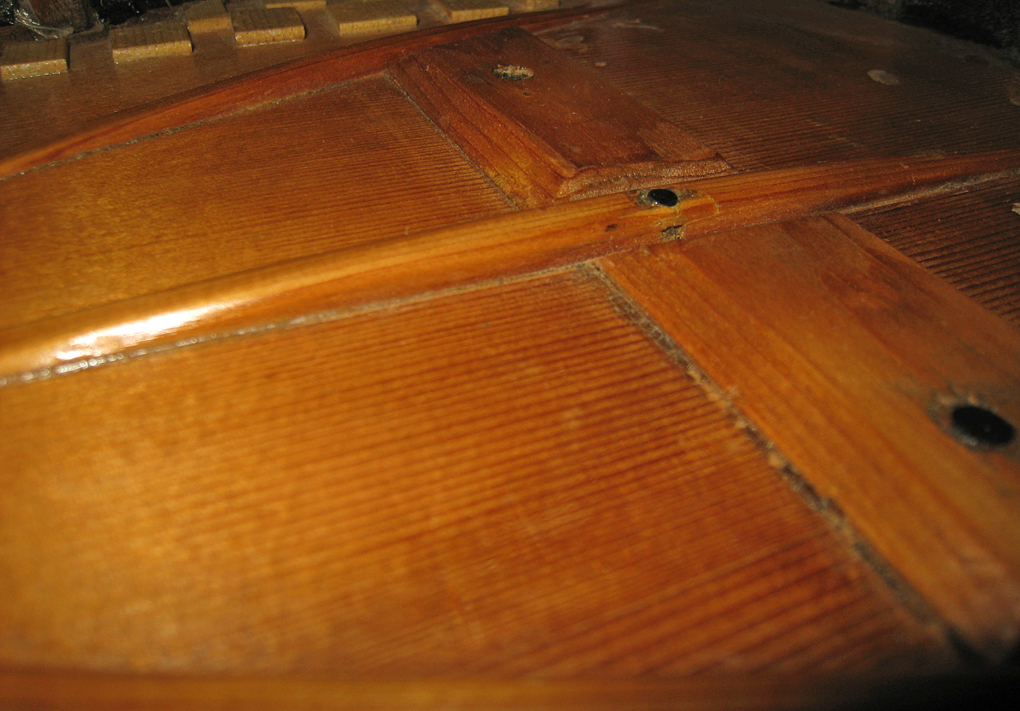
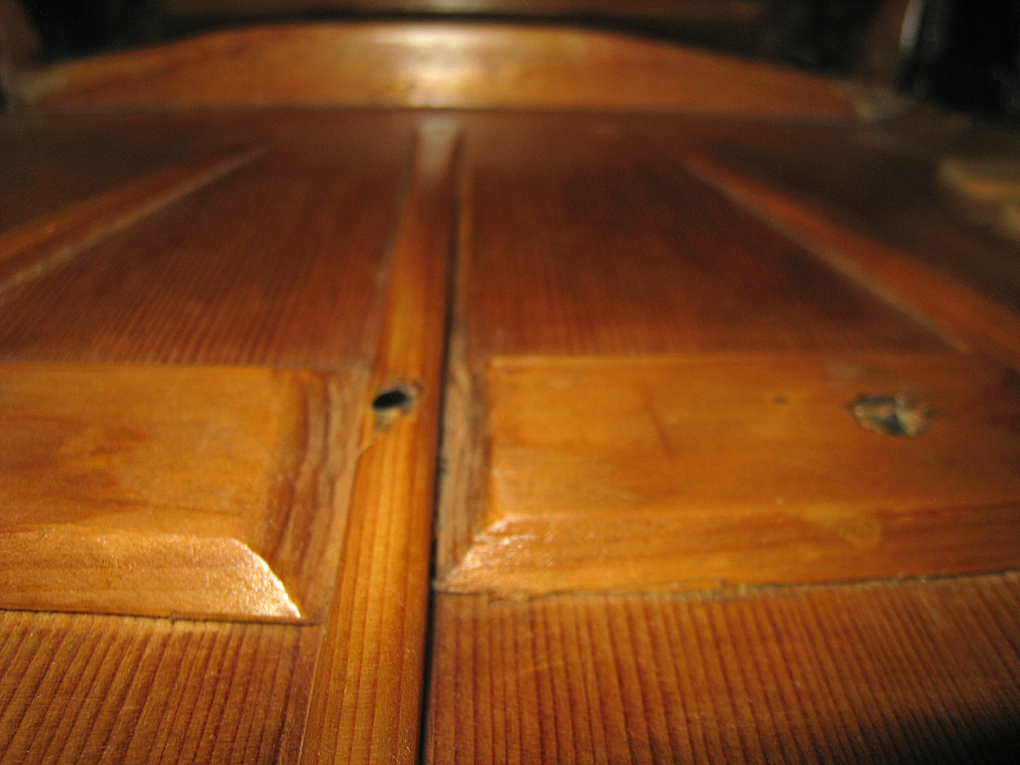
Both the Schmidt & Maul and Martin & Coupa have simple fan bracing with three blades, with a popsicle brace below the fingerboard.
The popsicle brace on the Schmidt & Maul has been beautifully crafted and stamped.
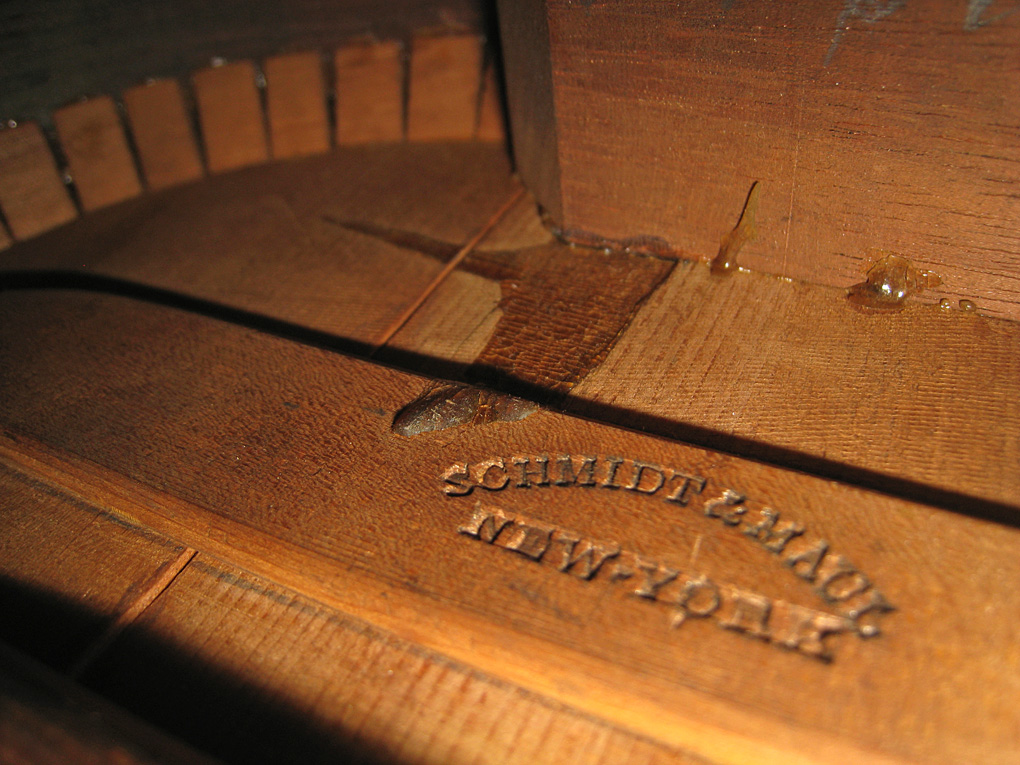
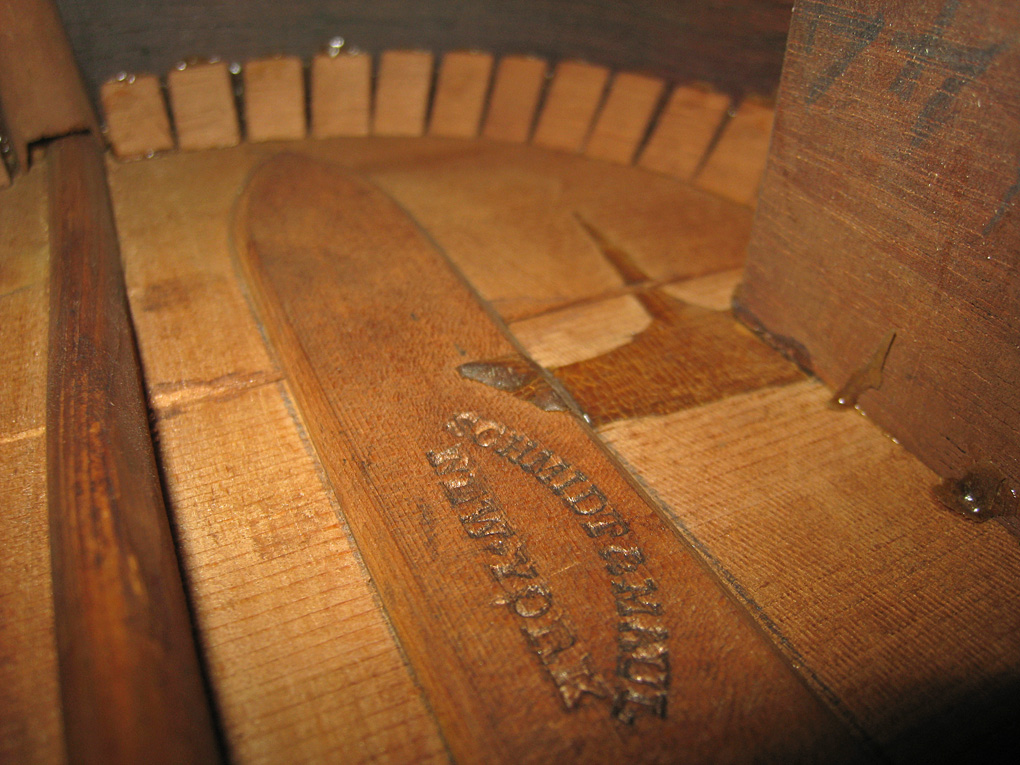
Schmidt & Maul
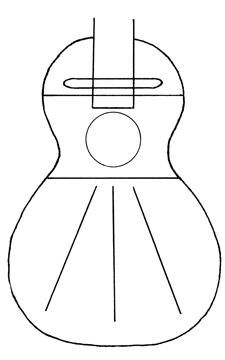
Martin & Coupa
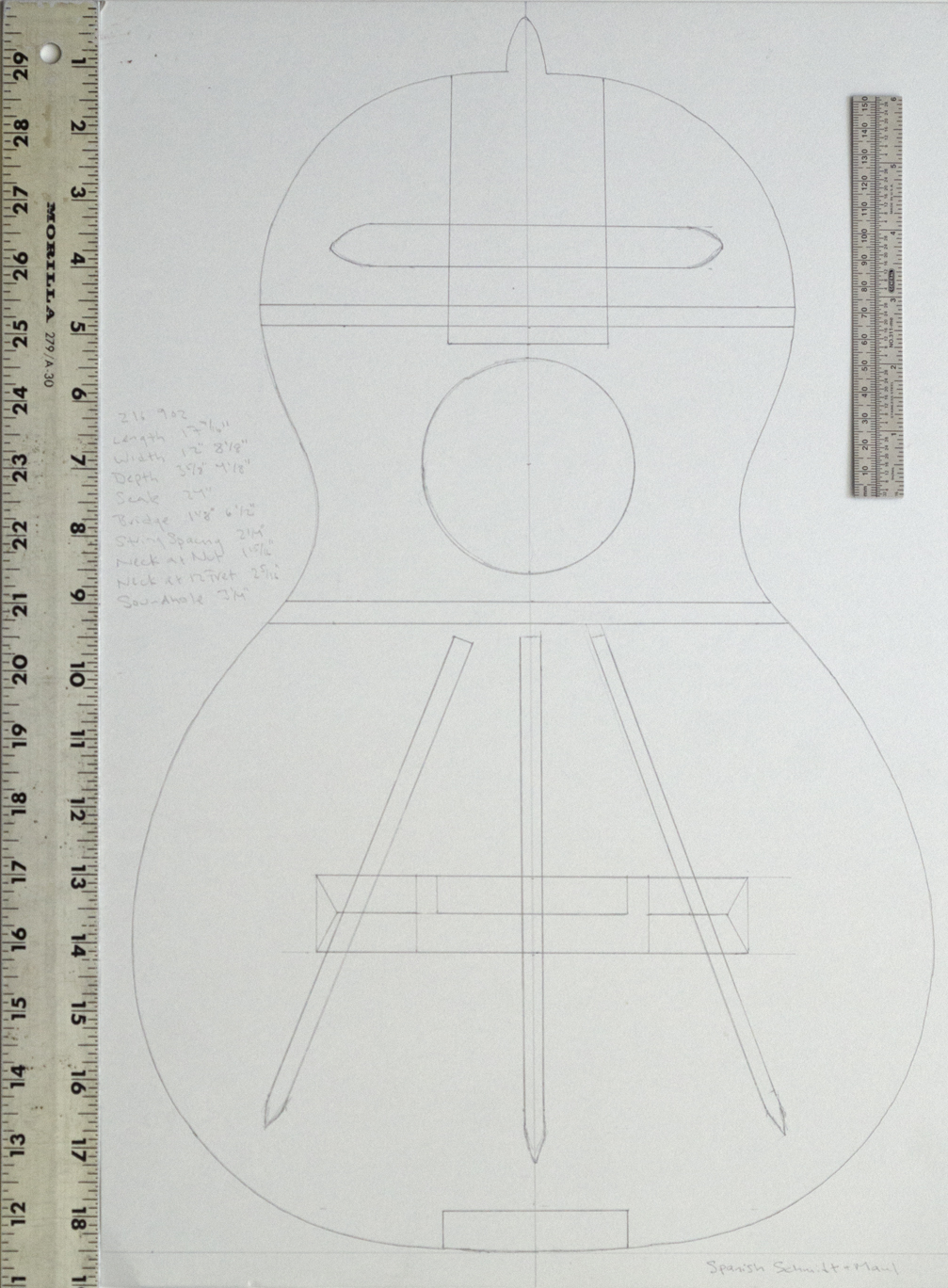
The Schmidt & Maul weighs 2 lbs, 9 oz.
Length
17 7/16"
Width
12" 8 1/8"
Depth
3 5/8" 4 1/8"
Scale
24"
Bridge
1 1/8" x 6 1/2"
String Spacing
2 1/4"
Neck at Nut
1 15/16"
Neck at 12th Fret
2 5/16"
Soundhole
3 1/4"
The Martin & Coupa weighs 2 lbs. 8.8 oz.
Length
17 5/16"
Width
11 3/8" 8 1/4"
Depth
3 3/8" 3 13/16"
Scale
24"
Bridge
7/8" 5 7/8"
String Spacing
2 9/32"
Neck at Nut
1 25/32"
Neck at 12th Fret
2 7/32"
Soundhole
3 1/2"
Schmidt & Maul with Experimental X Bracing

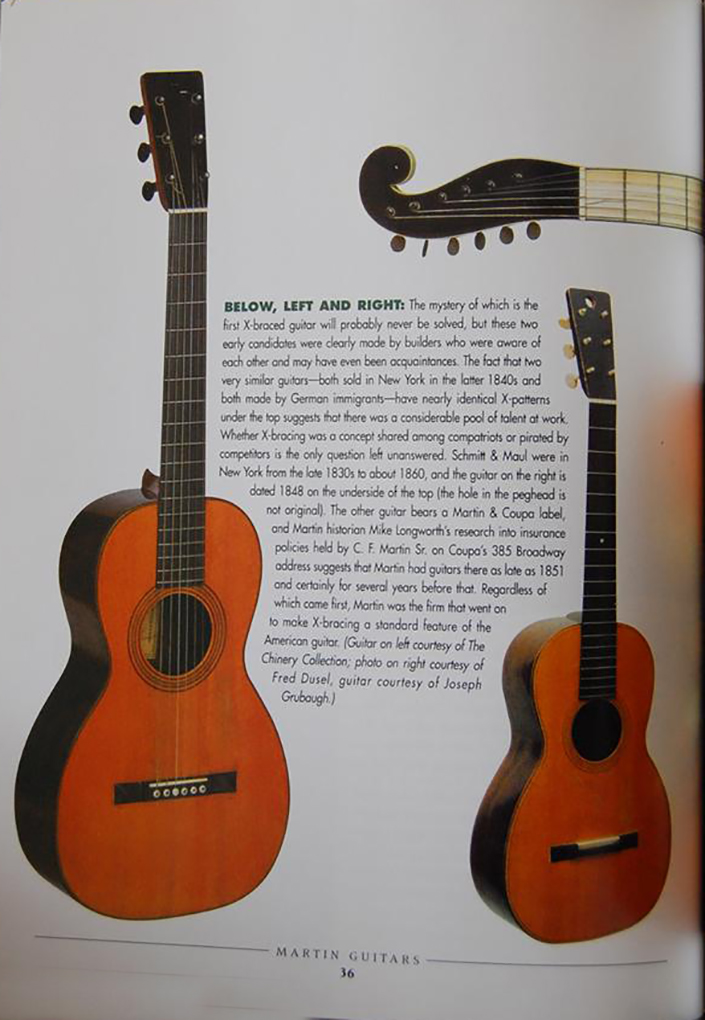
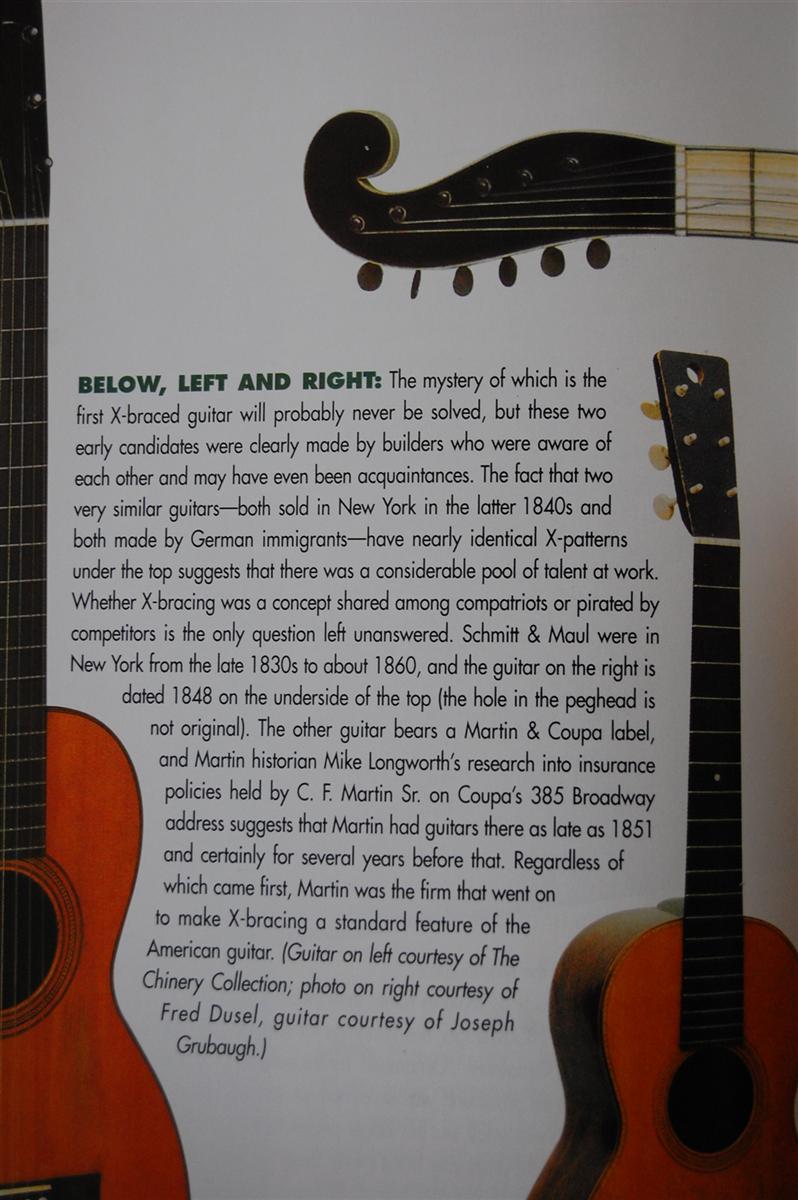
This Schmidt & Maul, like my early Martin and Martin & Coupa parlor guitars, has what I believe may be the first experimental variation of X-bracing,which appears at about the same time on a handful of Martins and Schmidt & Maul Guitars. One such Schmidt& Maul is dated 1845.
This Schmidt & Maul, with the same experimental variation of X-bracing as appears on the Martin & Coupa, also has several distinctive 1840's features including Spanish foot, Spanish heel, , as well as the colored diamond backstrip and checkerboard binding sometimes seen on early Martins.
This Schmidt & Maul shares a number of features with early Martins, such as a variant of the "tooth" rosette, arrowhead top border and backstrip, and pyramid bridge.


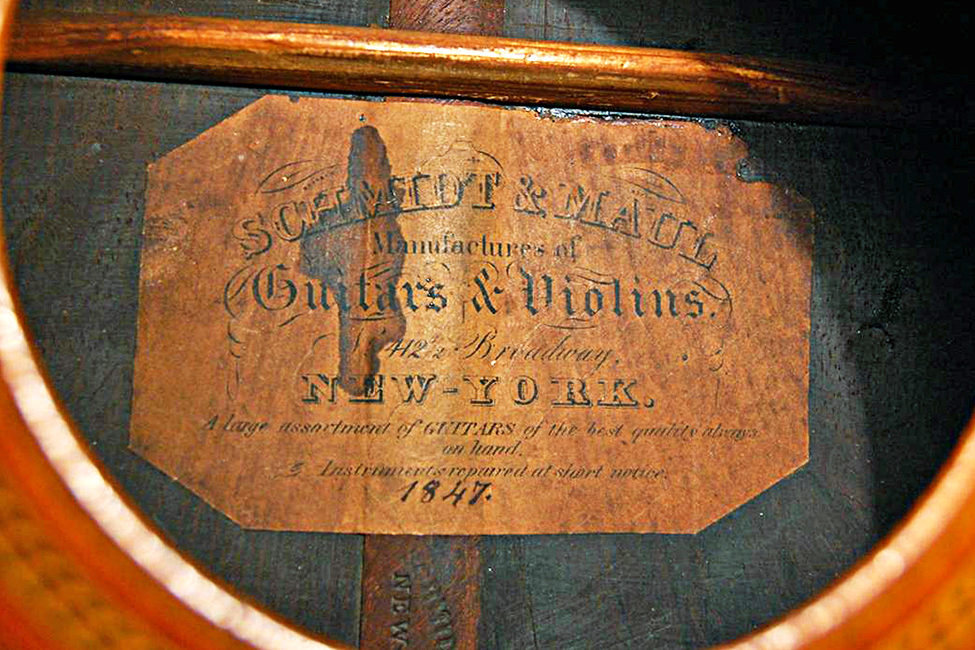
1847 Schmidt & Maul Alternate X Brace Guitar
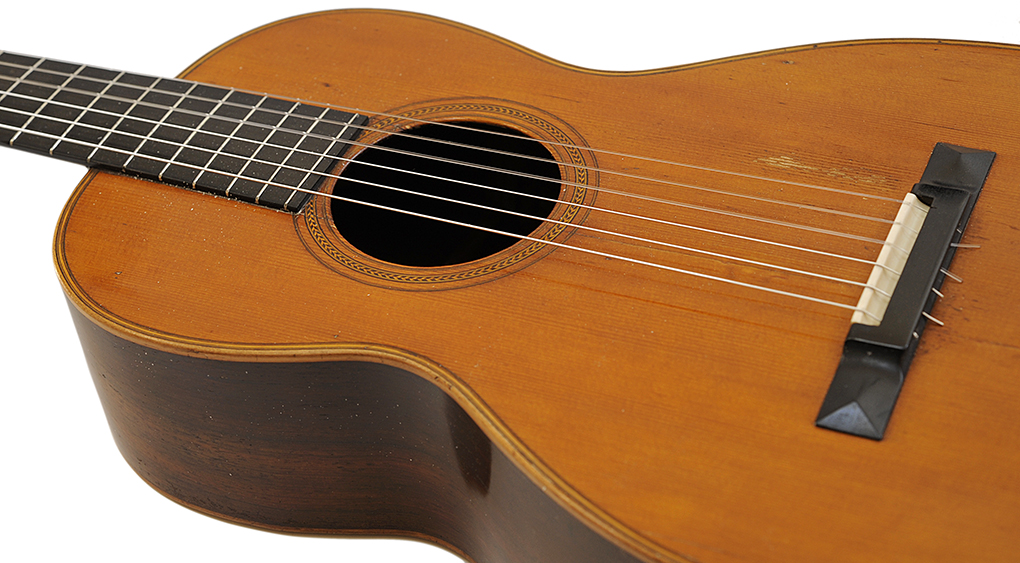
Several Schmidt & Maul guitars from the mid-1840's have been seen with the identical "hybrid X brace" seen on the Martin & Coupa shown above.
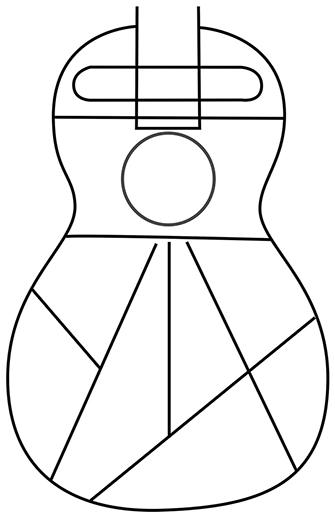
This Schmidt & Maul, dated 1847, has another experimental form of X bracing, consisting of fan braces, with three struts, and a tone bar that extends past the
treble end of the bridge and across the treble strut to form a small X under the treble side of the top.
The Schmidt & Maul contains many elements similar to the Martin, including herringbone trim, a Spanish false foot, ebonized neck with ice cream cone
heel, ebony tie style pyramid bridge with ivory inset, and a similar company stamp on the upper back near the heel, not surprising since Louis
Schmidt worked for Martin ten years earlier.
"Alternate X" braced, containing elements of fan bracing combined with an early small treble side X. I suspect that this variation was an early
one, as it contains a complete three strutted fan, while the other variation, seen on Martins, Martin & Coupas, and Schmidt & Mauls, contain only the
outer struts of the fan in combination with a large X.

Washburn & Johnston p 35.
The Steve Howe Guitar Collection pp. 77, 78, 79
Evans pp. 235-236
vintagemartin.com
To See Robert Corwin's Classic Photography of Folk and Roots Musicians, visit:
For Information on Photography for
Exhibition, Publication, CD's, Promotion, Web Pages, Tour Books,
to Purchase Photographic Prints, or
If You Have Questions or Suggestions About This Web Site or Vintage Martin Guitars:
e-mail: Robert Corwinentire site copyright ©1998 through 2026 Robert Corwin/Photo-Arts. All rights reserved.