1937 C. F. Martin Hudson Street Guitar
An Early C.F. Martin Built Hudson Street Viennese Style Guitar
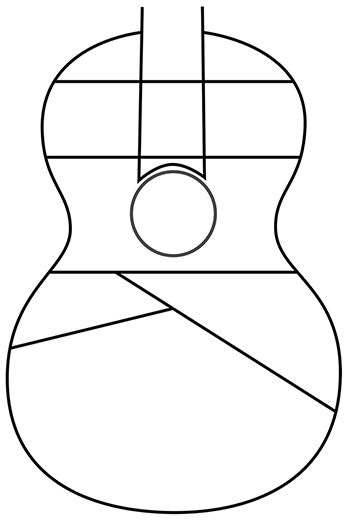
While the earliest Viennese influenced Martins had rather small figure-eight shaped bodies with large upper bouts, the "Hudson Street label" Martins built later in the
1880's could be surprisingly large and deep guitars reminiscent of the later Gibson Nick Lucas. These guitars, like their Viennese predecessors, had simple ladder bracing.
This guitar is typical of what Martin was building in the late 1830's before leaving New York for Pennsylvania. While most people associate the Viennese influenced Martins with
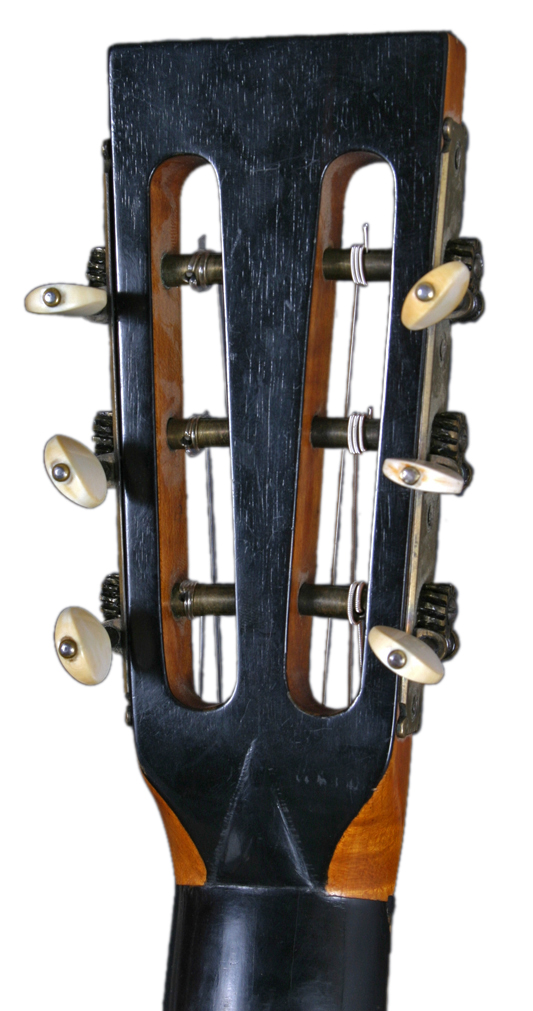
Stauffer style headstocks with Vienna gears, many of these originally had slotted headstocks with machines, some of which have been improperly replaced due to misunderstanding.
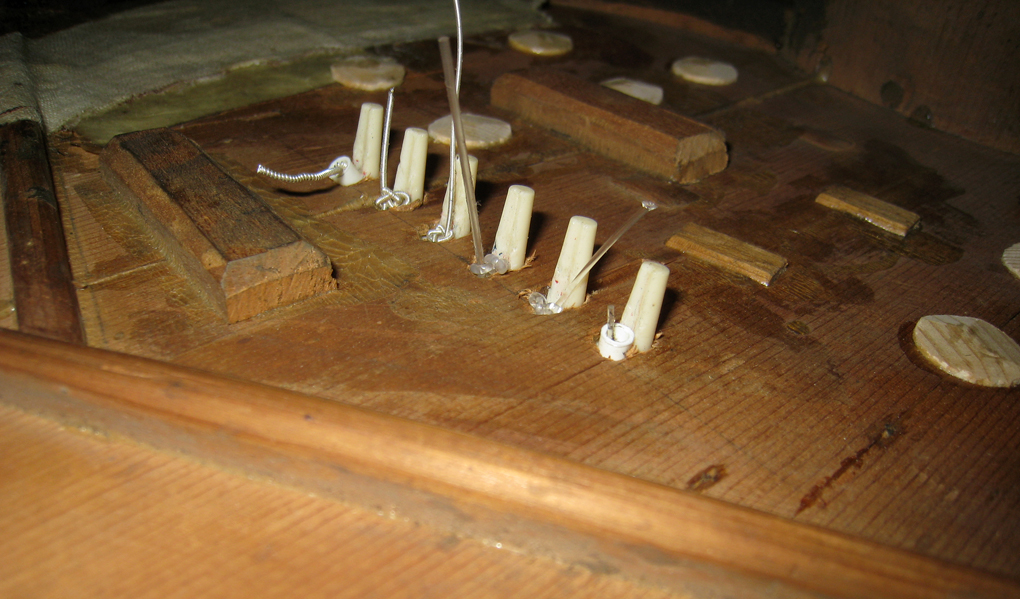
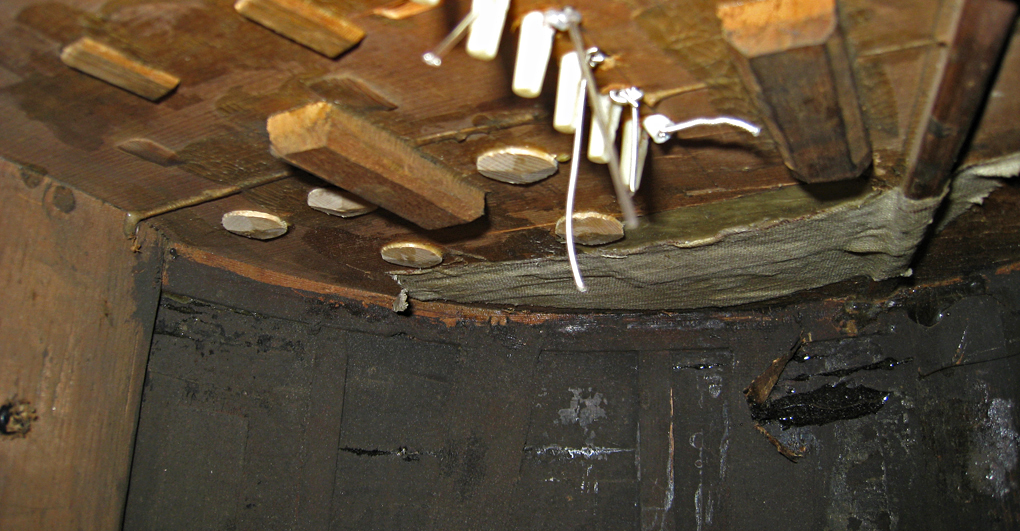
While the back and sides appear to be Brazilian rosewood, the back is in fact a rosewood veneer over spruce. Most early Martins were built in this fashion, with
the customer's choice of a variety of quality hardwood veneers over either spruce or mahogany.
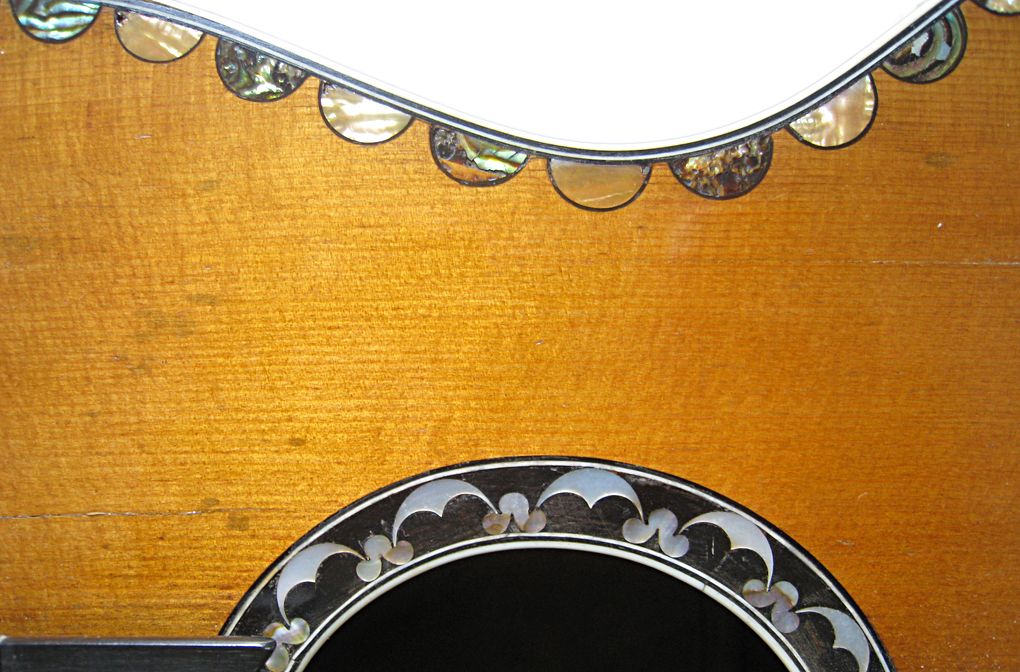
Most of the Hudson Street Martins have a top border of "thumbprint" inlays as well as the "herringbone" trim that has distinguished Martins for many years. The inlays may
have been crafted from halves of button blanks from neighboring lower East Side garment dealers.
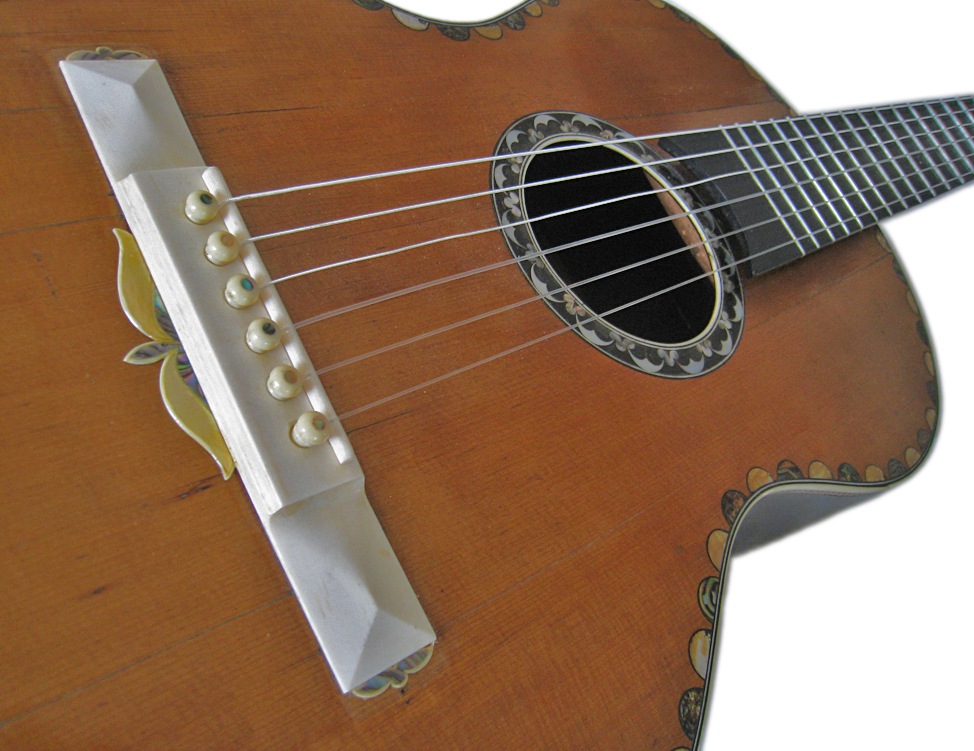
1837 Viennese Style Guitar built by C.F. Martin Sr.
with Fulton and Hudson Streets, New York City Label
Alternating green abalone and pearl semi-circles on top border
Fancy pearl "crescent" sound hole inlay
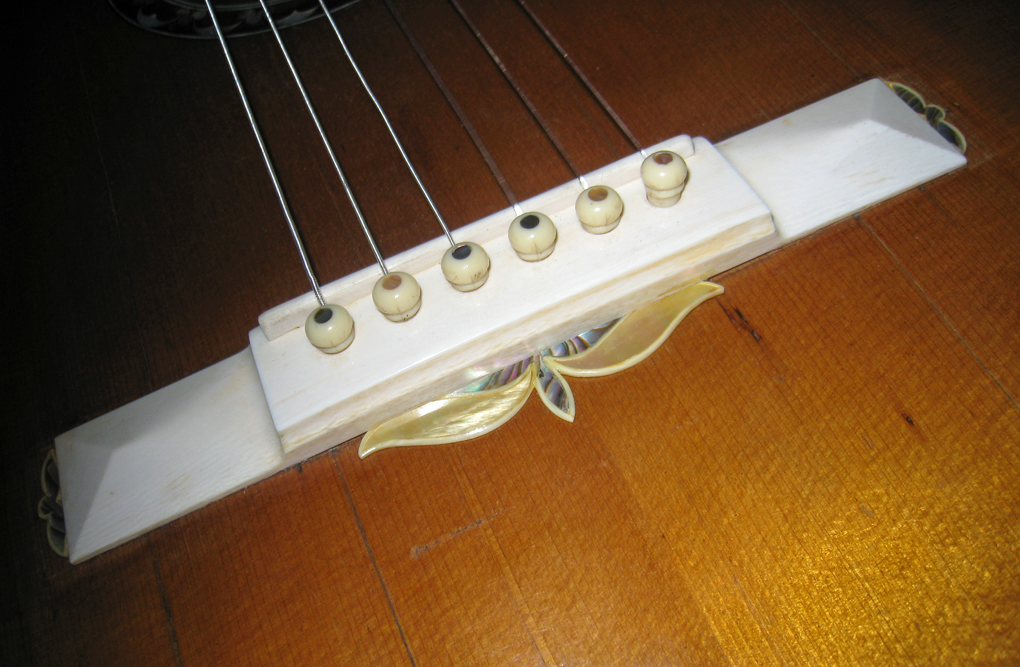
Ivory bridge with pearl pendants
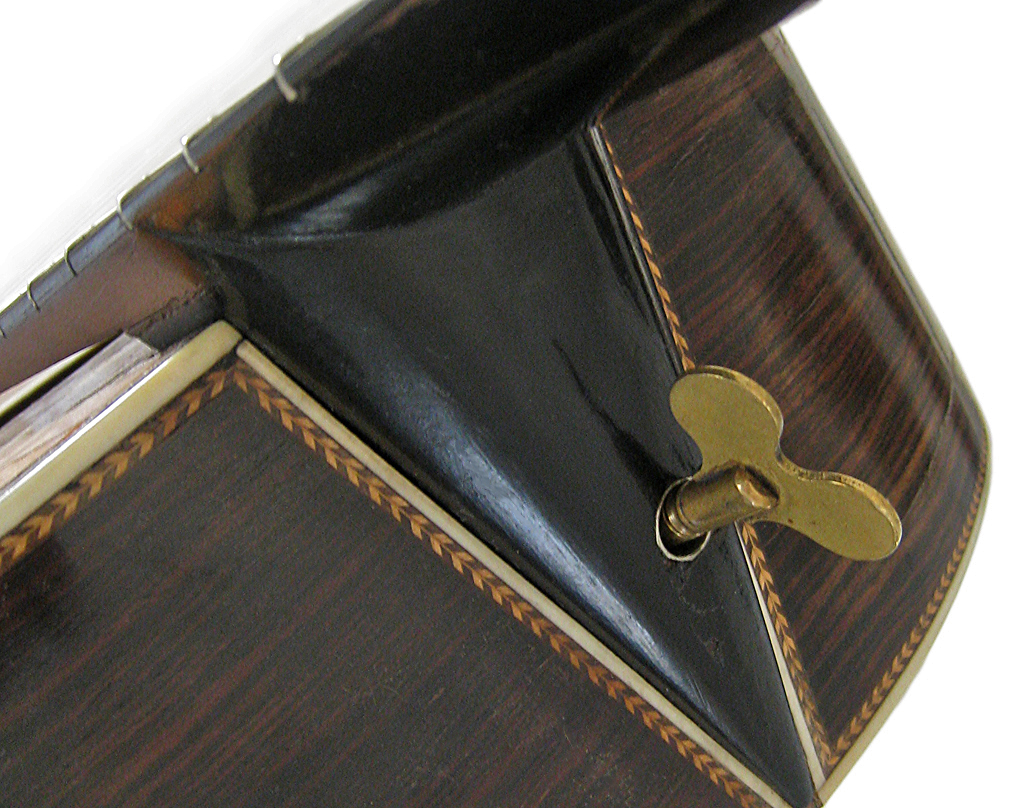
"Ice cream cone" heel with clock key adjustment
Herringbone side trim
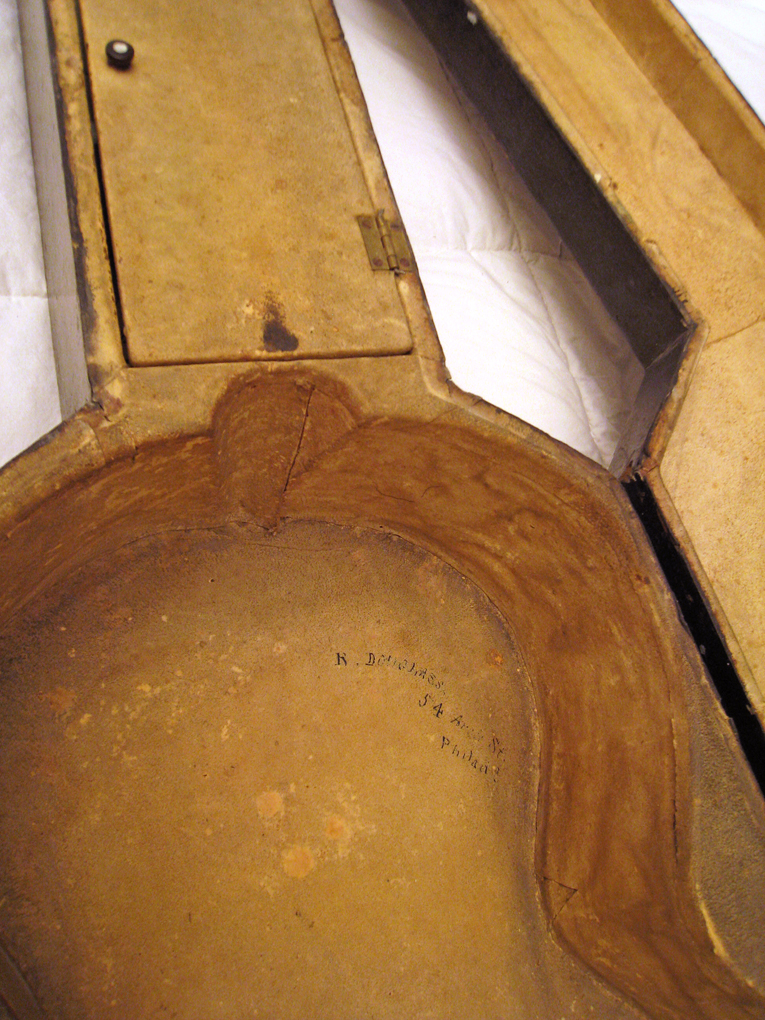
Original coffin style case
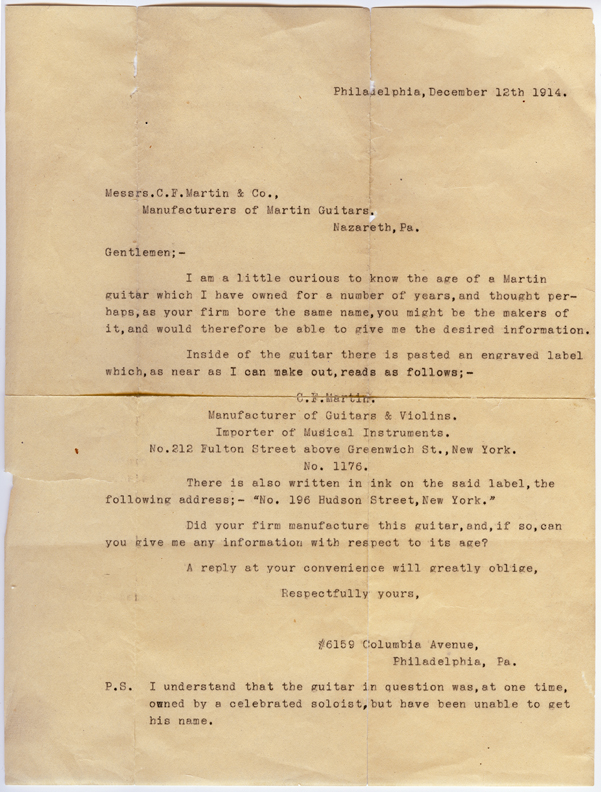
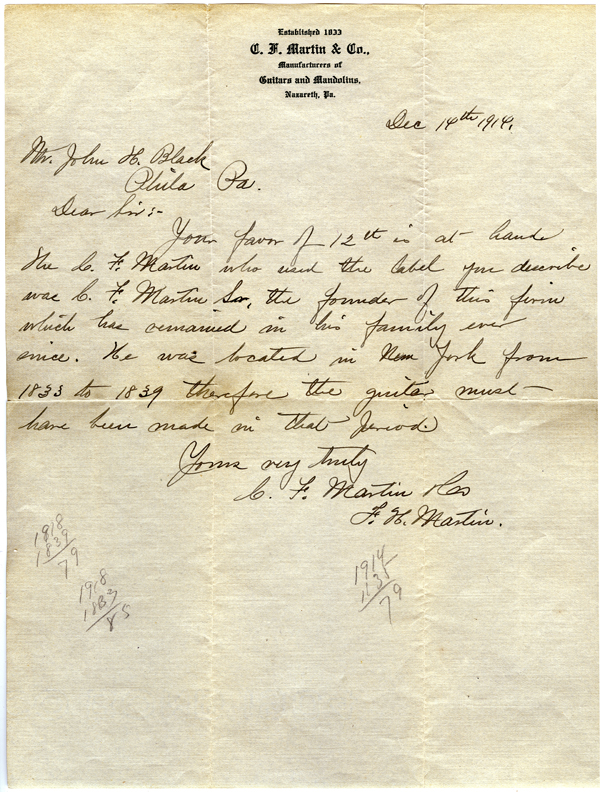
With accompanying letter dated December 14, 1914 from F.H. Martin
dating the work between 1833 and 1839
Numbered in Script 1176
Purchased from George Gruhn
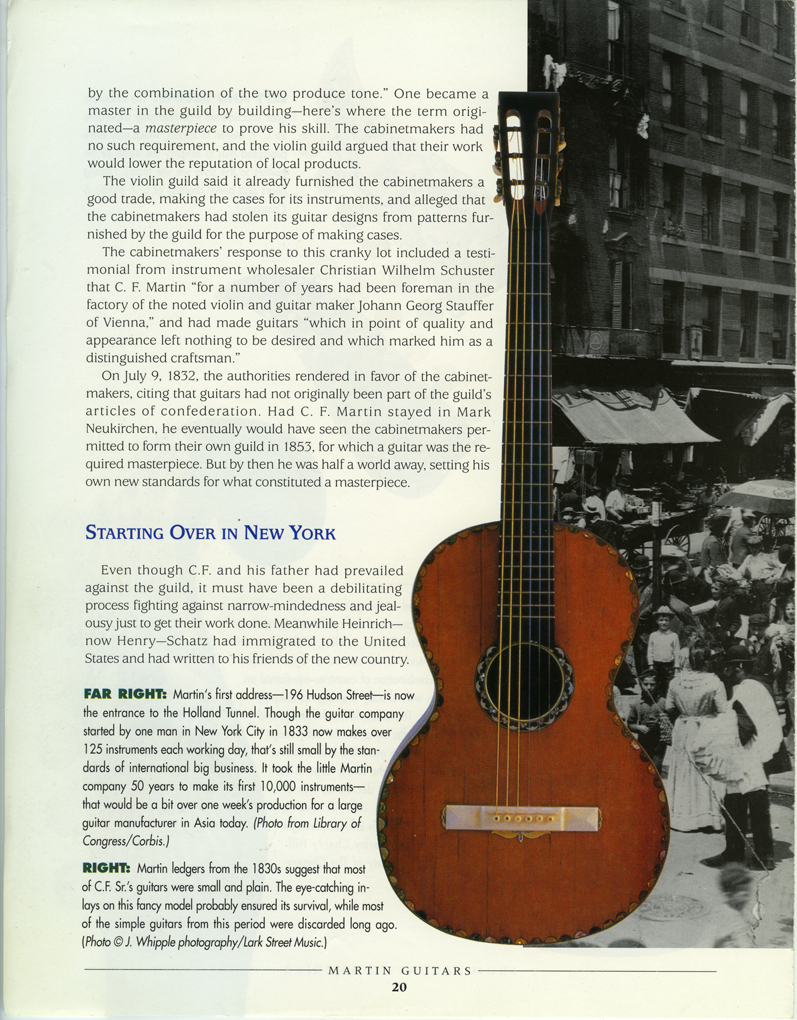
Illustrated on p. 20 of Washburn & Johnston, "Martin Guitars: An Illustrated Celebration of America's Premier Guitarmaker"
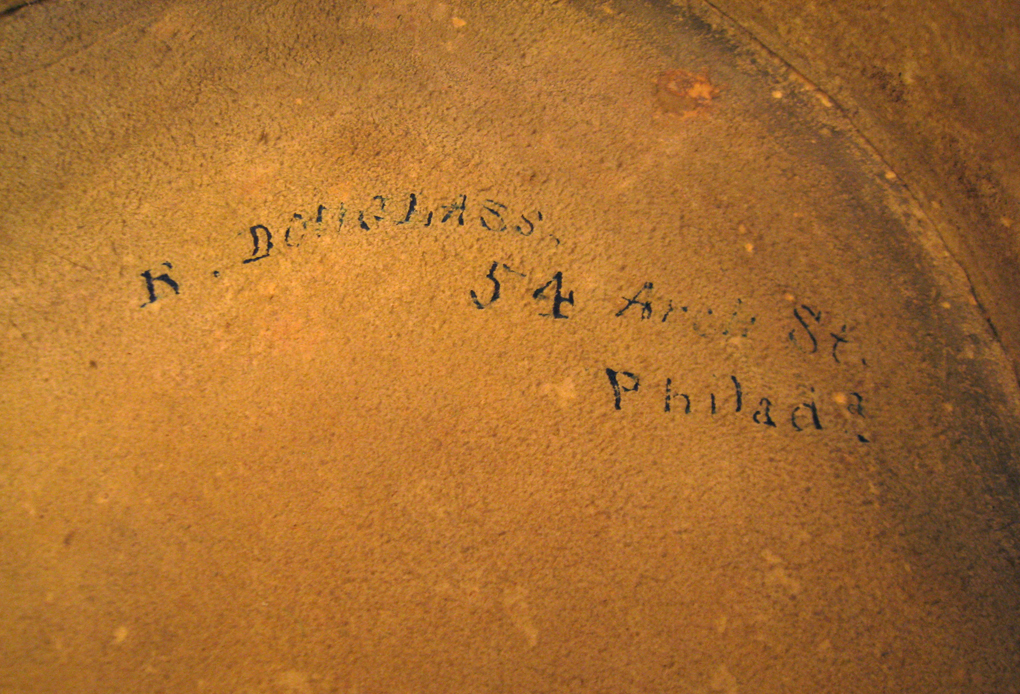
This guitar was owned by Robert Douglass, an African-American artist and daguerreotypist, who lived at 54 Arch Street n Philadelphia. Son of abolitionist Robert Douglass, a hairdresser, and grace Bustill Douglass, a milliner. Educated at the Pennsylvania Academy of Fine Arts, the National Gallery of Art, and the British Museum, he was a student of Thomas Sully.


I've located Hudson Street Martins with similar labels and the following numbers:
No. 1114 C. F. Martin Museum. Raised ivory fingerboard & neck, tapered fretboard
No. 1160 Private Collection. Flat ebony fingerboard, round end fretboard
No. 1168 Sold by Gruhn Guitars, Nashville. Raised ivory fingerboard, tapered fretboard
No. 1173 Fred Oster, Vintage Instruments, Philadelphia. Flat ebony fingerboard, round end fretboard
No. 1176 Illustrated above, Raised ebony fingerboard, round end fretboard
No. 1188 Metropolitan Museum of Art, New York. Raised ebony fingerboard, tapered fretboard
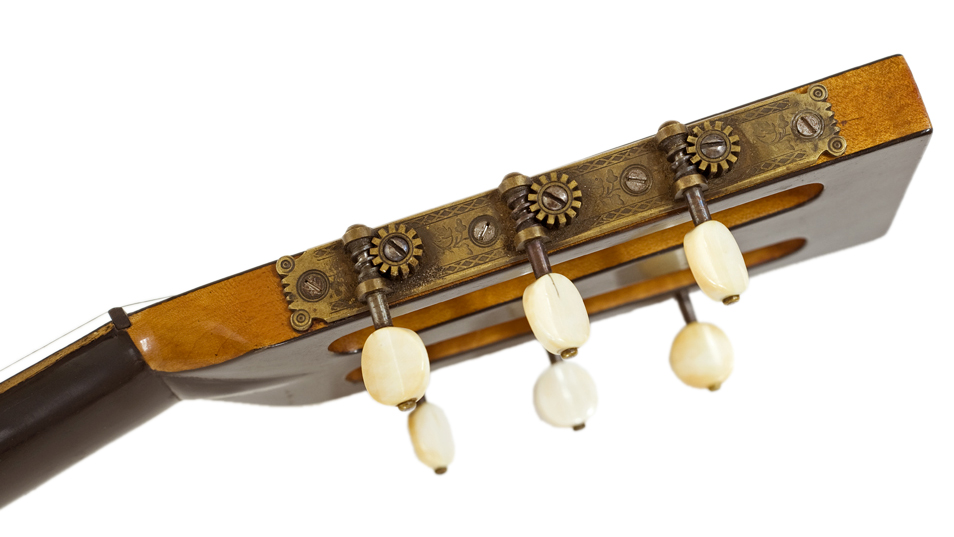

It has been assumed that all of the earliest Martins made in America were built with the Stauffer Style headstock, and so the headstock on this guitar was thought to have been replaced.
But we now know of several of the earliest Martins, this being one, with slotted headstocks designed for gears that appear to be original.
The near twin to this guitar, widely published, including on the cover of the "Chinery" book, with photos showing a Stauffer style headstock, in fact has a contemporary German Stauffer style headstock. While it would be easy to assume that the previous headstock was a Stauffer style as well, we now know that the instrument previously had a slotted style headstock with gears.
We believe this may be an early headstock from France. Martin was an importer, and also obtained imported tuners from his fellow German-American contemporaries in New York. This set of tuners are probably from somewhat later. I haven't removed them yet to check screw holes for signs of originality or change.
Illustrated in Washburn & Johnston, "Martin Guitars: An Illustrated Celebration of America's Premier Guitarmaker":
"Martin ledgers from the 1830's suggest that most of C.F. Sr.'s guitars were small and plain. The eye catching inlays on this fancy model probably
ensured it's survival, while most of the simple guitars from this period were discarded long ago."
To See Robert Corwin's Classic Photography of Folk and Roots Musicians, visit:
For Information on Photography for
Exhibition, Publication, CD's, Promotion, Web Pages, Tour Books,
to Purchase Photographic Prints, or
If You Have Questions About An Early Martin Guitar:
e-mail: Robert Corwinentire site copyright ©1998 through 2026 Robert Corwin/Photo-Arts. All rights reserved.