c. 1840 C.F. Martin Spanish Style Guitar
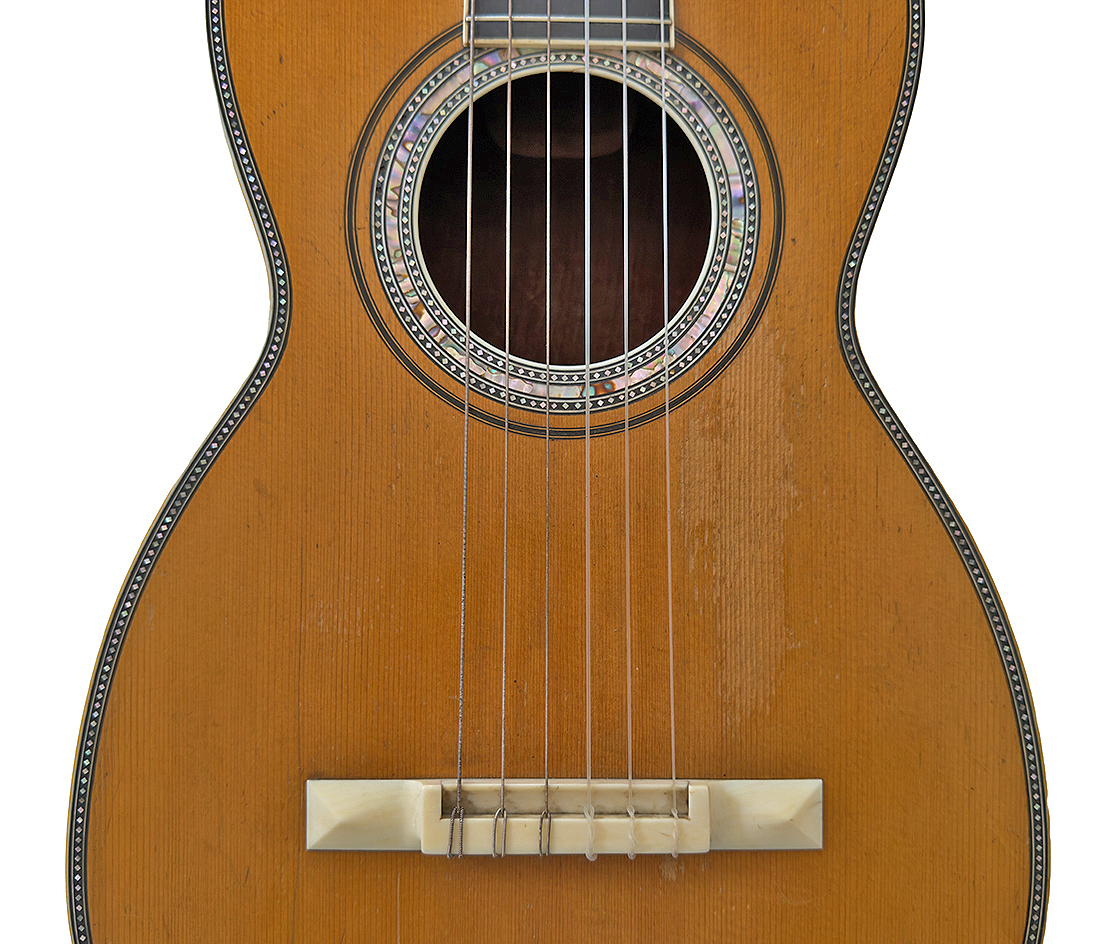
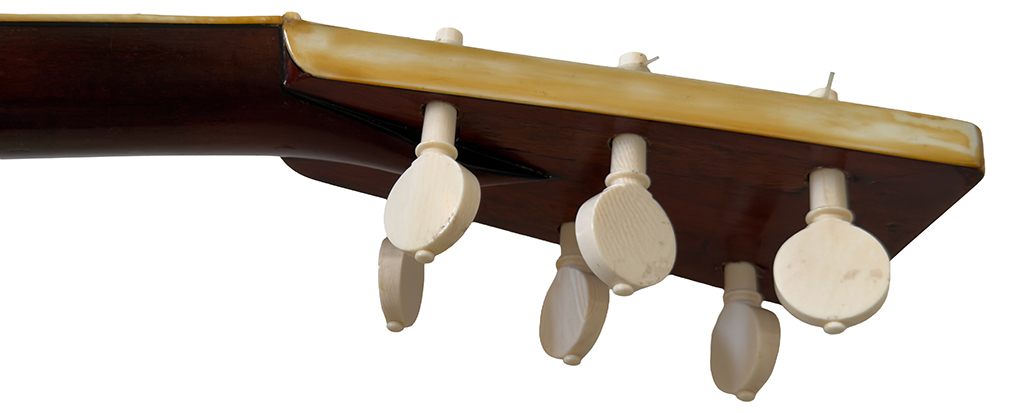
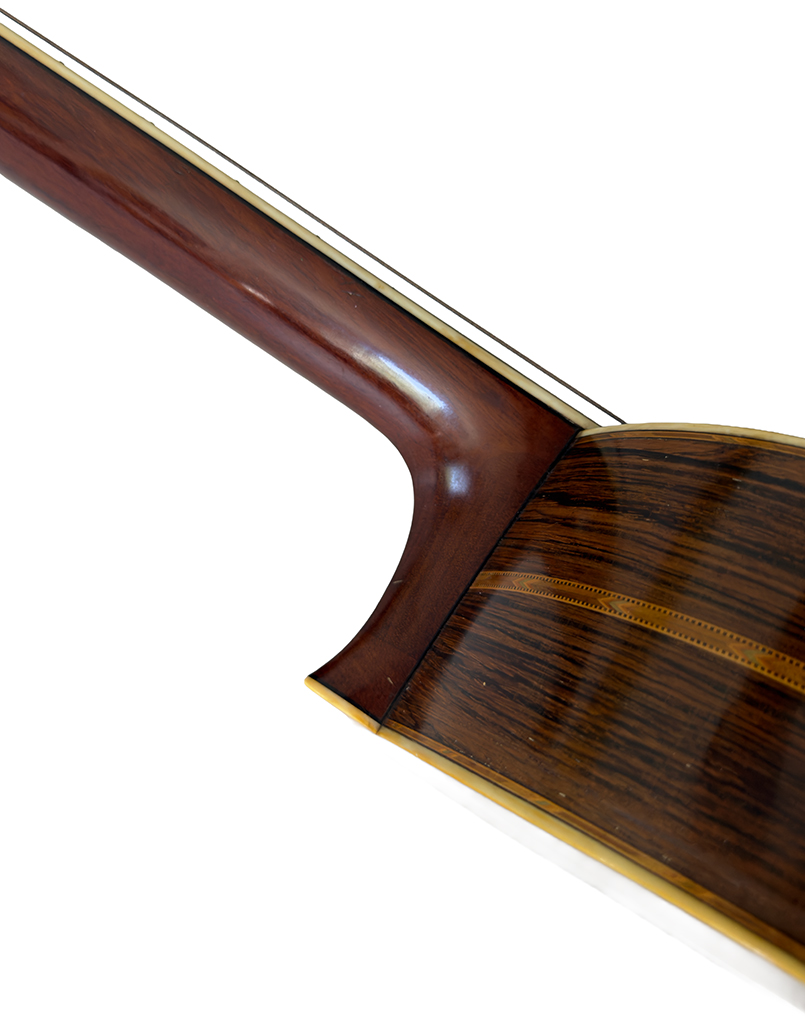
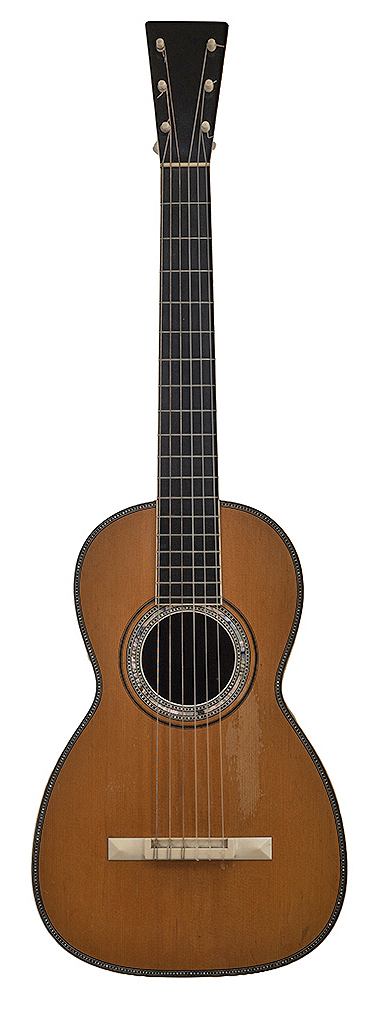
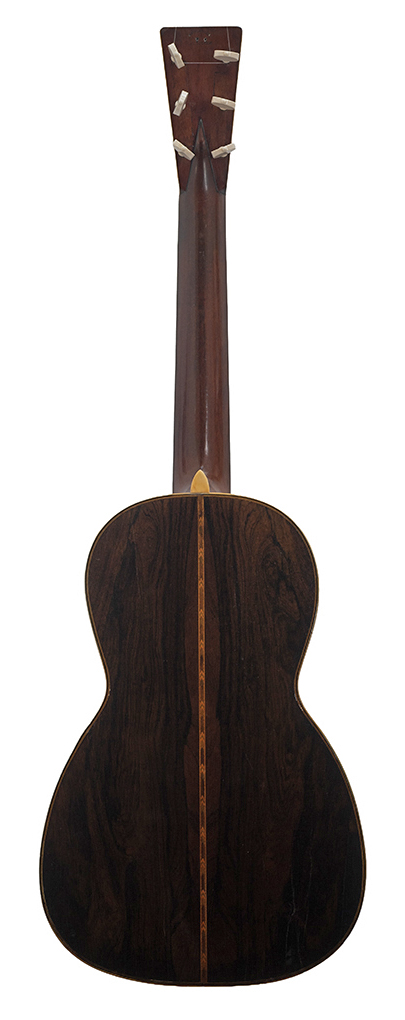
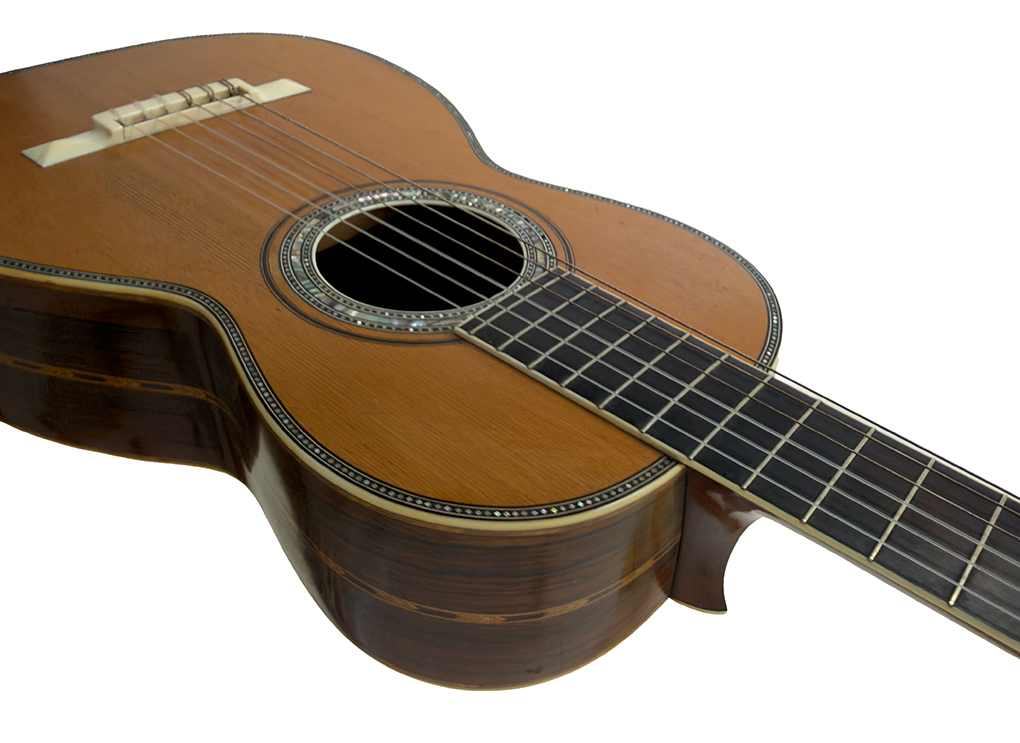
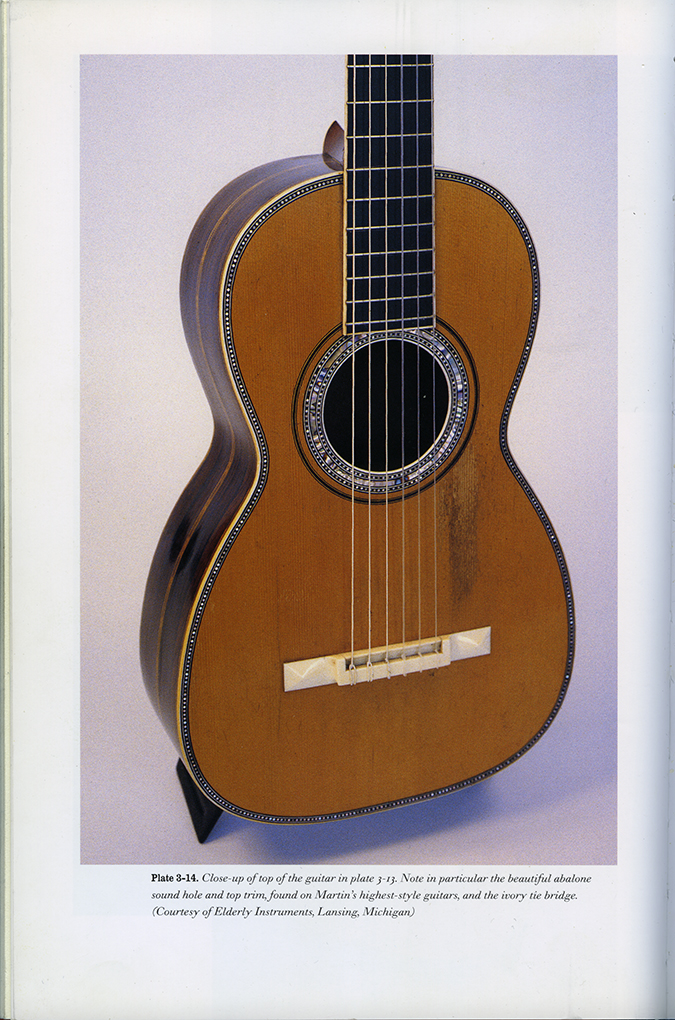
This guitar is a uniquely fine example of Martin's version of the Spanish guitar, with many of the typical features: cedar neck with elegantly curved Spanish
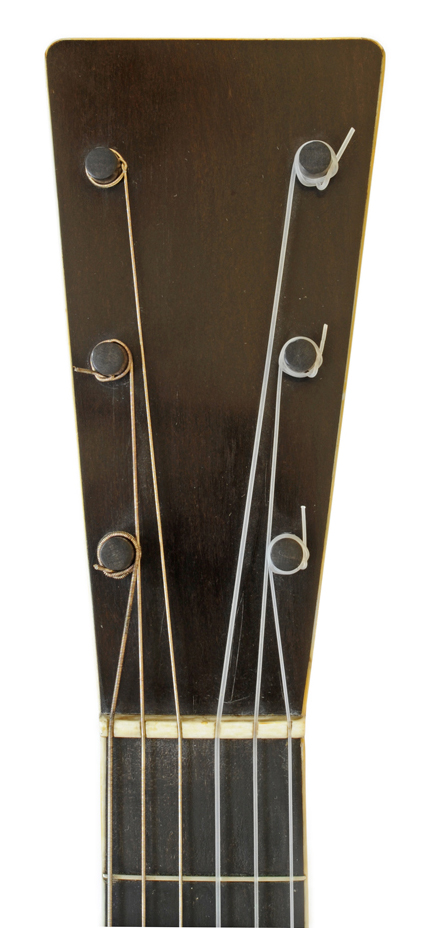
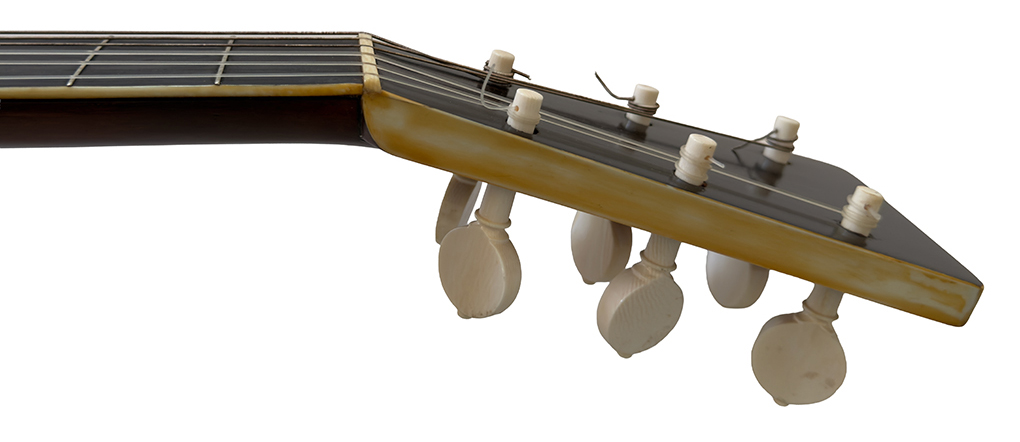
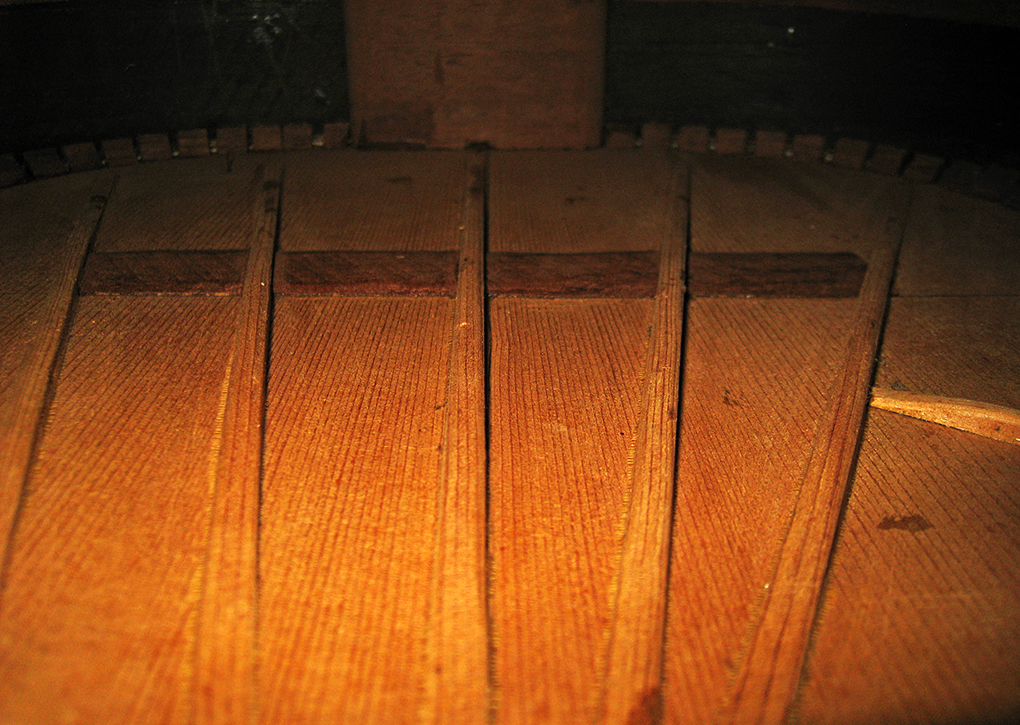
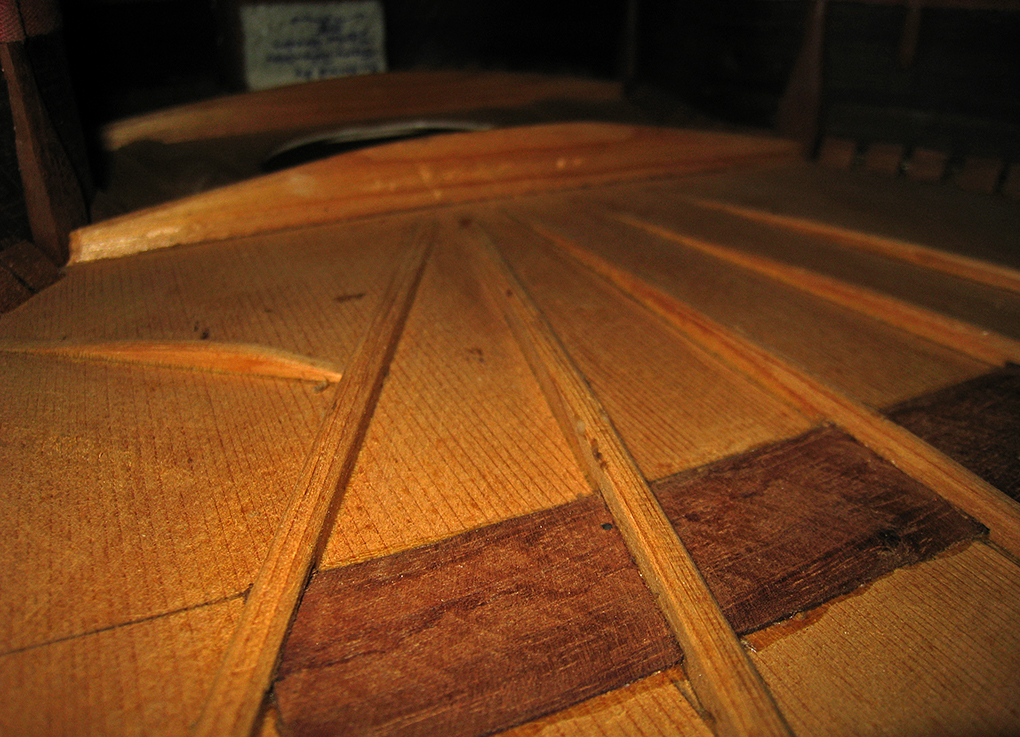
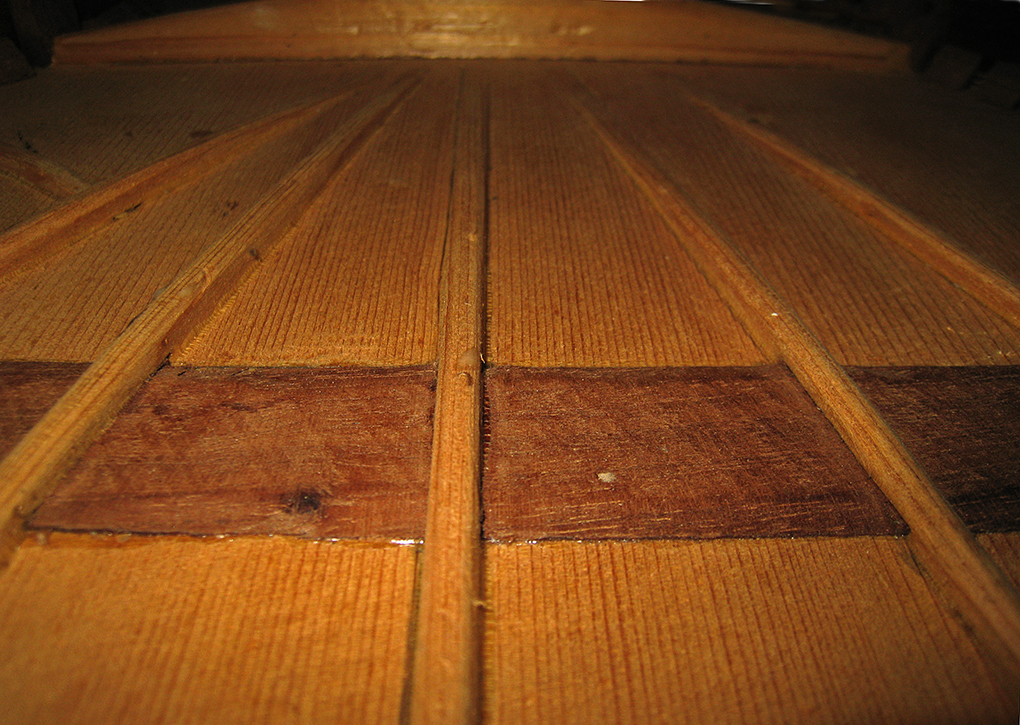
heel, large, square headstock flared to a wide end, with pegs, nickel silver nut, Spanish style interior false foot, tie bridge, fan braces, two piece rosewood sides
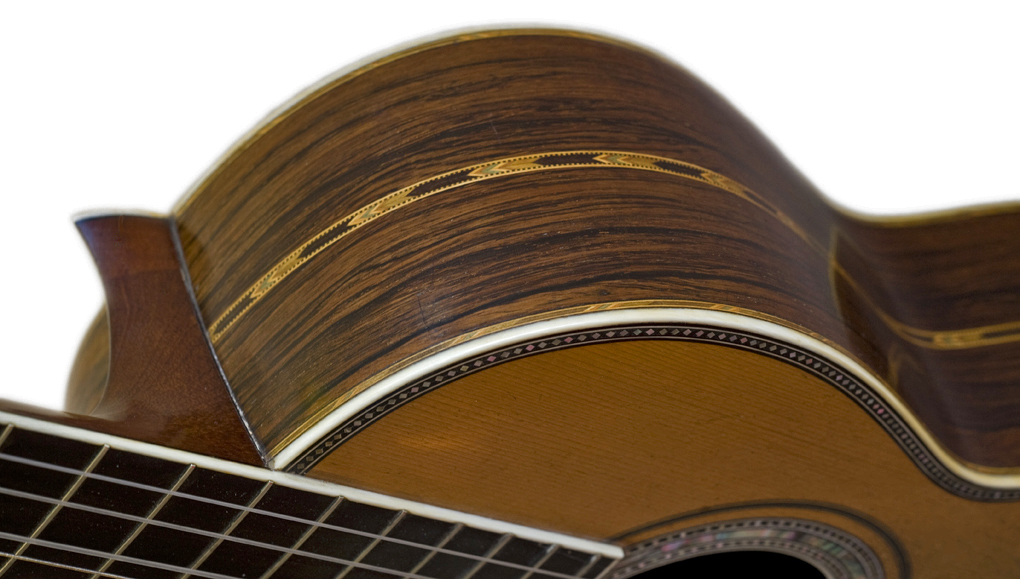
with decorative side filets and a decorative lengthwise center strip with marquetry dividing the two sections, and back with rosewood veneer over mahogany.
With the fancy appearance of perhaps the most jewel-like Martin "presentation" guitar existent, with a top border of pearl diamonds set in mastic, and a
version of one of the three basic pearl diamond-adorned soundhole designs with two rows of glittering tiny pearl diamonds surrounding a solid band of colorful
abalone, this example was clearly built to be played, with a large, long scale, modern feeling neck, which gives this guitar the feel in-hand of a much larger guitar.
The "Spanish" Martin is a distinct style with specific features clearly showing Martin's awareness of the pre-Torres guitar in Spain.
Built by C.F. Martin c. 1840
Slightly larger than Size 3, with unusual 4" depth and longer 24.5" scale
Soundhole and edge of top bordered in unique pattern of mother of pearl diamonds set in mastic
with additional ring of abalone in center of rosette
Multicolored marquetry on back stripe, as well as center and edges of sides.
Solid ivory pyramid tie style bridge
Ivory bordered flat style peghead with pegs
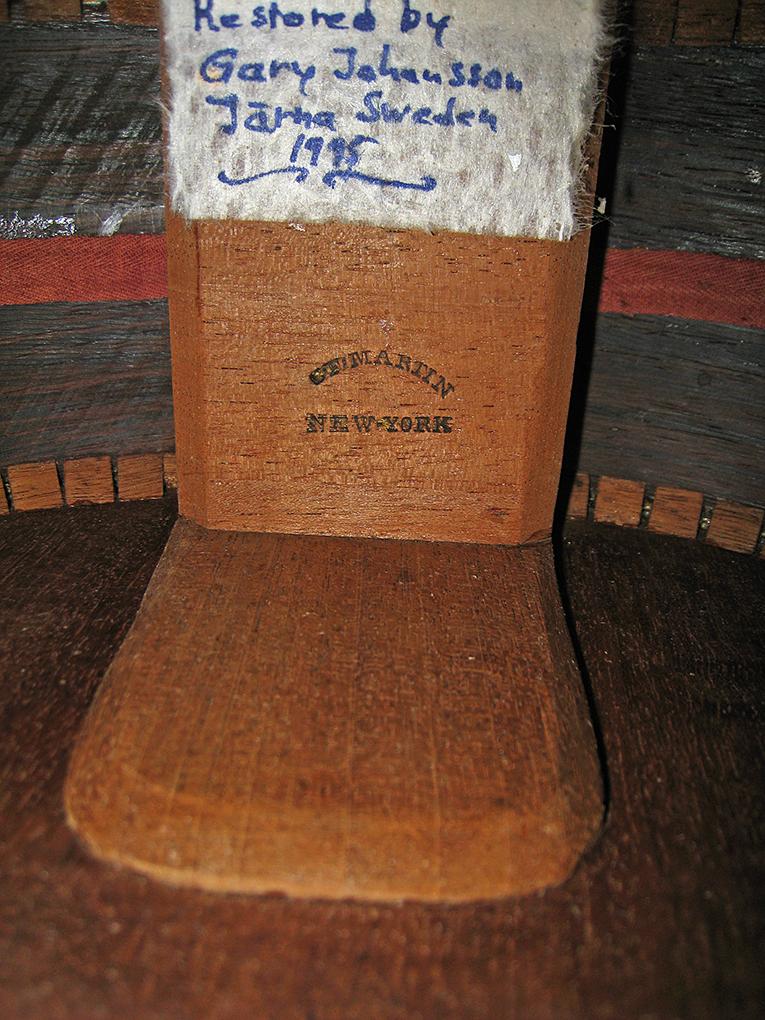
Spanish Style foot
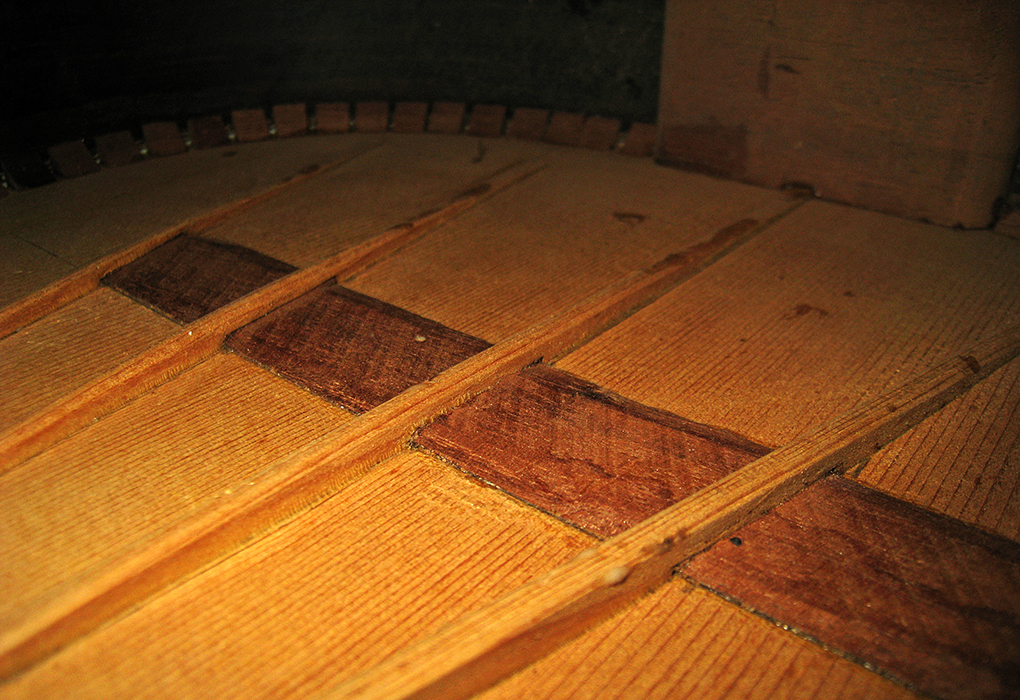
fan bracing (not ladder braced as suggested in Gura.)
Original coffin style case
Body width: 11.5"
Upper body width: 8 15/32"
Body length: 17.5"
Upper body depth: 3 9/16"
Lower body depth: 4"
Neck width at nut: 1 7/8"
Neck width at 12th fret: 2 5/16"
Soundhole: 3 13/32"
Scale: 24.5"
String spacing at bridge: 2 13/32"
Top braces: 5 blade fan
Back braces: 2 thin 9/16"
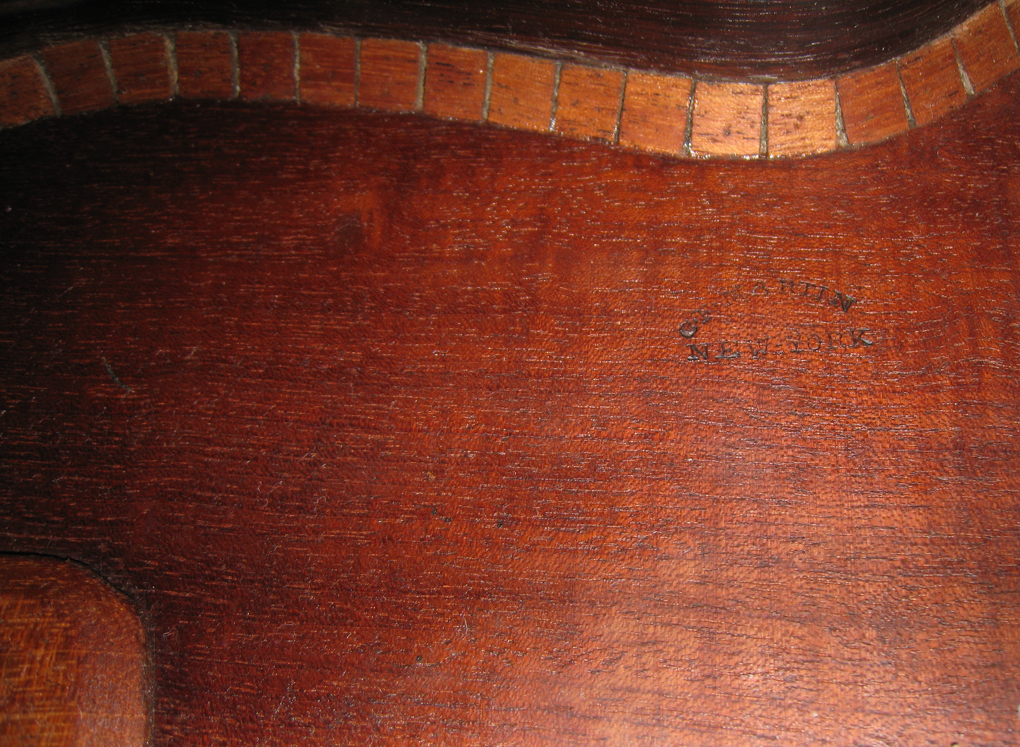
Stamp: "C.F. Martin New York"

Illustrated in Gura, "C. F. Martin and His Guitars, 1796-1873":
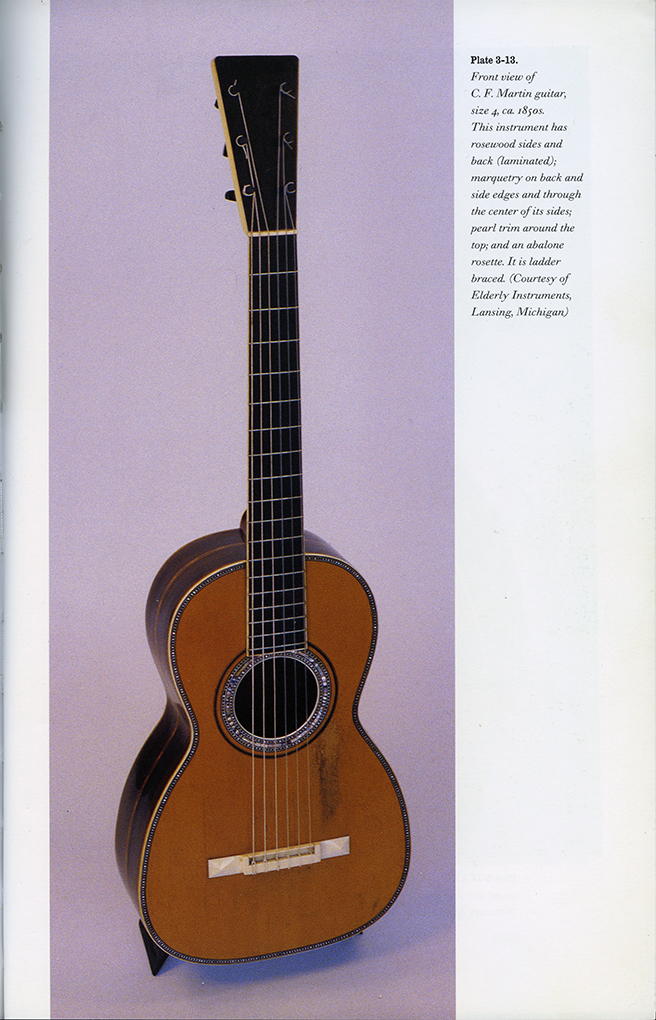
"This instrument has rosewood sides and back (laminated); marquetry on back and side edges and through the center of it's sides; pearl trim around the
center of it's sides; pearl trim around the top, and an abalone rosette. Note in particular the beautiful abalone soundhole and top trim, found on Martin's
highest-style guitars, and the ivory tie bridge."
Illustrated on plate 3-13 and 3-14.
From Matt Umanov's Web Site:
This top-grade and most unusual Martin from the 1840's has just recently come to us from Scandinavia. The man we acquired it from stated that he had traced the history of its ownership in Sweden - through family records of dated wills - back as for as the 1870's.
It is nominally a size three, although the body is considerably deeper (4") than the dimensions given for that size in Martin literature. Most interestingly, it also has a longer scale; at 24.5", it is nearly that of a grand concert size Martin. This suggests possible construction for concert use, as it gives the guitar an amazingly sonorous tone, far out of proportion to its size. The edge of the top and the soundhole are bordered with a unique pattern of mother-of-pearl diamond shapes set in mastic, with an additional ring of abalone in the rosette. The bridge is of solid ivory, with the type of wide "ski-slope" saddle found only on the earliest Martins. There is a fancy multi-colored backstripe, with matching stripes along the center of the sides of the instrument, and more matching marquetry along the edges of the sides; there is also a solid ivory endplate with mitered border.
The peghead is of the solid type, with a solid ivory edge. The ebony tuning pegs are of the original type, but are probably not the original ones. There is also the "false foot" feature in front of the neck block, typically found on better Martins of the 19th century; the neck block itself is stamped "CF Martin New York", as are the inside of the back and the rear of the peghead.
Other than some minor work in a small area of the back and some restoration work on the peghead, this guitar is quite original, with original finish, frets, etc., etc., and is free of major cracks. The wooden case is original as well, with a narrow gold stripe painted near the edge of the top, a feature previously seen on other Martin cases of the period. A truly rare and unique early Martin guitar.
Matt Umanov Guitars 273 Bleecker St.
For Information on Photography for
Exhibition, Publication, CD's, Promotion, Web Pages, Tour Books,
or to Purchase Photographic Prints:
e-mail the Photographer:Robert Corwinentire site copyright ©1998 through 2026 Robert Corwin/Photo-Arts. All rights reserved.