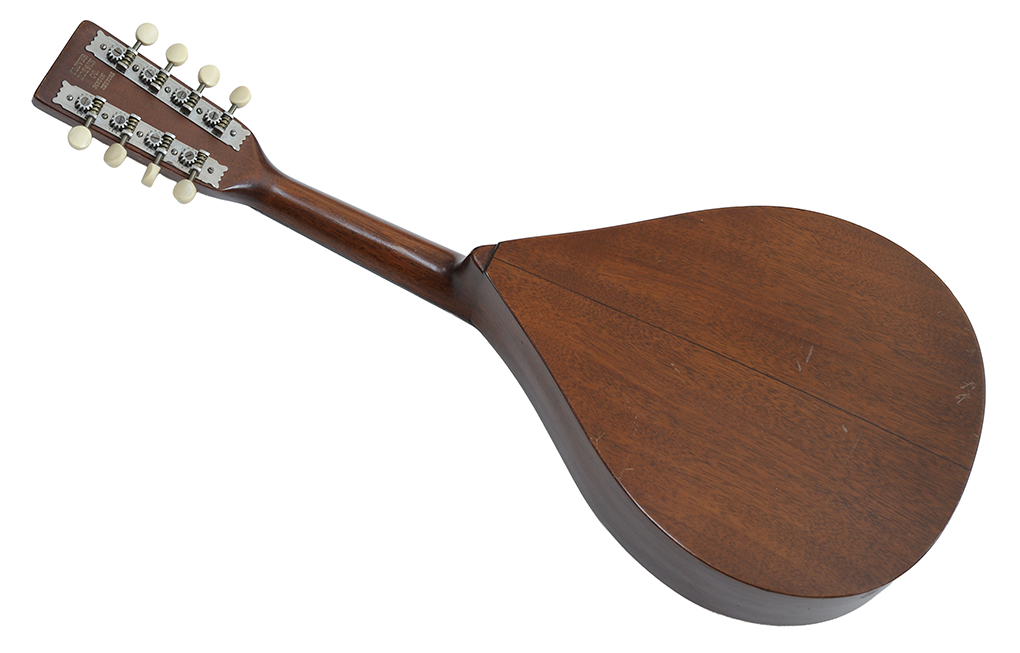
Martin Ditson Company Mandolins

Ditson Empire Mandolins
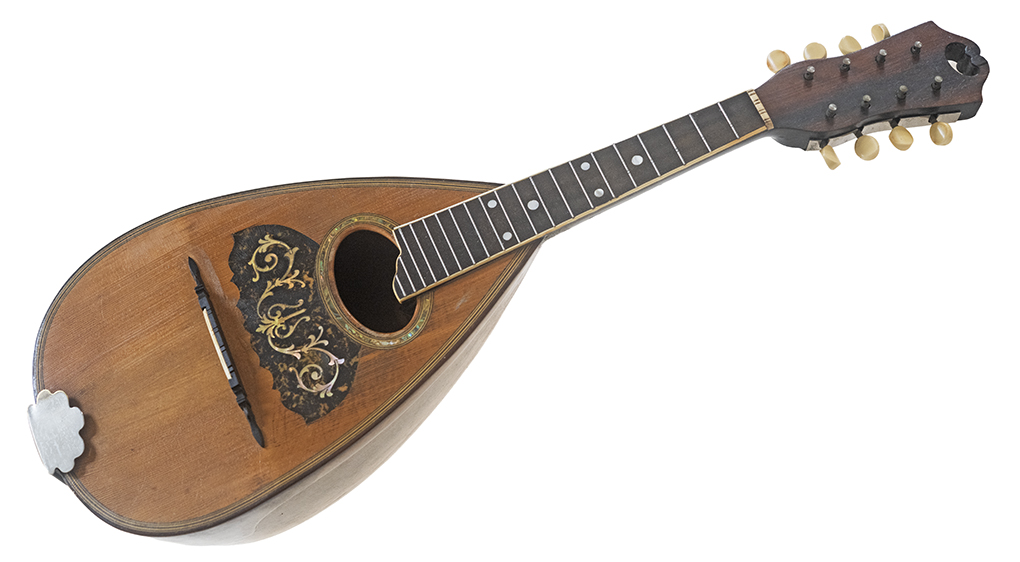
Oliver Ditson (b. October 20, 1811), a major music publisher in Boston, Massachusetts, entered the musical instrument business in 1867, when he acquired a stock of musical instruments from Firth, Son & Company a few years after the death of John Firth, and opened a new store to sell the instruments. This offshoot of the Oliver Ditson Company was called the John C. Haynes Co., as it was managed by the young John Haynes, who Ditson had already taken on as a junior partner. Soon Haynes started producing Tilton guitars under license in the shop of Swedish luthier Pehr A. Anderberg. Haynes eventually bought out Anderberg's shop, growing into a major builder of guitars, including Bay State and many other brands, with a factory of 25 men.
Upon the death of Oliver Ditson on December 21, 1888, John Haynes became the President of the Oliver Ditson Company until he retired in 1903 and Oliver's son Charles Healy Ditson became President. In 1907, Bay State was sold to the Vega Banjo Company.
But more importantly, Oliver's son Charles Healy Ditson (b. August 11, 1845) opened a store in New York in 1867. Martin guitars and mandolins were not just "shipped" to the Charles Ditson Store. The instruments were ordered by the New York store, and the Boston store buyer had little interest or even knowledge of these instruments. They were happy to sell a few standard Martin instruments. It was Small Goods Manager Harry Lawrence Hunt who was responsible for ordering these unique instruments from the Martin Company, who built guitars and mandolins for the Charles Ditson Store until a few years after Charles Healy Ditson's death on May 14, 1929, when the store was closed. Shortly before the store's closing, Harry Hunt left to open the Lyon and Healy Harp Salon in Steinway Hall. It should be noted that Lyon and Healy began as Oliver Ditson gave financial backing to George Washburn Lyon and Patrick J. Healy to open a small store in Chicago as an outlet for Oliver Ditson's sheet music. They grew large as representatives of Steinway Pianos.
Bowl back mandolins with the Ditson name were made by a good many makers. Shortly after the turn of the century, Ditson began to purchase guitars and mandolins from Martin. The Ditson mandolins made by Martin all have the "Empire" name.
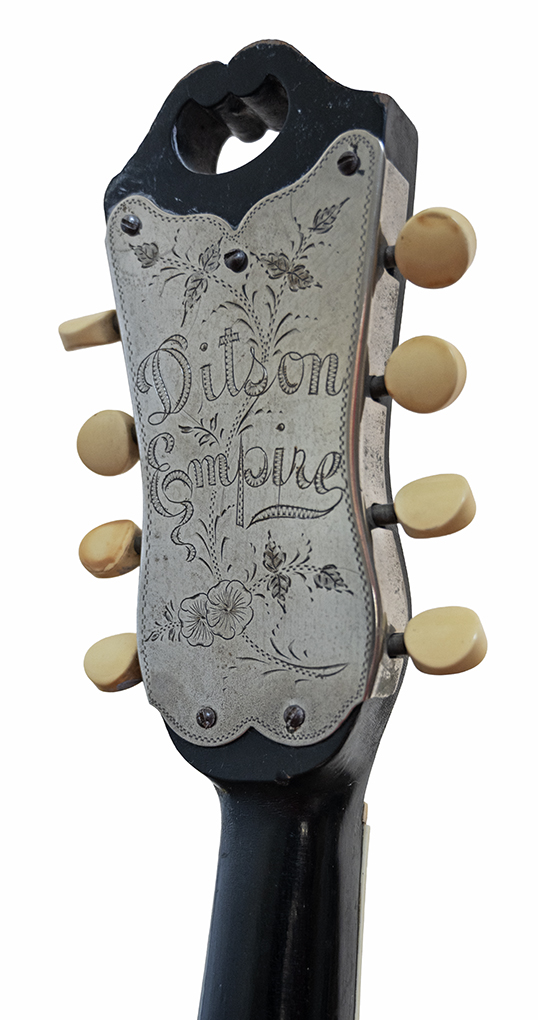
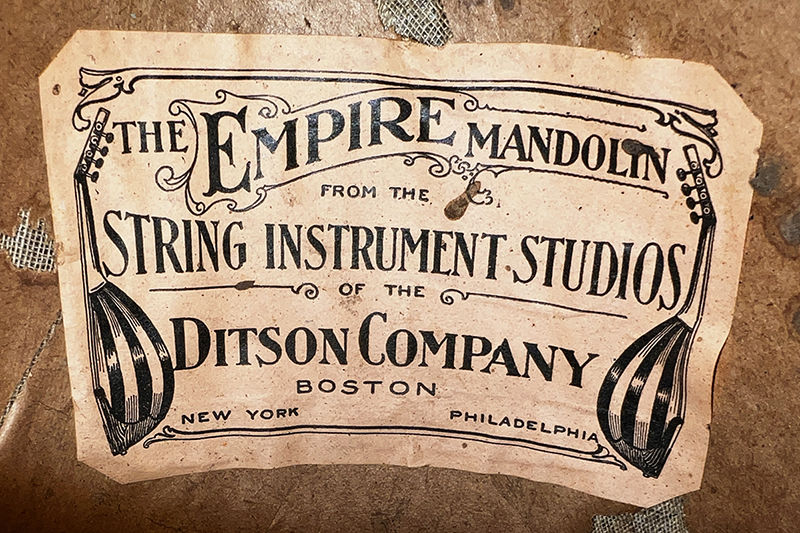
The first mandolins with Ditson serial numbers were shipped on July 10, 1915. These were also bowl back mandolins. Martin was building mandolins exclusively for Ditson in 11 different styles.
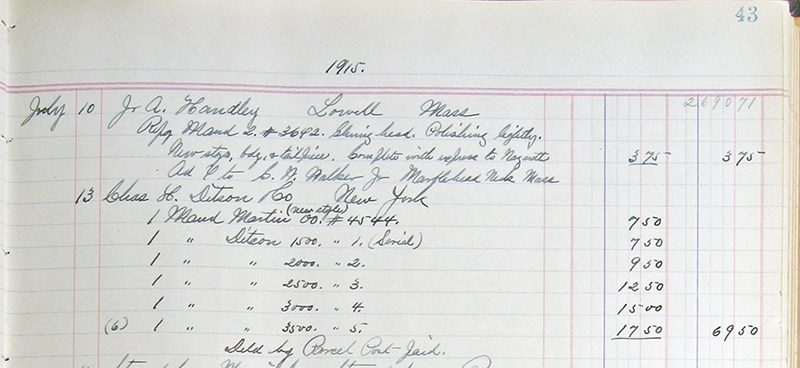
Shortly after this initial order in July, the Charles Ditson store replaced the #1500, #2000, #2500 #3000, and #3500 with the #1517, #2250, #2538, #3035 and #3540.
These had the same tuners as standard Martin mandolins.
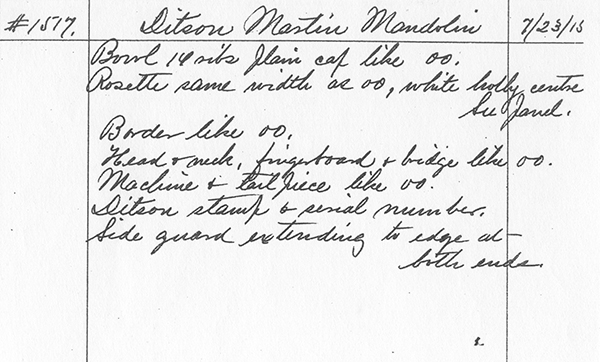
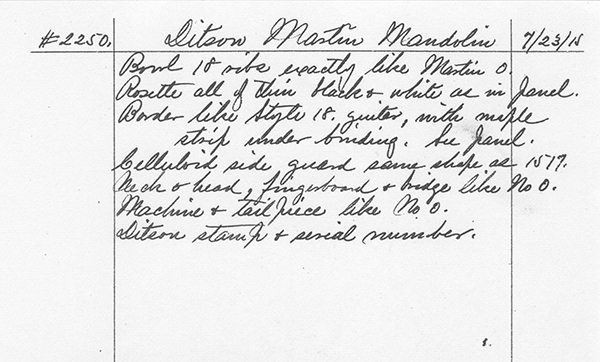
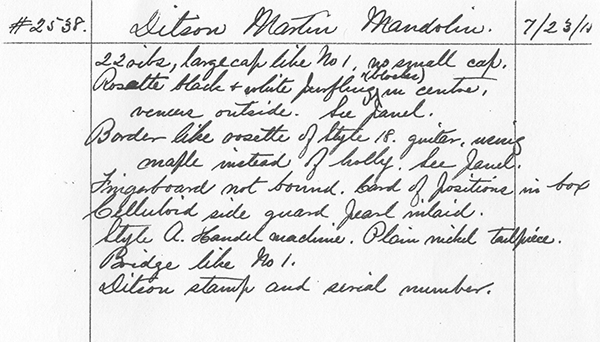
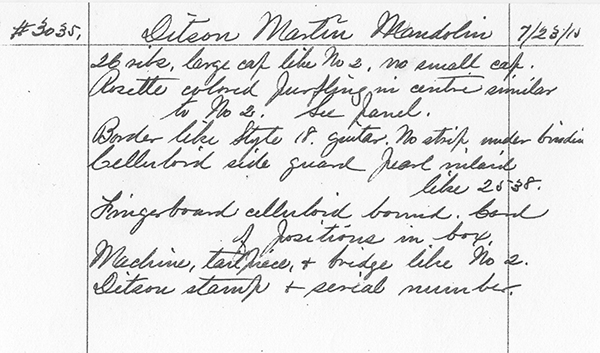
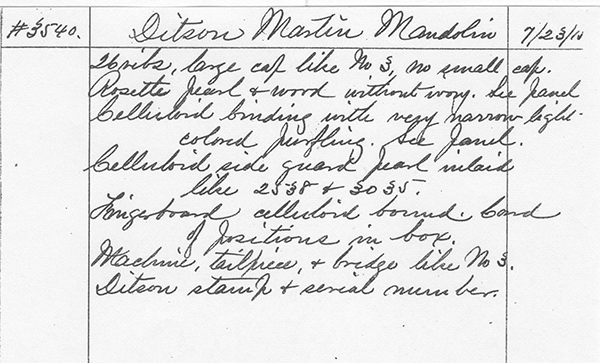
In August, Martin shipped to Ditson the first four of the new #2250 model, as well as the first two of the standard Martin flat back mandolins, a model A.
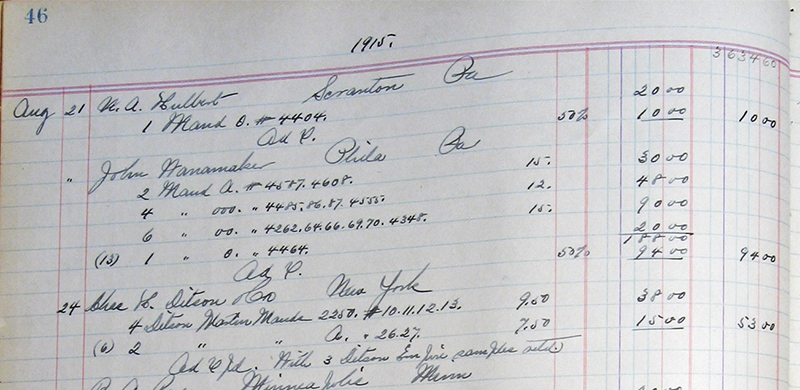
By July 30, 1918, Ditson had stopped buying the unique Ditson model bowlback mandolins, and was only buying the standard Martin Models with a Ditson stamp. They purchased another half dozen standard Martin bowlback mandolins in both 1917 and 1918, but otherwise had moved on to the Standard Model A, B, and C flat backs.
1923 Martin Ditson A Mandolin
To See Robert Corwin's Classic Photography of Folk and Roots Musicians, visit:
For Information on Photography for
Exhibition, Publication, CD's, Promotion, Web Pages, Tour Books,
to Purchase Photographic Prints, or
If You Have Questions About An Early Martin Guitar:
e-mail: Robert Corwinentire site copyright ©1998 through 2026 Robert Corwin/Photo-Arts. All rights reserved.