The 12 Fret Martin Dreadnaught Returns
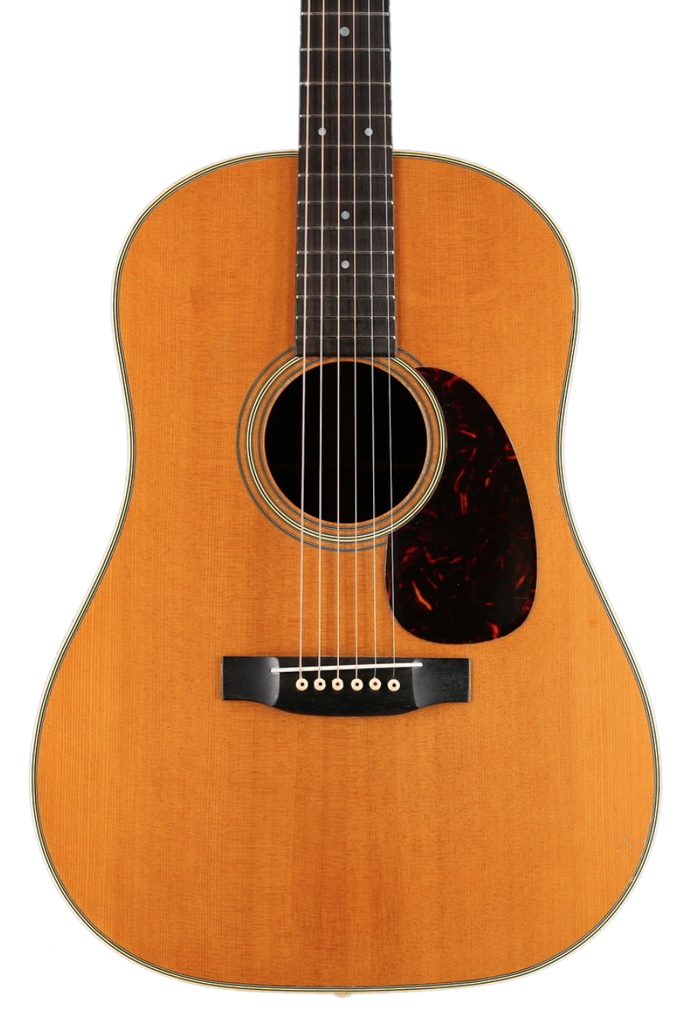
The first Dreadnaught guitars were the 12 fret Hawaiian "Extra Large" guitars built for the Ditson Company in 1916, which were given the name "Dreadnaught" after the huge British battleships used in WW I. The name of the ships was actually spelled with an "O", and Martin changed to the proper spelling of Dreadnought until after 1964. Martin built 28 Style 111 and four Style 222 Ditson Dreadnaughts. Sales were poor, to the eventual point where Martin could not produce them profitably
After the Charles Ditson Company Store in New York closed their doors in 1930, Martin built two D-1 guitars and 7 D-2 guitars, equivalent to what are now known as D-18 and D-28, for the Chicago Musical Instrument Co. Soon after, Martin changed the names to D-18 and D-28, but these were still special order guitars, and sales were still slow.
Four years after Martin began building "Orchestra Model" guitars in 1929, after previously claiming that a 14 fret Dreadnaught wouldn't work, they finally built their first "Orchestra Model" 14 Fret Dreadnaught, stamped on February 22, 1934, which they sold to the Chicago Musical Instrument Co.
Eventually the 14 fret Dreadnaught began to dominate, and Martin all but forgot about 12 fret Dreadnaughts. The last of the pre-war 12 fret Dreadnaughts was produced in 1939.
The 1960's D-28-S
Prior to playing in public, Peter, Paul and Mary spent months rehearsing in Florida. Unfortunately, on the way there, Peter left his 00-21 Martin a cab. So he was shipped an 0-16NY from New York to play.
On January 8, 1962, Dick Rosmini, a wonderful and pioneering 12 string guitar player who grew up in Greenwich Village, and who also worked as the main jewelry photographer for Tiffany & Co., ordered a 12 fret D-28 from Eddie Bell's Guitar Headquarters on Music Row in New York City. Ten days later, Peter placed an order for an identical guitar with Izzy Young's Folklore Center in the Village, a proper rosewood Martin guitar to replace the 00-21.
On Monday, January 29, 1962, Peter, Paul & Mary signed to Warner Bros. receiving a $30,000 advance, in time to pay for the guitar.
By Tuesday of the following week, on February 6th, Martin stamped the neck block on both Rosmini's and Peter's D-28S.
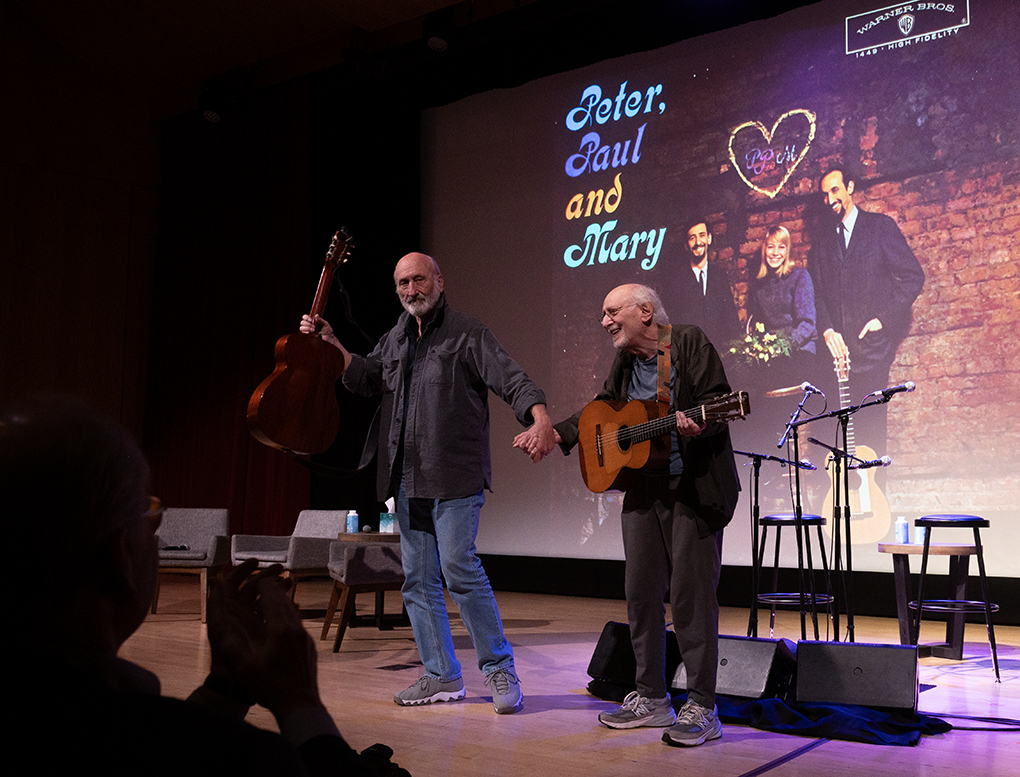
On this recording, Peter still used his Martin 0-16NY and Noel "Paul" used his 00-18G. These guitars appear on the famous front cover of the album, in a photo taken in front of the brick wall of the "Bitter End" coffeehouse in Greenwich Village. Six months before Peter lost his fight with cancer in January, 2025, Peter and Noel donated these guitars to the Metropolitan Museum in New York.
Here is a photo I took of Peter and Noel on the night these guitars were donated:
From what Peter has told me, he didn't know at the time that the original D-28 was a 12 fret, or even that Martin had ever made a 12 fret Dreadnaught before. He just asked Martin if they could build a Dreadnaught guitar with a 12 fret neck like his favorite 00-21 which was lost.
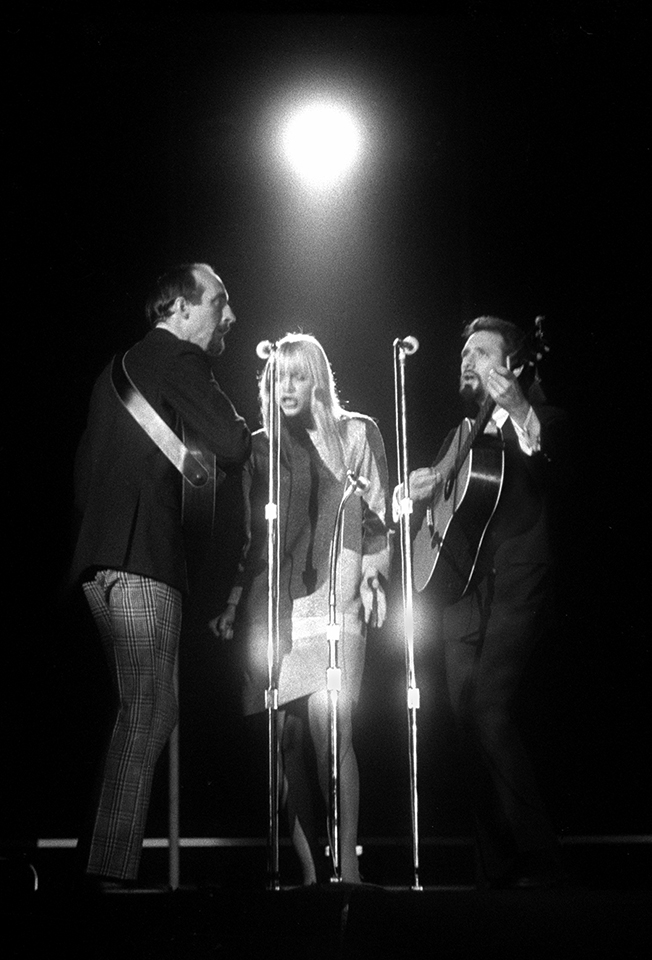
Here's a photo I took of Peter with his D-28S in 1966:
It appears that the first post-war 12 fret Martin D-28S was #175091, stamped on November 9, 1960. Other D-28S were produced earlier, but it appears that they were mostly, if not all, special order 14 fret D-28 with other features, not 12 frets. Most were built in the 1950's, when double and special extra large guards were popular and available on special order. The one from 1960 is likely the first of Martin's postwar D-28S "Standards". I've been told that the 1960 D-28S was later given a new 12 fret neck with a 1 3/4" nut, an inlaid line of pearl in the wood between the inner and middle rosette ring, and an oversized black pick guard. Two more were produced in late 1961.
Peter's guitar was sadly stolen on the grounds of the Philadelphia Folk Festival in 1972 by a young man who asked Peter for advice on becoming a conscientious objector during the Vietnam War, and then offered to help Peter carry it. Peter was more disturbed by having the guitar stolen by someone professing to not believe in war than he was with the guitar being stolen.
Peter later purchased the D-28S ordered at the same time as Peter's for Dick Rosmini to help Dick with funds when he was dying of cancer.
One more 12 fret D-28S was produced four months after Peter's for Cyrus Faryar, an Iranian born singer who had lived in Hawaii. Faryar was a friend of Dave Guard of the Kingston Trio, a founding member of the Modern Folk Quartet, a producer of Firesign Theater, performed at Monterey Pop leading the "Group With No Name", and recorded sessions with Fred Neil, Linda Ronstadt, and Cass Elliott.
Peter later ordered a second D-28S, the one he lent to Bob Dylan on that fateful night at Newport in 1965 to follow his electric set with an acoustic "It's All Over Now Baby Blue" played on Peter's guitar. That guitar had a standard Martin pick guard. Peter's memory was sketchy on the details, but knowing Peter as I do, that guitar was likely also left in the trunk of a New York City cab, or it could have been the guitar that fell off the roof of a car.
11/09/60
D-28S
12 fret, Neck like 00-28G
#1709
S.O. #595
9/12/61
D-28GS
12 fret, Neck like 00-28G, no pick guard
#179677
S.O. #912
10/09/61
D-28S
12 fret, Neck like 00-21, no pick guard
#180204
S.O. #953
2/6/62
1 D-28S
Old Style, 12 fret neck, no pick guard
#181847
S. O. # 148
Dick Rosmini
2/6/62
1 D-28S
Old Style, 12 fret neck, no pick guard
#181848
S. O. # 148
Peter Yarrow
The D-28 Peter lent to Bob Dylan at Newport on the night he played electric was another D-28 with a guard. Peter couldn't remember, but his second D-28 was probably one of the dozen Martin produced earlier that year, in February.
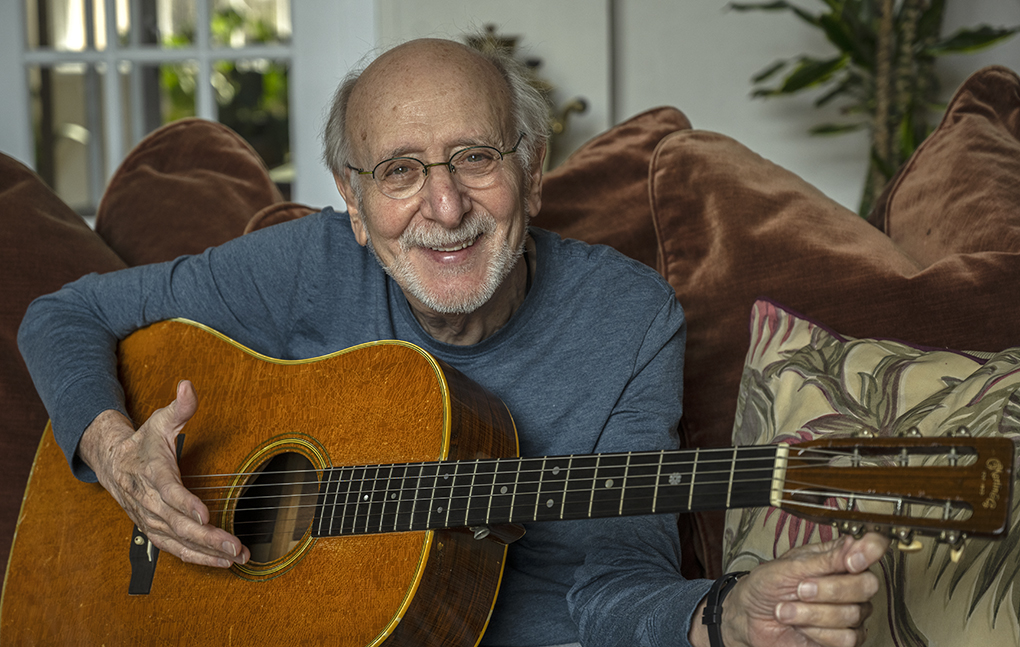
Here's a photo I took of my brother Peter in his apartment with the Rosmini D-28S...
D-28 Special Wurlitzer
With the immense popularity of Peter, Paul, and Mary following the release of their first album, and the great interest in wanting to play their folk songs, about six months after the release of the album, the E. U. Wurlitzer Store in Boston ordered two 12 fret D-28 similar to Peter's, which were stamped on July 19, 1962 as "D-28SW" for "Special Wurlitzer".
The E. U. Wurlitzer Store of Boston was not directly related to the Rudolph Wurlitzer Store of Cincinnati, for which Martin built "Company Guitars" in 1922.
Ernest Ulrich Wurlitzer, who estabished the E. U. Wurlitzer Stores, emigrated to America a full 60 years after Franz Rudolph Wurlitzer (1831-1914), founder of the Rudolph Wurlitzer store in Cincinnati, and was not related to any of his close relatives or connected to that store.
The Wurlitzers were instrument makers in Saxony dating to the 1500's, so E.U and Rudolph were surely members of the same extended family.
Rudolph was born in Schoneck, Saxony, while E.U.'s family were born in Erlbach, Neukirchen, only 11km. away, and only a stone's throw from the Martin home in Neukirchen.
The E. U. Wurlitzer Store, located on Bedford Street in Boston, was said to be founded in 1890 by Ernest Ulrich Wurlitzer (1878-1962).
When Ernest was only 11, and two years before he even came to this country!